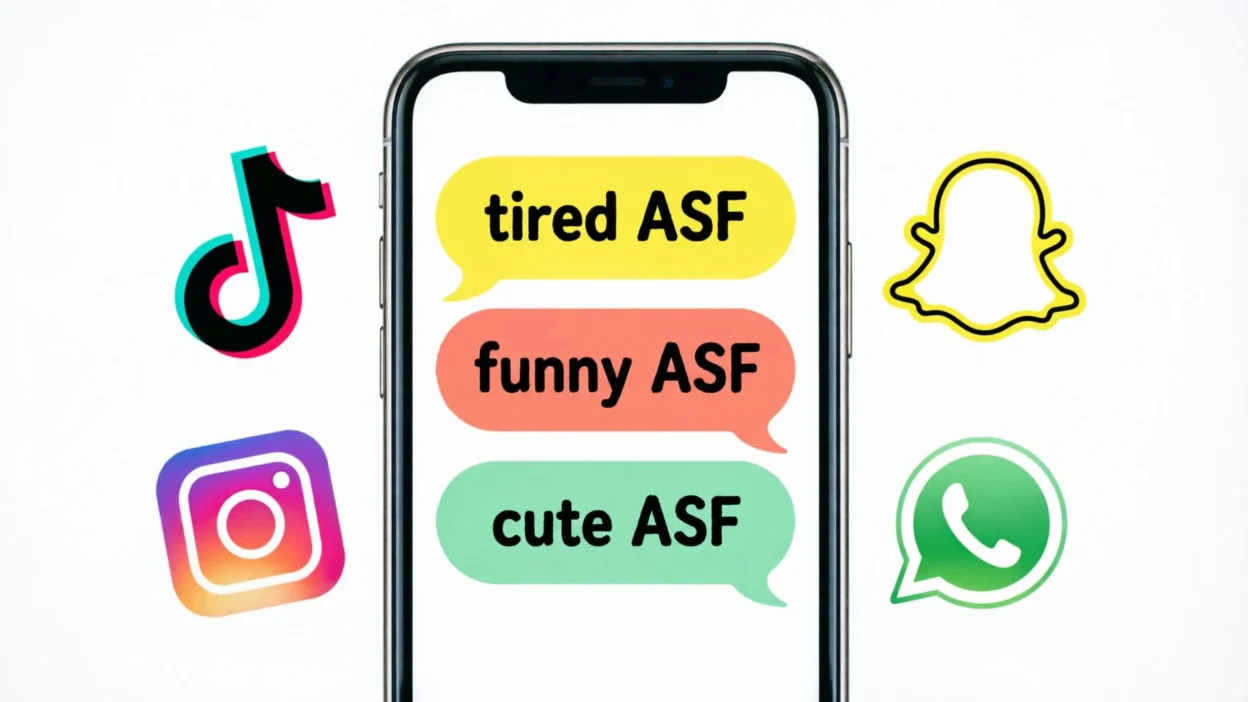
ASF in chat means “As F*ck.” It’s an informal slang intensifier used to strongly emphasize a feeling or situation. People use it in text messages and on social media to mean “very,” “extremely,” or “really.”
You’ll often see ASF on TikTok captions, Snapchat stories, Instagram comments, or casual WhatsApp chats. It’s not a polite acronym. It’s internet slang that shortens a strong expression into just three letters.
Many users search for “asf full form in chat” because they see it in messages like “I’m tired ASF” or “That’s funny ASF” and aren’t sure what it stands for. Slang evolves fast online, and abbreviations like this can feel confusing at first.
Here’s exactly what ASF means, how people use it across platforms, and how you should reply when someone sends it to you.
ASF Full Form in Chat – Meaning & Explanation
The ASF full form in chat is “As F*ck.”
It’s used as an intensifier, meaning:
- Extremely
- Very
- Really
- To a high degree
What Does ASF Mean in Chat?
When someone writes:
“I’m bored ASF.”
They simply mean:
“I’m extremely bored.”
It’s not a complicated acronym. It’s a shortened slang phrase designed for fast typing.
Is ASF an Acronym or Slang?
ASF is:
- A shortened slang abbreviation
- A texting shortcut
- An intensifier
- Informal language
It is not professional language and should only be used casually.
ASF Meaning on Snapchat
On Snapchat, ASF is often used in:
- Story captions
- Private snaps
- Quick emotional reactions
Example:
“This filter is cute ASF.”
Tone: Playful, dramatic, expressive.
ASF Meaning on TikTok
On TikTok, ASF appears in:
- Video captions
- Comment sections
- Trend reactions
Example:
“This trend is annoying ASF.”
Tone: Exaggerated, expressive, sometimes sarcastic.
ASF Meaning on Instagram
On Instagram, it’s mostly used in:
- Meme comments
- Reels captions
- Reaction replies
Example:
“You look good ASF.”
Tone: Complimenting, casual, Gen Z style.
ASF Meaning on WhatsApp
On WhatsApp, usage depends on closeness.
Example:
“I’m hungry ASF.”
It’s common between friends but not appropriate for family or formal groups.
ASF Meaning in SMS Text Messages
In regular SMS texting, ASF works the same way:
“It’s cold ASF today.”
Meaning: It’s extremely cold.
ASF Across Different Platforms
Snapchat
On Snapchat, ASF is emotional and dramatic.
It adds exaggeration to feelings.
Example:
“I’m tired ASF after that exam.”
TikTok
On TikTok, ASF often appears in viral humor.
Example:
“This sound is addictive ASF.”
It’s part of meme culture.
Instagram uses ASF in captions and comments.
Example:
“That outfit is fire ASF.”
Mostly Gen Z audience.
Used casually among close friends.
Rare in family chats.
SMS
Simple texting between friends.
Still informal.
ASF Tone & Context Variations
The meaning stays similar, but tone changes everything.
1. Funny Tone
A: I just tripped in public.
B: That’s embarrassing ASF.
A: Don’t remind me.
2. Sarcastic Tone
A: I love waking up at 6 AM.
B: Yeah, fun ASF.
A: Exactly.
3. Romantic Tone
A: You look cute ASF today.
B: Stop, you’re making me blush.
A: Just being honest.
4. Angry Tone
A: They canceled again.
B: That’s annoying ASF.
A: I know.
5. Playful Tone
A: Why are you smiling?
B: Because I’m happy ASF.
A: Good.
6. Excited Tone
A: I passed my test!
B: Congrats ASF!
A: Thank you!
7. Complimenting Tone
A: New haircut?
B: Yeah.
A: Looks good ASF.
8. Tired Tone
A: Long day?
B: Tired ASF.
A: Go rest.
9. Shocked Tone
A: He won the lottery.
B: Lucky ASF.
A: For real.
10. Dramatic Tone
A: I’m starving.
B: Hungry ASF?
A: Yes.
ASF Grammar & Language Role
ASF works as an intensifier adverb.
Part of Speech
It acts like:
- Very
- Extremely
Example:
“Cold ASF” = Extremely cold
Sentence Role
It usually comes after adjectives.
Correct:
- “Funny ASF”
- “Tired ASF”
Not formal grammar, but accepted in slang.
Does It Replace a Full Sentence?
No.
It modifies a feeling or description.
Formal vs Informal
ASF is:
- Extremely informal
- Not workplace-friendly
- Not suitable for academic writing
Tone impact: Strong, emotional, exaggerated.
How to Reply When Someone Says “ASF”
Your reply depends on tone.
Funny Replies
- “Not ASF, just a little.”
- “You always exaggerate.”
- “Relax.”
Serious Replies
- “What happened?”
- “Why so extreme?”
- “Tell me.”
Flirty Replies
- “Only ASF because I’m here.”
- “You’re cute ASF too.”
- “Stop, you’re making me smile.”
Neutral Replies
- “Got it.”
- “That makes sense.”
- “I understand.”
Is ASF Rude or Bad?
Is ASF Rude?
It can be.
Because it contains a censored swear word.
Is It Disrespectful?
Depends on context.
- With friends: Normal
- With elders: Disrespectful
- In professional settings: Inappropriate
Is It a Bad Word?
It’s mild profanity slang.
Not extremely offensive, but not clean language either.
Can You Use It in School?
Better avoid it in assignments or teacher communication.
Can You Use It at Work?
No. Avoid in emails or professional chats.
Who Uses ASF?
Age Group
Mostly:
- Gen Z
- Younger Millennials
Rare among older adults.
Regions
Common in:
- United States
- UK
- Canada
- Australia
- Global internet culture
Platforms
Most popular on:
- TikTok
- Snapchat
Less common on LinkedIn.
Origin & Internet Culture
ASF likely evolved from early internet chat culture where users shortened swear phrases for speed.
It became popular through:
- Twitter era slang
- Meme culture
- TikTok exaggeration humor
There is no single official origin, but it grew naturally through fast typing habits.
Comparison Table
| Term | Meaning | Formal/Informal | Tone | Popularity | Confusion Risk |
|---|---|---|---|---|---|
| ASF | As F*ck (very) | Informal | Strong/Emotional | High | Medium |
| IDK | I Don’t Know | Informal | Neutral | Very High | Low |
| ION | I Don’t | Informal | Casual | Medium | High |
| Dunno | Don’t Know | Informal | Neutral | Medium | Low |
| IDC | I Don’t Care | Informal | Blunt | High | Low |
Real-World Usage Insight
In real conversations, people don’t think deeply before using ASF. It’s automatic. Someone feels strongly about something, and ASF just comes out in text. It’s emotional shorthand.
However, I’ve noticed it’s mostly used when people are exaggerating for humor or dramatic effect. Rarely used in serious life conversations.
Frequently Asked Questions About ASF
What Does ASF Mean in Text Messages and Online Chat?
ASF means “As F*ck.” It intensifies a feeling to mean very or extremely.
What Does ASF Mean on Snapchat and TikTok?
On Snapchat and TikTok, it’s used in captions and comments to exaggerate emotions, reactions, or humor.
Is ASF Rude, Disrespectful, or Harmless Slang?
It’s mild profanity. Fine among friends but inappropriate in professional settings.
How Should You Reply When Someone Says “ASF”?
Match their tone. Reply playfully, seriously, or neutrally depending on context.
Is ASF the Same as IDK or Different?
Different.
IDK means “I don’t know.”
ASF means “very” or “extremely.”
Can You Use ASF in School or Work?
Avoid using it in formal communication. Keep it for casual chats.
Final Summary: When to Use ASF (And When to Avoid It)
ASF stands for “As F*ck” and works as a strong slang intensifier.
Use it when:
- Chatting with friends
- Posting memes
- Expressing exaggeration
Avoid it when:
- Speaking to teachers
- Writing emails
- Communicating professionally
Common mistake:
Using it in formal settings where it may seem immature.
If you understand the tone and audience, ASF is just another modern internet shortcut. If not, it can sound rude or unprofessional.