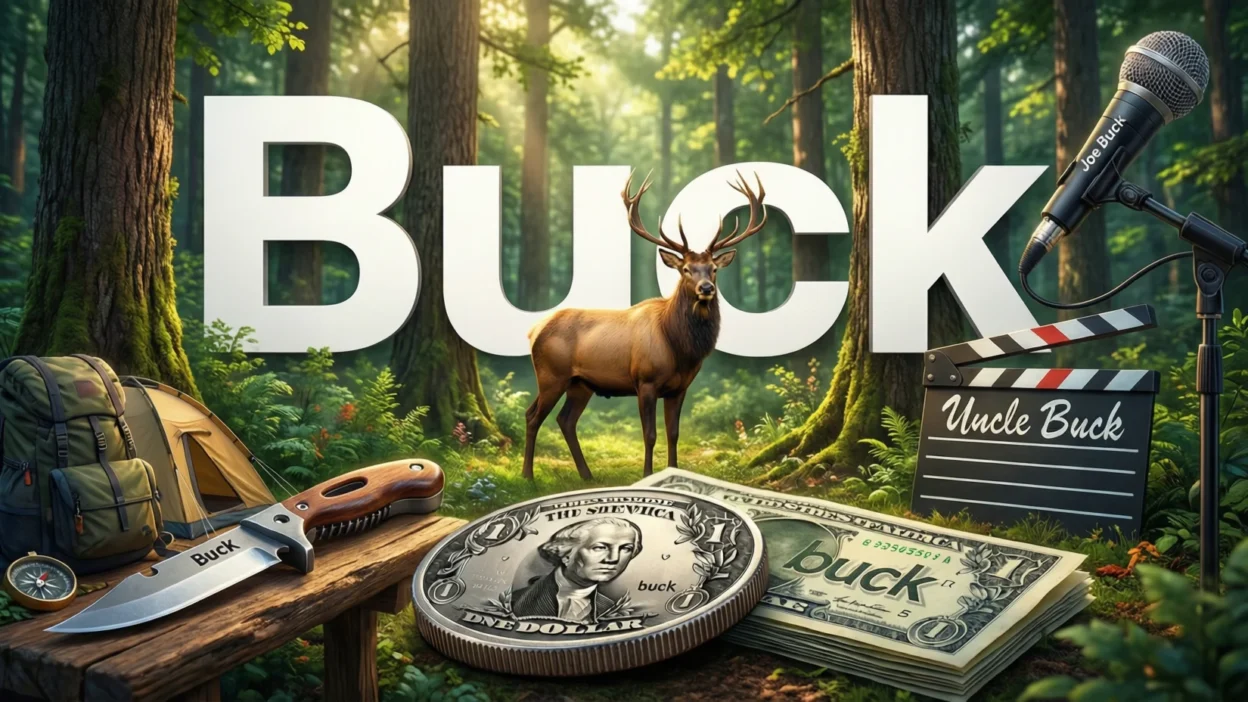
Definition: The word “buck” can mean a U.S. dollar, a male animal like a deer or rabbit, or the verb “to buck,” meaning to resist or jump.
It also appears in idioms like “pass the buck” and pop culture references such as Joe Buck, Buck Mason, and Uncle Buck.
The word “buck” is versatile, referring to money, male animals, actions, slang, and idiomatic expressions. Its meanings appear in everyday speech, wildlife, pop culture, and historical contexts.
This guide explores the origins, definitions, and uses of buck, helping readers understand and apply it correctly in conversation, writing, and media.
What Does Buck Mean in Money?
One of the most common uses of “buck” is to refer to money, specifically the U.S. dollar. For example, “That costs ten bucks” means ten dollars. This informal usage is widely recognized across the United States, appearing in casual conversation, advertising, and pop culture. The term originated from the early American frontier, where buckskins—deer hides—were used as a form of trade or currency. Over time, the word buck became shorthand for a dollar, making it a staple in American slang.
Casual phrases include “a few bucks,” “spend a buck,” or “make some quick bucks.” This term is rarely used in professional financial documents, but it has influenced idiomatic expressions like “bang for your buck,” emphasizing value or return on investment. Even brands and products, such as Buck Knives, Cutter and Buck, and the Buck 110 Auto, carry the name, showing its strong association with American culture and commerce. Understanding this usage allows you to navigate everyday conversations about money confidently.
Why Is a Dollar Called a Buck?
The term “buck” for a dollar has an interesting history that dates back to early American trade. In the 1700s and 1800s, buckskins—deerskins—were used as currency among settlers and Native Americans. A single deerskin was often valued roughly equal to one dollar, and traders would literally pay with buckskins for goods and services. Over time, people began to shorten this reference, and “buck” became synonymous with one dollar in everyday speech.
This slang usage became widespread and is still common today. Phrases like “It costs twenty bucks” or “I only have a few bucks” are casual ways to refer to money. Idioms such as “bang for your buck” highlight its cultural significance. Brands like Buck Mason and Buck Knives have further embedded the term into modern American culture. Understanding the origin of buck shows how a simple term evolves from practical trade to everyday language and idioms.
What Does Buck Mean in Animals?
In the animal world, “buck” refers to the male of certain species, most commonly deer. A male deer is called a buck, while a female is a doe. Bucks are often recognized by their antlers and play important roles in mating and territorial behaviors.
The term buck also applies to male rabbits, goats, and some antelope species. For instance, in rabbit breeding, a male rabbit is called a buck, while in goats, bucks refer to uncastrated adult males. Hunting communities, wildlife enthusiasts, and farmers use these distinctions for clear communication.
Historical usage helped early settlers and hunters communicate efficiently about wildlife. Modern idioms, such as “buck wild,” often draw from animal behavior to convey energy, unpredictability, or strength. Understanding buck in this context is crucial for wildlife discussions, hunting references, or reading texts where animal terminology appears.
What Does Buck Mean in Slang?
In modern slang, “buck” has multiple meanings depending on context. While it often still refers to money, it can also describe behavior, attitude, or energy. For instance, “buck wild” describes someone acting wildly or energetically, while “buck up” is a motivational phrase meaning to be brave or resilient.
Slang uses appear in casual conversation, social media, and pop culture. You might hear, “He went buck on the dance floor,” describing someone dancing wildly. In another context, “Don’t buck against the rules” conveys resistance.
Cultural references also contribute to slang popularity. Figures like Joe Buck, sports broadcaster Michelle Beisner-Buck, and entertainers like Buck Angel reinforce the word’s cultural presence. Recognizing these uses allows readers to interpret meaning based on tone, audience, and context.
What Does Buck Mean in Texting and Social Media?
In texting and social media, “buck” has become even more versatile. Often used for money, it can also describe excitement, chaos, or wild behavior. For example:
- “That party cost me 50 bucks 😅”
- “He went buck wild at the festival 🔥”
Young audiences use it creatively, often with emojis to convey tone. Memes, viral content, and pop-culture references have amplified its informal use. Understanding buck in digital contexts is essential because tone and surrounding words determine its meaning. Social media keeps language lively, and buck demonstrates this evolution.
Buck as a Verb — Action Meaning Explained
As a verb, “buck” means to resist, oppose, or move suddenly. Horses literally buck to throw off riders, and this action has inspired figurative expressions like “buck the trend” or “buck the system”, meaning to resist norms or authority.
Understanding buck as a verb helps interpret sports, literature, and daily conversation. For example:
- “The horse bucked its rider during the rodeo.”
- “The team bucked expectations and won the championship.”
This figurative usage bridges literal action and symbolic resistance, showcasing the word’s versatility.
Common Idioms and Phrases Using Buck
Several idioms use “buck”:
- Pass the buck – shift responsibility
- The buck stops here – accept accountability
- Bang for your buck – get value
- Make a quick buck – earn money fast
- Buck up – be brave or resilient
- Buck wild – energetic or unruly
These phrases illustrate how buck transcends literal meanings. They also appear in pop culture, movies, and media references, including the cast of Uncle Buck, reinforcing cultural relevance.
Buck Meaning in Different Industries and Contexts
Finance: Bucks = dollars; idioms highlight value.
Gaming: Bucks may refer to in-game currency.
Sports & Military: Buck indicates resistance or sudden movement.
Products: Names like Buck 110 Auto, Buck Knives, and Cutter and Buck show cultural integration.
Understanding context ensures accurate interpretation across industries.
Regional and Cultural Uses of the Word Buck
Primarily American English uses buck for money; in other English-speaking countries, it often refers to male animals. Idioms like “pass the buck” and media references like Buck Rogers or Buck Owens have made the term culturally recognizable worldwide. Context is key to proper understanding.
Synonyms and Related Words for Buck
Money: dollar, greenback, coin, cash
Animals: stag, male deer, hart, male rabbit/goat
Verb: rebel, resist, defy, oppose
Slang: wild, energetic, unruly, daring
These alternatives help readers understand and use buck appropriately in various contexts.
Examples of Buck Used in Sentences
Money: “I paid twenty bucks for this book.”
Animals: “A large buck stood in the forest.”
Slang: “He went buck wild at the party.”
Verb: “She decided to buck the trend and pursue an unconventional career.”
Real-world examples show versatility across contexts.
Common Misunderstandings About the Word Buck
- Buck does not always mean money.
- Idioms like “pass the buck” or “the buck stops here” are figurative.
- Not all animals are called bucks—specific species matter.
- Verb usage can be literal (horse bucks) or figurative (resisting authority).
Clarifying these prevents misinterpretation.
FAQs About the Meaning of Buck
- What does buck mean in slang? Energetic behavior or money.
- What does buck mean in money? One U.S. dollar.
- Why do Americans say buck? Derived from buckskins used as currency.
- What animal is called a buck? Male deer, rabbits, goats, or antelope.
- Does buck only refer to money? No; context determines meaning.
Conclusion
The word “buck” demonstrates how a single term can carry multiple meanings across money, animals, slang, verbs, and idioms.
From historical buckskins to modern slang, idioms, and references like Joe Buck, Buck Mason, Buck Taylor, Buck Angel, and Uncle Buck, the term is versatile and culturally rich.
Understanding context ensures proper usage in conversation, media, writing, and social platforms.
If referring to money, a male animal, energetic behavior, or idiomatic expressions, buck is a dynamic word with enduring relevance in English.