Definition: Bummer is an informal term used to describe a situation that is disappointing, unfortunate, or frustrating. People often use it in casual conversation, texts, or online posts to show empathy or mild disappointment.
The word “bummer” has become a staple in casual English, instantly communicating disappointment or frustration in just one word.
From conversations to texting, social media, and pop culture references like Judy Moody and the Not Bummer Summer, the term expresses empathy, regret, or minor setbacks.
Linguists and language enthusiasts note that “bummer” illustrates how informal language evolves, spreads through media, and becomes part of social vocabulary.
In this article, we’ll explore everything about bummer—its meaning, synonyms, common situations, pop culture appearances, famous examples like Blackbear Hot Girl Bummer, and tips for using it confidently.
What Does “Bummer” Mean?
The term “bummer” is widely used to describe a situation that is disappointing, unfortunate, or frustrating. It’s informal, versatile, and can convey empathy or personal frustration depending on context.
Literal Meaning
At its core, “bummer” means something that causes disappointment or sadness.
- “I missed the concert because of rain—what a bummer!”
- “You didn’t get the promotion? That’s a total bummer.”
“Bummer” as Slang
In slang, it expresses a casual, empathetic reaction:
- Friend A: “I lost my wallet today.”
- Friend B: “Oh no, that’s such a bummer!”
It can also be used ironically, exaggerating small setbacks: - “Out of coffee this morning… total bummer!”
Bummer in Texts and Online
- Text: “You failed the quiz? Bummer 😢”
- Social media: “Missed the game… bummer! #FOMO”
- Online games: “Lost the bummer game again!”
These digital uses make it friendly, relatable, and widely understood.
The History and Origin of “Bummer”
Etymology
“Bummer” likely originates from early 20th-century American slang, derived from “bum,” meaning a vagrant or lazy person. Over time, it evolved to describe a disappointing situation rather than a person.
Popularization in American English
The term gained widespread use in the 1960s and 1970s, boosted by counterculture movements, movies, and music. It became a word that could express frustration casually and empathetically.
Pop Culture Influence
- Movies: Judy Moody and the Not Bummer Summer and other teen films use the term to depict minor disappointments.
- Music: Songs like Blackbear Hot Girl Bummer and Summer Bummer lyrics cemented it in youth culture.
- Memes and social media: Quick, relatable reactions to everyday mishaps, like the bummer game online.
Common Situations Where People Say “Bummer”
Everyday Life
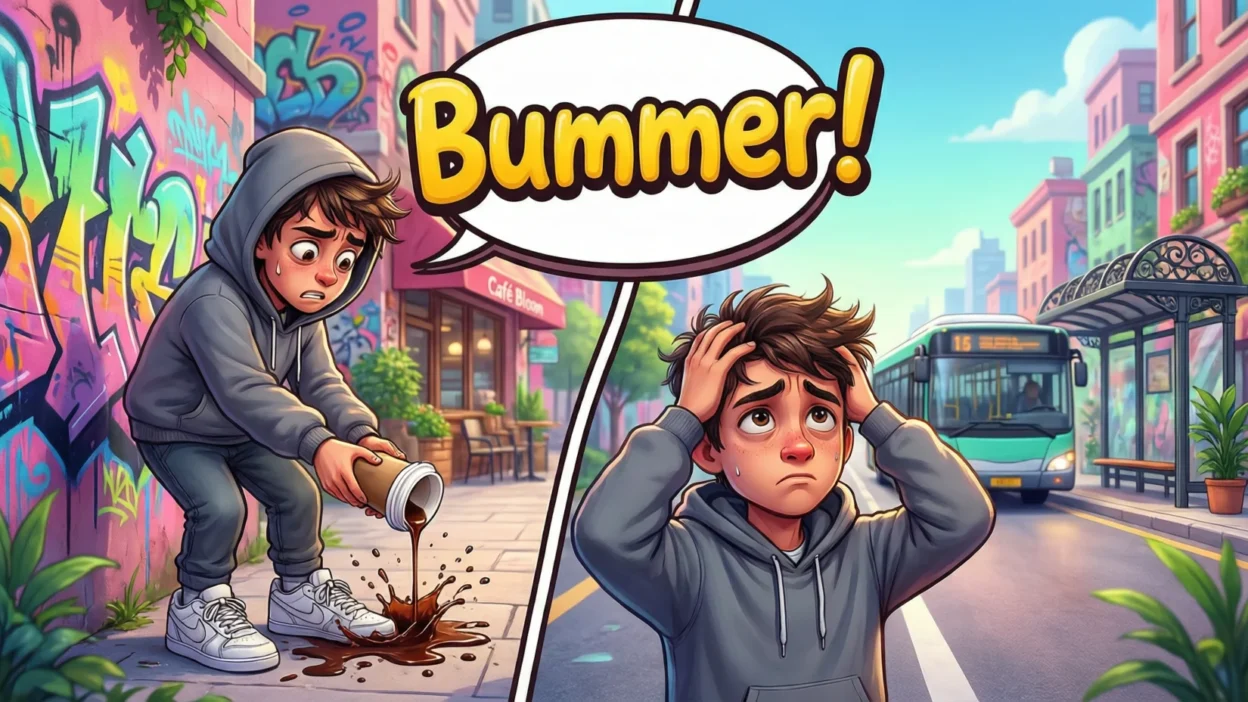
- Missing the bus: “Missed the bus… what a bummer!”
- Bad weather: “Rain canceled our picnic—total bummer.”
- Minor mishaps: “Dropped my phone… bummer lamb.”
Work and School
- Failed tests or assignments: “You didn’t pass? That’s a bummer.”
- Missed deadlines: “Project got postponed—bummer.”
Social and Relationship Contexts
- Friend cancels plans: “You can’t make it to dinner? Bummer!”
- Romantic minor setbacks: “He didn’t text back? Bummer.”
Funny or Ironic Uses
- Trivial inconveniences: “No coffee this morning… total bummer 😂”
- Games: “Lost the bummer game—ugh!”
Synonyms and Related Words
Common Alternatives
- Drag – casual disappointment: “Missing the party was such a drag.”
- Downer – slightly heavier disappointment: “Hearing bad news was a downer.”
- Letdown – expectation vs reality: “The movie was a letdown.”
- Disappointment – formal alternative: “Not getting the scholarship was a disappointment.”
Tone Differences
- Bummer – friendly, informal
- Drag – casual, laid-back
- Downer – serious impact
- Letdown – unmet expectations
Bummer in Pop Culture
Movies and TV
- Judy Moody and the Not Bummer Summer uses the term frequently to depict setbacks.
- Shows like Friends and The Simpsons employ it naturally in dialogue.
Music
- Songs like Blackbear Hot Girl Bummer and Summer Bummer lyrics show how the term expresses frustration and teen angst.
Memes and Online Media
- Memes exaggerate minor setbacks: “Missed the bus… bummer!”
- The bummer game and online content spread the expression widely.
How to Use “Bummer” Correctly
In Conversation
- Perfect for casual chats: “You lost your keys? That’s a bummer.”
- Tone: empathetic or lighthearted.
In Writing
- Texts: “Bummer 😢 about missing the game!”
- Social media: “Rain ruined our hike… bummer! #WeekendFail”
- Blogs: Adds relatability and conversational tone.
Avoid Overuse
- Best for mild to moderate disappointments.
- For serious matters, use formal alternatives like “disappointment” or “regret.”
Humor and Irony
- Exaggerates trivial mishaps: “Out of coffee… total bummer 😂”
FAQs About “Bummer”
Q1: What is a bummer in slang?
- A situation that is unfortunate or disappointing, often casual and empathetic.
Q2: Can “bummer” be positive?
- Occasionally ironic or humorous, exaggerating minor setbacks.
Q3: How do you respond to “bummer”?
- “Yeah, that sucks!” / “Totally a bummer, hope it gets better!”
Q4: Is “bummer” rude or informal?
- Informal but friendly; not appropriate for formal writing.
Q5: How to use “bummer” in a sentence?
- Casual: “You lost your wallet? Bummer.”
- Texting: “Bummer 😢 about missing the game.”
- Humor: “My ice cream fell… total bummer 😂.”
Conclusion
The word “bummer” is a versatile, informal term used to express disappointment, frustration, or empathy.
From daily mishaps like missing the bus to pop culture references in Judy Moody and the Not Bummer Summer, Blackbear Hot Girl Bummer, or even online games like the bummer game, the term has solidified its place in modern language.
Knowing its meaning, history, and synonyms like drag, downer, letdown, and disappointment ensures you can use it naturally and confidently.
If in conversation, text, or social media, “bummer” helps communicate relatable setbacks while keeping the tone friendly and approachable. Next time something unfortunate happens, just say it: “What a bummer!”