The past tense of catch, known as caught, is an essential part of English grammar for students, language learners, writers, and grammar enthusiasts. Understanding how to use caught correctly can improve your writing and speaking skills. The verb catch is irregular, meaning it doesn’t follow the standard “-ed” ending for past tense like regular verbs. Instead, it transforms into caught for both the simple past and past participle forms. In this article, we’ll explore the caught tense, its structure, conjugation, and practical examples to make it easy to understand. Whether you’re writing a story, preparing for an English exam, or polishing your grammar, this guide will help you master caught with confidence. Let’s dive into the definition, rules, and real-life examples to make learning verb tense examples fun and straightforward!
What Is the Caught Tense?
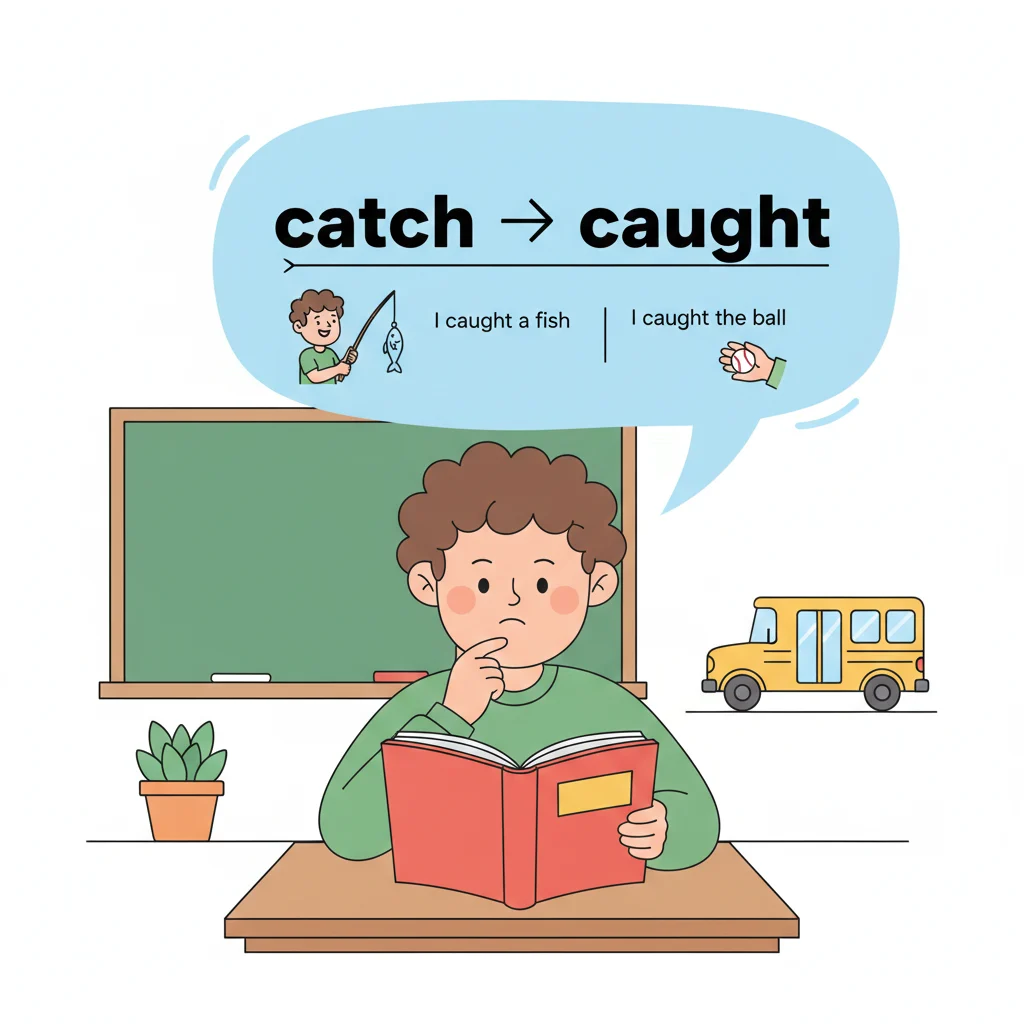
The past tense of catch is caught, used to describe actions that happened in the past. For example, “I caught a fish yesterday” refers to a completed action. Caught is both the simple past and past participle form of the irregular verb catch. It’s used in various tenses, like the simple past, present perfect, and past perfect, depending on the sentence structure. For instance, in the present perfect, you might say, “I have caught a cold.” This versatility makes caught a key verb for expressing past events related to capturing, grabbing, or understanding something.
How to Recognize the Caught Tense?
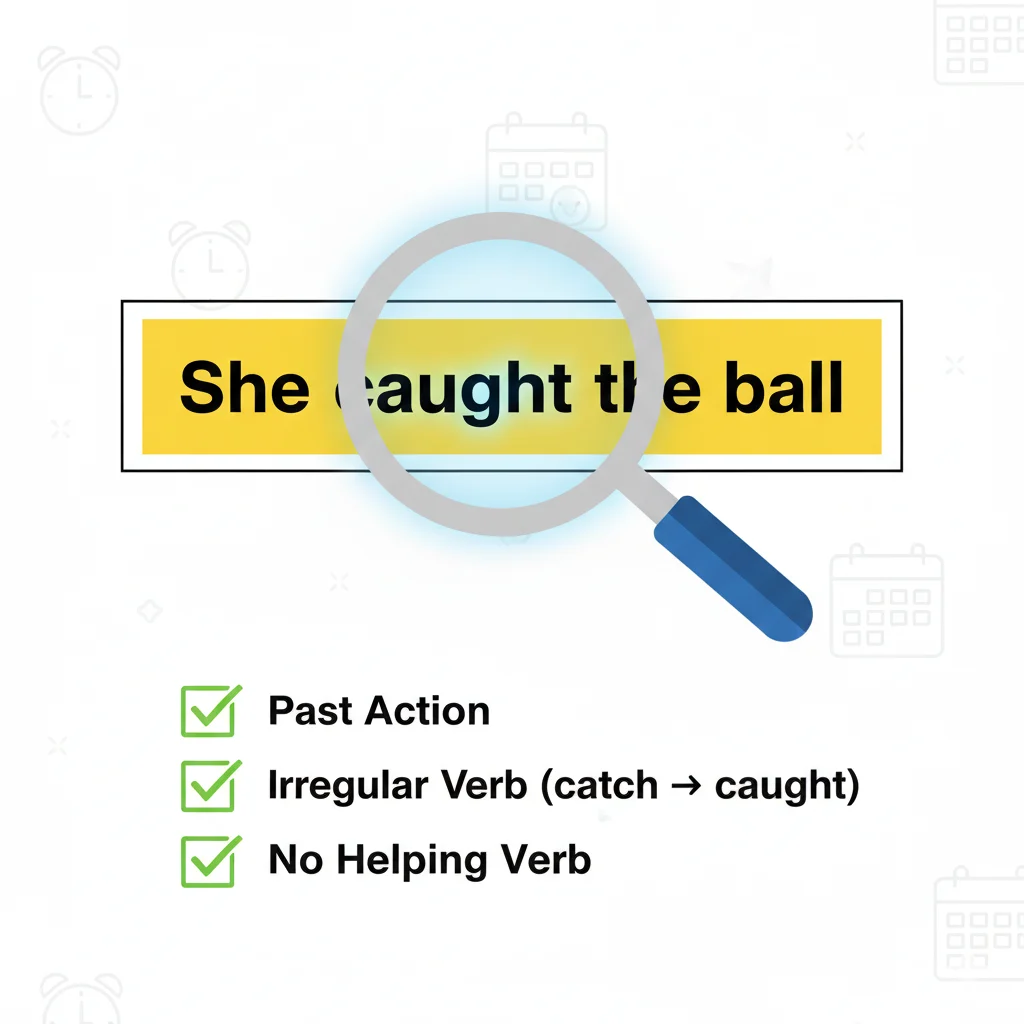
Recognizing caught in a sentence is simple. Look for:
- Completed actions: The action happened in the past (e.g., “She caught the ball”).
- Irregular form: Catch changes to caught, not “catched.”
- Helping verbs: In perfect tenses, caught pairs with have, has, or had (e.g., “They had caught the thief”).
- Context: The sentence often indicates a specific time in the past, like “yesterday” or “last week.”
Structure of a Sentence
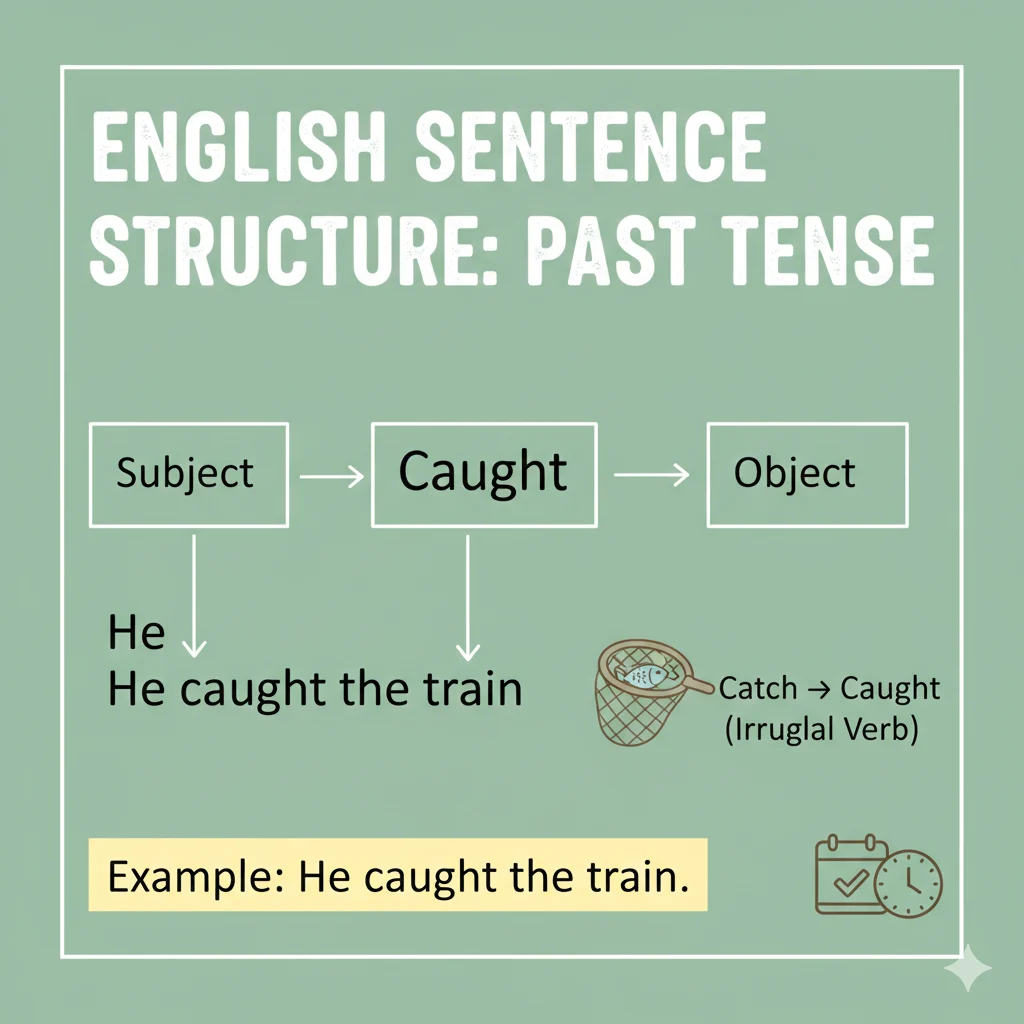
The sentence structure for caught depends on the tense:
- Simple Past: Subject + caught + object (e.g., “He caught the train”).
- Present Perfect: Subject + have/has + caught + object (e.g., “I have caught a fish”).
- Past Perfect: Subject + had + caught + object (e.g., “She had caught the mistake”).
The structure typically follows the pattern of subject + verb + object, with caught as the main verb or participle.
Formation
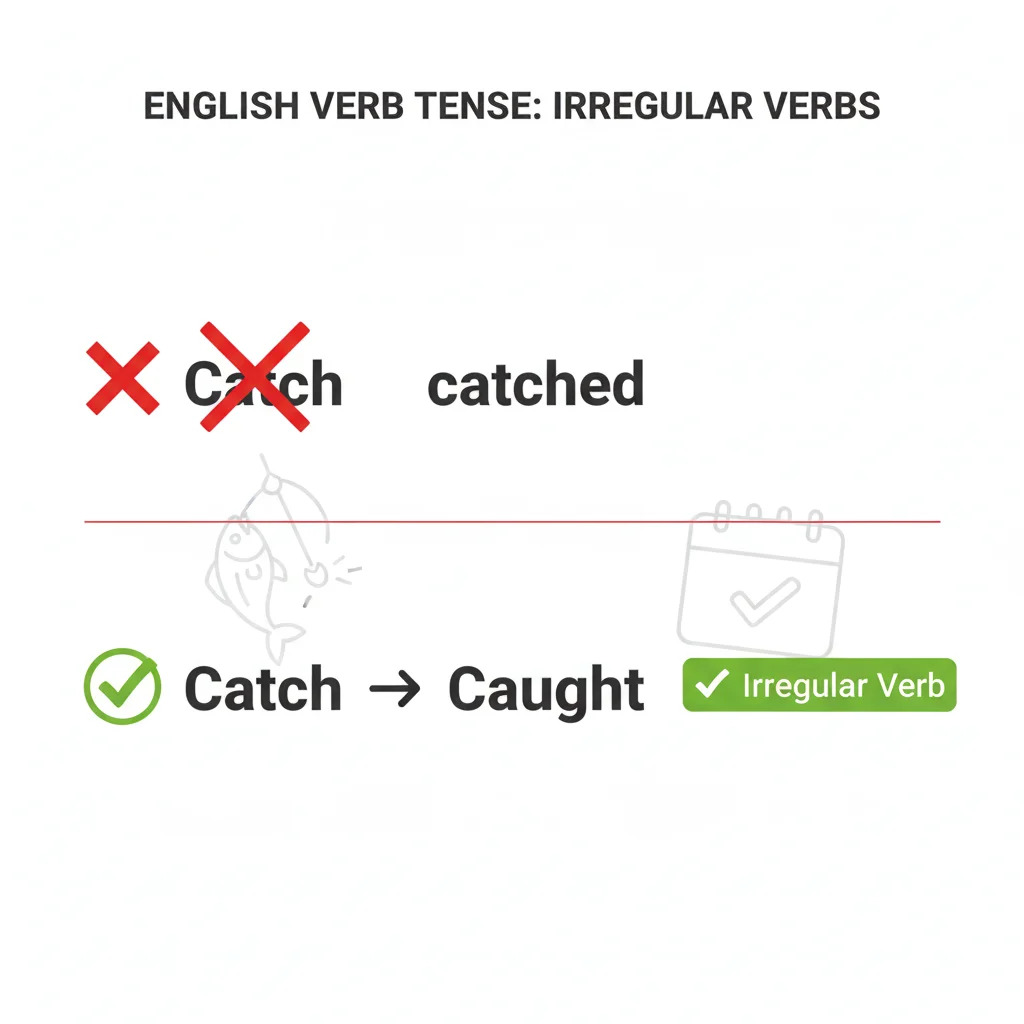
To form caught, you don’t add “-ed” like regular verbs. Instead:
- Simple Past: Use caught directly (e.g., “I caught”).
- Present Perfect: Use have/has + caught (e.g., “She has caught”).
- Past Perfect: Use had + caught (e.g., “They had caught”).
No additional endings are needed, as caught is the fixed form for all subjects.
Verbs
The verb catch is irregular, so its past tense doesn’t follow regular patterns. Related verbs like grab, seize, or capture may have similar meanings but different conjugations. For example, grab becomes grabbed in the past tense, while catch becomes caught.
Helping Verbs
Helping verbs like have, has, and had are crucial for forming perfect tenses with caught:
- Have/Has: Used in present perfect (e.g., “I have caught”).
- Had: Used in past perfect (e.g., “He had caught”).
These auxiliaries indicate the timing and completion of the action.
Explanation of Some Verbs with Reference to Caught
Verbs like grab, snatch, and capture share similar meanings to catch but differ in usage:
- Grab (regular): Past tense is grabbed. It implies a quick action (e.g., “She grabbed the book”).
- Snatch (regular): Past tense is snatched. It suggests a sudden or forceful action (e.g., “He snatched the prize”).
- Capture (regular): Past tense is captured. It’s often used for more formal or significant actions (e.g., “They captured the city”).
Unlike these regular verbs, catch is irregular, so it becomes caught without the “-ed” ending.
Table of Some Regular or Irregular Verbs in Caught Tense
| Verb | Base Form | Past Tense | Irregular/Regular |
| Catch | Catch | Caught | Irregular |
| Grab | Grab | Grabbed | Regular |
| Snatch | Snatch | Snatched | Regular |
| Capture | Capture | Captured | Regular |
| Hold | Hold | Held | Irregular |
| Take | Take | Took | Irregular |
| Seize | Seize | Seized | Regular |
Simple Sentence Examples
- I caught a butterfly in the garden.
- She caught the bus just in time.
- He caught a cold last week.
- We caught the movie at the cinema.
- They caught the thief red-handed.
- You caught my attention with your speech.
- It caught fire suddenly.
- John caught a fish in the lake.
- The kids caught fireflies at night.
- Sarah caught the ball during the game.
Negative Sentence Examples
- I didn’t catch the ball in time.
- She hasn’t caught a fish yet.
- He hadn’t caught the train before it left.
- We didn’t catch the news last night.
- They haven’t caught the suspect.
- You didn’t catch my meaning.
- It hasn’t caught on with the audience.
- John didn’t catch any mistakes in the report.
- The kids hadn’t caught any bugs before.
- Sarah didn’t catch the joke.
Interrogative Sentence Examples
- Did I catch the right bus?
- Has she caught a cold?
- Had he caught the ball before it fell?
- Did we catch the last show?
- Have they caught the criminal?
- Did you catch what I said?
- Has it caught your interest?
- Did John catch the fish himself?
- Have the kids caught any fireflies?
- Did Sarah catch the hint?
Negative and Interrogative Sentence Examples
- Didn’t I catch the ball correctly?
- Hasn’t she caught a fish yet?
- Hadn’t he caught the train on time?
- Didn’t we catch the movie last night?
- Haven’t they caught the thief yet?
- Didn’t you catch my point earlier?
- Hasn’t it caught fire before?
- Didn’t John catch any errors in the text?
- Haven’t the kids caught any bugs?
- Didn’t Sarah catch the joke at first?
How to Conjugate Caught Tense
Conjugating caught is straightforward since it’s the same for all subjects:
- Use caught for simple past (e.g., “I caught”).
- Pair with have/has for present perfect (e.g., “She has caught”).
- Pair with had for past perfect (e.g., “They had caught”).
- No subject changes the form of caught.
- Use did for negative simple past (e.g., “I didn’t catch”).
- Use did for interrogative simple past (e.g., “Did you catch?”).
- Ensure proper auxiliary verbs for perfect tenses.
- Avoid adding “-ed” to catch.
- Use caught consistently as the past participle.
- Practice with different subjects for fluency.
Conjugation Table for All Subjects
| Subject | Simple Past | Present Perfect | Past Perfect |
| I | Caught | Have caught | Had caught |
| You | Caught | Have caught | Had caught |
| He/She/It | Caught | Has caught | Had caught |
| We | Caught | Have caught | Had caught |
| They | Caught | Have caught | Had caught |
Spelling Changes or Irregularities
The verb catch is irregular, so:
- It does not take the “-ed” ending (e.g., not “catched”).
- The form caught is used for both simple past and past participle.
- No spelling changes occur across subjects.
- Common error: Writing “catched” instead of caught.
Sentence Examples with Different Subjects
- I caught a butterfly yesterday.
- You caught the ball perfectly.
- He has caught a cold recently.
- She had caught the train before it left.
- It caught fire unexpectedly.
- We caught the last show on Friday.
- They have caught several fish today.
- John didn’t catch the joke at first.
- The kids caught fireflies last night.
- Sarah caught everyone’s attention.
- I hadn’t caught the mistake earlier.
- You didn’t catch the bus, did you?
- He caught the thief red-handed.
- We have caught up with the news.
- They caught the hint quickly.
Common Mistakes with Caught Tense
- Using catched instead of caught.
- Forgetting helping verbs in perfect tenses (e.g., “I caught” instead of “I have caught”).
- Confusing caught with regular verbs like grabbed.
- Incorrect subject-verb agreement in perfect tenses (e.g., “She have caught” instead of “She has caught”).
- Omitting did in negative simple past sentences.
- Using caught in present tense contexts.
- Misplacing caught in future tense sentences.
- Overusing caught when synonyms like grabbed or captured are better.
- Ignoring context for time-specific phrases.
- Mixing up caught with taught (from teach).
How to Avoid Common Mistakes
- Always use caught, not catched.
- Include have/has/had for perfect tenses.
- Compare catch with regular verbs to understand differences.
- Use has for singular subjects, have for plural.
- Add did for negative simple past sentences.
- Practice caught in past contexts only.
- Check if caught fits the sentence’s meaning.
- Use synonyms like grabbed for variety.
- Include time indicators like “yesterday” for clarity.
- Read sentences aloud to catch errors.
Related Verbs and Synonyms for Caught
- Grab (grabbed): Quick action (e.g., “She grabbed the book” vs. “She caught the ball”).
- Snatch (snatched): Sudden taking (e.g., “He snatched the prize” vs. “He caught the fish”).
- Capture (captured): Formal or significant (e.g., “They captured the city” vs. “They caught the thief”).
- Seize (seized): Forceful action (e.g., “She seized the opportunity” vs. “She caught the hint”).
- Hold (held): Similar but implies retention (e.g., “He held the rope” vs. “He caught the rope”).
Sentence Comparisons
- Caught vs. Grabbed: “She caught the ball” (skillful) vs. “She grabbed the ball” (quick).
- Caught vs. Snatched: “He caught the fish” (careful) vs. “He snatched the fish” (sudden).
- Caught vs. Captured: “They caught the thief” (action) vs. “They captured the city” (strategic).
- Caught vs. Seized: “She caught the hint” (understood) vs. “She seized the moment” (acted).
- Caught vs. Held: “He caught the rope” (initial action) vs. “He held the rope” (kept).
Tips to Practice Using Caught Tense
- Write 5 sentences using caught daily.
- Read books and highlight caught usage.
- Practice with a grammar app.
- Create flashcards for catch conjugations.
- Speak sentences aloud with caught.
- Watch movies and note caught in dialogue.
- Use caught in journal entries.
- Play grammar games online.
- Practice with a language partner.
- Review your writing for caught errors.
Frequently Asked Questions
- What is the past tense of catch? It’s caught.
- Is catched correct? No, it’s always caught.
- How do I use caught in present perfect? Use have/has caught.
- Can caught be used for future tense? No, use catch or will catch.
- What’s the difference between caught and grabbed? Caught implies skill; grabbed is quicker.
- Is caught used with all subjects? Yes, it’s the same for all.
- How do I form a negative sentence with caught? Use didn’t catch.
- What are synonyms for catch? Grab, snatch, capture.
- Can caught be used in passive voice? Yes, e.g., “The thief was caught.”
- How do I practice caught? Write and speak sentences regularly.
Exercises
- Write a sentence using caught in the simple past.
- Convert “I catch the ball” to past tense.
- Make a negative sentence with caught.
- Create an interrogative sentence with caught.
- Use caught in a present perfect sentence.
- Write a past perfect sentence with caught.
- Replace caught with a synonym in a sentence.
- Correct this: “She catched the fish.”
- Combine caught with “yesterday” in a sentence.
- Write a sentence with they and caught.
Quizzes
- What is the past tense of catch? (Answer: Caught)
- Is “I catched the ball” correct? (Answer: No)
- What helping verb goes with she in present perfect? (Answer: Has)
- What’s the past perfect form of catch? (Answer: Had caught)
- Which is correct: “They caught” or “They catched”? (Answer: They caught)
- What’s a synonym for catch? (Answer: Grab)
- How do you make caught negative in simple past? (Answer: Didn’t catch)
- Can caught be used in future tense? (Answer: No)
- What’s the form of catch in past participle? (Answer: Caught)
- Correct this: “He have caught the fish.” (Answer: He has caught)
True or False
- Caught is the past tense of catch. (True)
- Catched is correct in English. (False)
- Caught is used in present perfect with have/has. (True)
- Caught changes based on the subject. (False)
- Didn’t catch is correct for negative simple past. (True)
- Caught can be used in future tense. (False)
- Grabbed is a synonym for caught. (True)
- Caught is a regular verb. (False)
- Had caught is used in past perfect. (True)
- Caught is used in passive voice sentences. (True)
Conclusion
Mastering the past tense of catch, caught, is a key step for students, language learners, and writers aiming to improve their English grammar. By understanding its formation, sentence structures, and common mistakes, you can confidently use caught in various contexts, from simple past to perfect tenses. With the examples, conjugation tables, and practice tips provided, you’re well-equipped to incorporate caught into your writing and conversations. Practice regularly to avoid errors like using catched or misplacing helping verbs. Try writing your own sentences, use a grammar checker, or share your examples with a study group to reinforce your skills. Keep exploring verb tense examples and synonyms to expand your vocabulary. Ready to take your grammar to the next level? Start practicing caught in real sentences today!