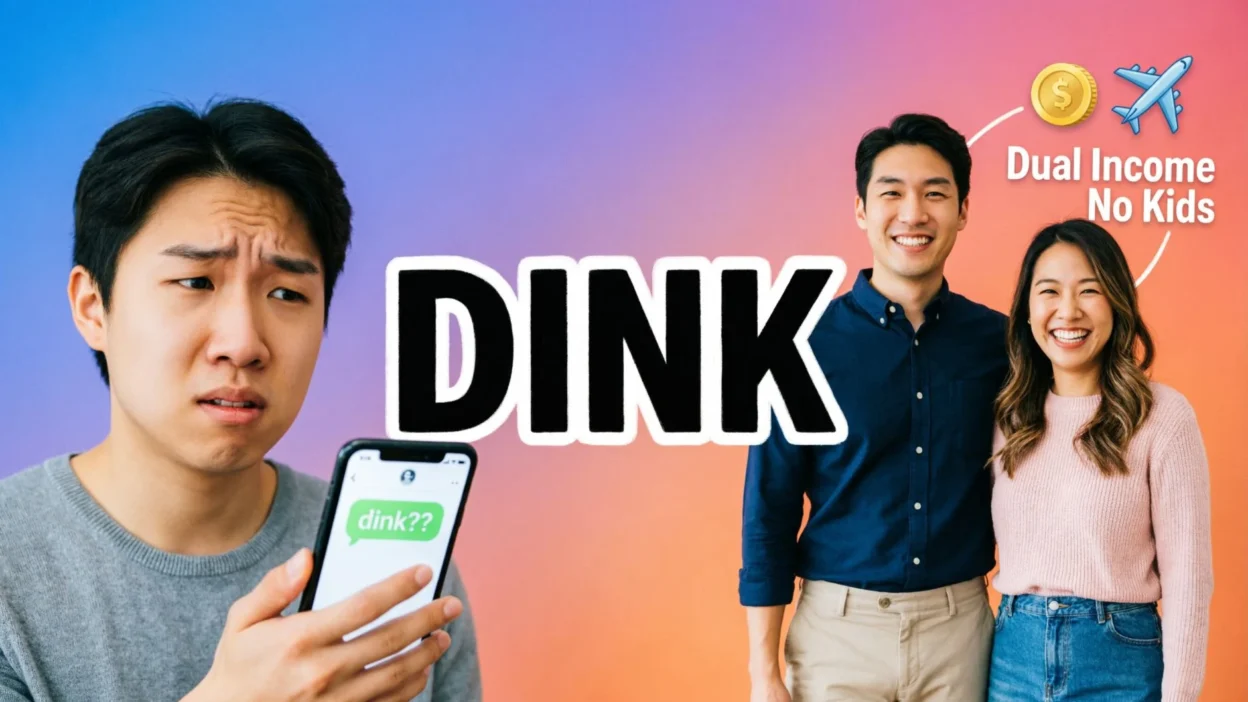
Dink meaning in text usually refers to a slang term that can describe someone as foolish, annoying, or insignificant — though in some contexts, it can also stand for “Dual Income, No Kids.” The exact meaning depends on how it’s used in the conversation.
You might see “dink” in TikTok comments, Snapchat chats, Instagram captions, or casual text messages. It’s not a formal acronym in most cases, but rather internet slang that changes tone based on context.
Many people search for this term after spotting it in a message and wondering whether it’s playful, insulting, or simply descriptive. Since slang evolves quickly in 2026, meanings can shift depending on who’s using it.
Below, you’ll find the clear definition, examples of how it’s used in real conversations, and smart replies you can use confidently.
Dink Meaning in Text Explained
When people search for dink meaning in text, they’re usually confused about what it means in chat, comments, or social media messages.
Here’s what “dink” can mean:
1️⃣ Playful Slang Insult
In casual chat, “dink” slang meaning is often a light, joking way to call someone:
- Silly
- Annoying
- Goofy
- Ignorant (but not seriously)
Example:
“Bro you forgot your keys again? You’re such a dink 😂”
Here it’s playful, not aggressive.
2️⃣ Acronym: DINK (Dual Income, No Kids)
In financial or lifestyle conversations, DINK (capitalized) means:
Dual Income, No Kids
It describes couples who both earn money and don’t have children.
Example:
“They travel all the time. Total DINK lifestyle.”
This usage is very different from slang chat usage.
3️⃣ Random Internet Humor
Sometimes “dink” appears in memes or gaming chats as a random sound-effect word. It doesn’t always carry deep meaning. It can just be playful typing culture.
Is “Dink” an Acronym or Slang?
It depends:
| Version | Type |
|---|---|
| dink (lowercase) | Slang insult |
| DINK (uppercase) | Acronym |
| dink as sound | Meme-based typing |
So when asking what does dink mean in chat, context matters a lot.
Dink Meaning Across Platforms
Different platforms shape tone differently. Let’s break it down.
Dink Meaning on Snapchat
On Snapchat, “dink” is usually playful teasing.
Example:
“You opened my snap and didn’t reply? Dink.”
Tone: Friendly, joking
Rarely serious.
Dink Meaning on TikTok
On TikTok, you’ll mostly see:
- DINK lifestyle content
- Finance couple trends
- Meme comments
Example:
“DINK life looks peaceful tbh.”
Tone: Informational or humorous.
Dink Meaning on Instagram
On Instagram, it appears in:
- Couple bios (“DINK vibes ✈️”)
- Comment sections as light teasing
Tone: Casual and social.
Dink Meaning on WhatsApp
On WhatsApp, meaning depends on the relationship.
Between close friends:
“You lost again? Dink.”
Between coworkers:
Usually not used.
Tone: Personal and informal.
Dink Meaning in SMS Text
In regular text messages:
- Mostly playful insult
- Rarely acronym unless discussing lifestyle
Older generations may not recognize it.
Dink Tone & Context Variations
Tone changes everything.
Let’s look at real mini chat examples 👇
Funny Tone
A: I tripped over nothing.
B: You absolute dink 😂
A: Don’t expose me like that.
Sarcastic Tone
A: I’m basically a genius.
B: Sure you are, dink.
A: Wow. Rude.
Romantic/Playful Tone
A: I stole your fries.
B: You little dink ❤️
A: Worth it.
Angry Tone (Rare)
A: You lied to me.
B: Stop acting like a dink.
A: Excuse me?
In angry tone, it feels more insulting.
Playful Gaming Tone
A: I clutched that round.
B: Total dink move.
A: MVP baby.
10 More Real Chat Examples
- “Move, dink, I’m driving.”
- “Don’t be a dink about it.”
- “He’s kind of a dink sometimes.”
- “You dink, that was my snack.”
- “Only a dink would say that.”
- “I was being a dink earlier, sorry.”
- “Stop dinking around.”
- “Classic dink behavior.”
- “That’s such a dink move.”
- “You’re my favorite dink.”
Notice how tone shifts from playful to mildly insulting.
Dink Grammar & Language Role
Understanding grammar helps avoid misuse.
Part of Speech
“Dink” is usually:
- A noun (You’re a dink.)
- Occasionally a verb variation (Stop dinking around.)
Sentence Role
It often replaces:
- “Idiot”
- “Silly person”
- “Dummy”
But softer and less harsh.
Sentence Position
It appears:
- At the end (“You dink.”)
- In the middle (“Don’t be a dink.”)
- As a nickname (“Hey dink.”)
Formal vs Informal Usage
✅ Informal only
❌ Not professional
❌ Not academic
Using it in formal writing would look immature.
Tone Impact
- With emojis = playful
- Without emojis = can feel rude
- In caps = aggressive
Example:
“YOU DINK” = confrontational
How to Reply When Someone Says “Dink”
This section is important because many users want response ideas.
Funny Replies
- “Proud dink reporting for duty.”
- “Only on weekends.”
- “Certified dink since 2024.”
- “It’s a lifestyle.”
Serious Replies
- “What do you mean by that?”
- “That’s not cool.”
- “Can you explain?”
Flirty Replies
- “Only your dink 😉”
- “You love this dink.”
- “Say it again but sweeter.”
Neutral Replies
- “Okay?”
- “Fair enough.”
- “Noted.”
- “Lol.”
Match the energy of the sender.
Is Dink Rude or Bad?
Is dink rude?
Mildly, yes — but usually playful.
Is it disrespectful?
Depends on tone and relationship.
Is it a bad word?
No. It’s not a swear word.
Can you use it in school?
With friends? Maybe.
With teachers? No.
Can you use it at work?
Not recommended.
Safe rule:
Use only with people who understand your humor.
Who Uses This Term?
Age Group
- Mostly Gen Z
- Some younger Millennials
- Rarely older adults
Regions
- US
- UK
- Online global communities
Platforms
Most common on:
- Snapchat
- TikTok
- Gaming chats
- Discord
Less common on professional platforms like LinkedIn.
Origin & Internet Culture
The word “dink” has existed for decades in English slang as a mild insult.
The acronym DINK (Dual Income, No Kids) became popular in:
- 1980s economic discussions
- Modern TikTok finance trends
Its slang use likely survived because:
- It sounds soft
- It isn’t explicit
- It feels humorous
There’s no confirmed viral TikTok that started it. It’s more of an old slang word that resurfaced.
Comparison Table
| Term | Meaning | Formal/Informal | Tone | Popularity | Confusion Risk |
|---|---|---|---|---|---|
| dink | Silly person / DINK couple | Informal | Playful | Medium | High |
| idk | I don’t know | Informal | Neutral | Very High | Low |
| ion | I don’t | Informal | Casual | High | Medium |
| dunno | Don’t know | Informal | Relaxed | High | Low |
| idc | I don’t care | Informal | Blunt | Very High | Low |
Notice how dink meaning in text is more context-dependent than others.
Real-World Experience Insight
In real conversations, people rarely use “dink” aggressively. It’s usually between close friends who already joke around a lot.
When strangers use it, it can feel awkward.
In couple bios, the DINK acronym is becoming more visible because financial independence and child-free lifestyles are trending topics.
So context decides everything.
Frequently Asked Questions About Dink
What Does Dink Mean in Text Messages and Online Chat?
In text messages, “dink” usually means a silly or mildly annoying person in a playful way.
What Does Dink Mean on Snapchat and TikTok?
On Snapchat, it’s playful teasing.
On TikTok, it’s often about the DINK lifestyle (Dual Income, No Kids).
Is Dink Rude, Disrespectful, or Harmless Slang?
It’s harmless among friends but can sound rude if tone is serious.
How Should You Reply When Someone Says “Dink”?
You can reply playfully, seriously, or flirty depending on the vibe. Matching tone is key.
Is Dink the Same as IDK or Different?
Completely different.
- IDK = I don’t know
- Dink = Slang insult or lifestyle acronym
Can You Use Dink in School or Work?
With friends in school? Maybe.
In professional settings? Avoid it.
Final Summary: When to Use “Dink” (And When Not To)
Let’s keep it simple.
Use “dink” when:
- You’re joking with close friends
- Tone is clearly playful
- Emojis soften it
- Everyone understands slang
Avoid “dink” when:
- Talking to coworkers
- Messaging teachers
- In serious arguments
- With someone sensitive
Common Mistakes
- Using it in all caps
- Using it with strangers
- Confusing it with IDK
- Assuming everyone knows the acronym version
Dink meaning in text depends entirely on context.
It can be playful, sarcastic, financial, or slightly insulting.
Use it wisely.