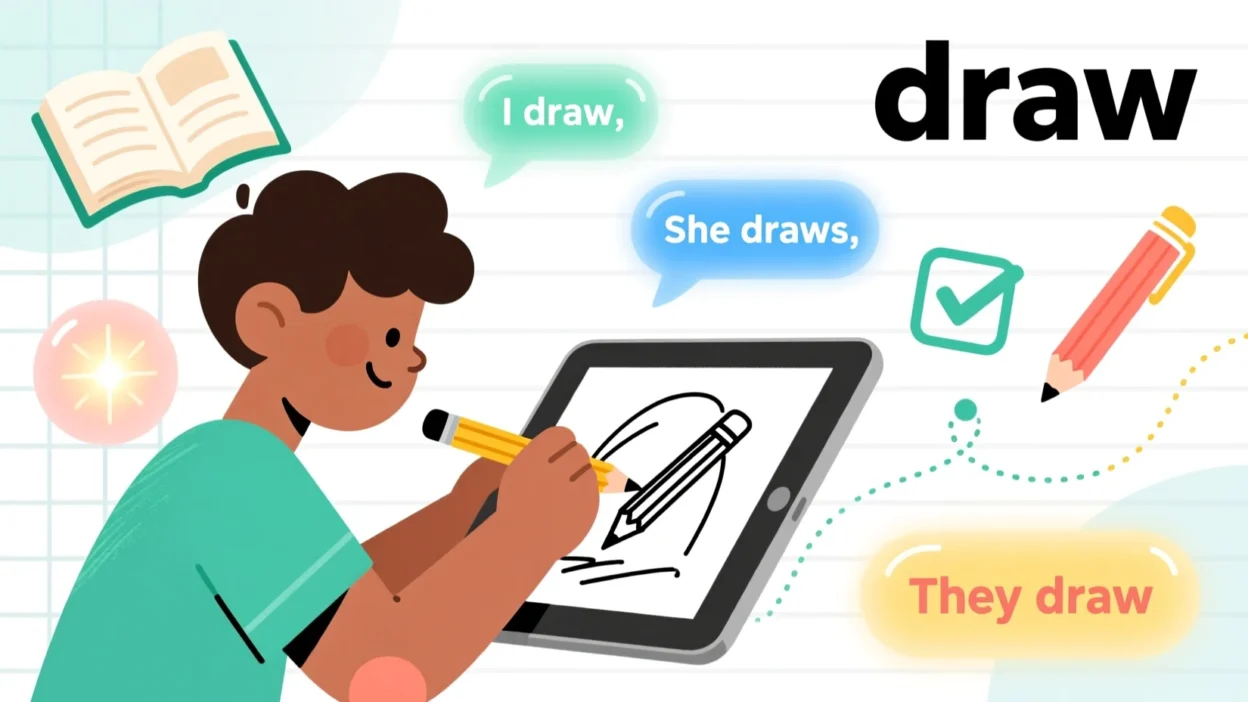
The present tense of draw is essential for describing actions happening now or habits and facts that are always true.
If you’re a student, language learner, writer, or grammar enthusiast, mastering the present tense of draw can enhance your communication skills.
This article explores the definition, structure, and usage of the verb draw in the present tense, with clear examples to make learning easy.
From forming simple sentences to avoiding common mistakes, we’ll guide you through every step.
By the end, you’ll confidently use draw in everyday conversations and writing.
Let’s dive into the world of verb tenses and discover how to use draw effectively!
What Is the Present Tense of “Draw”?
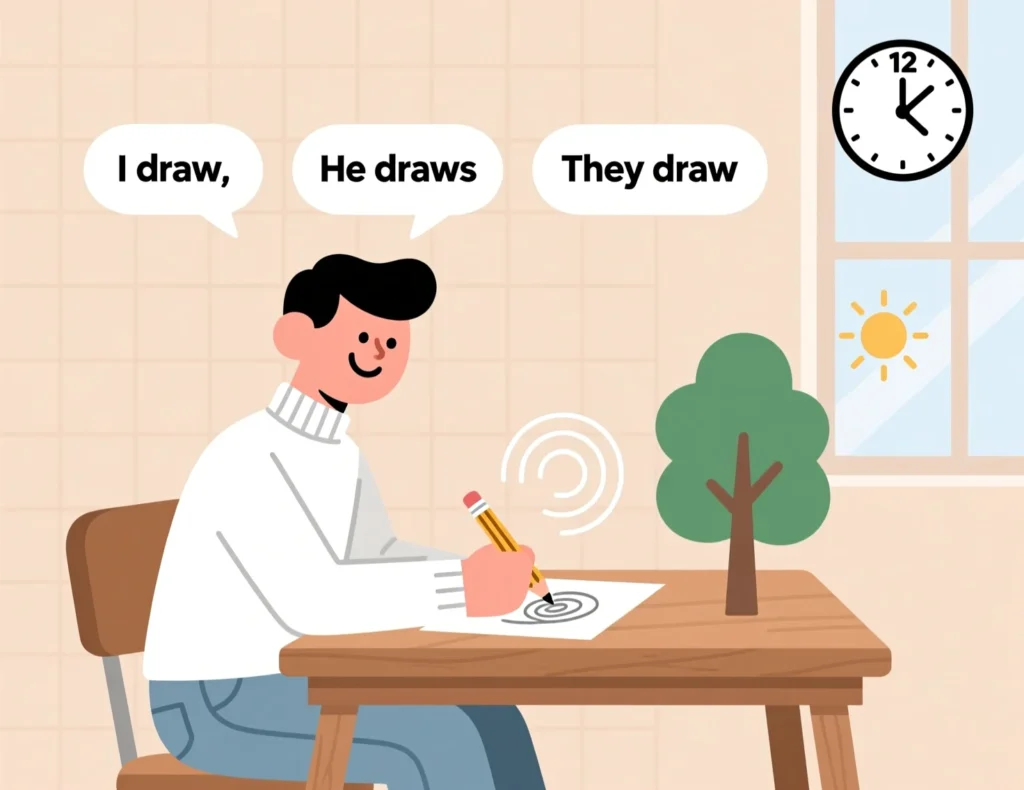
The verb draw in the present tense describes actions occurring now, general truths, or habitual actions. For example, “I draw a picture every day” shows a routine. It’s used to express creativity, such as sketching or illustrating, and can also mean pulling or attracting, like “The event draws a large crowd.” Understanding draw in the present tense helps convey immediacy and consistency in your writing or speech.
How to Recognize the Present Tense of “Draw”?
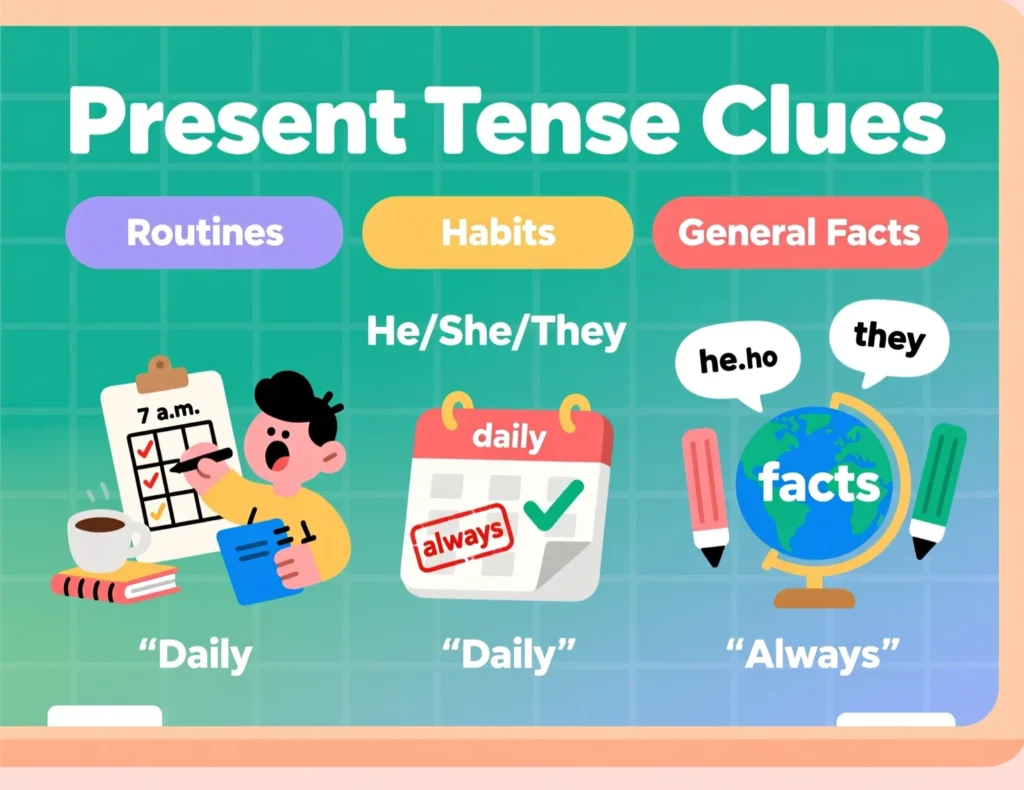
To identify the present tense of draw, look for:
- Actions happening now: “She draws a portrait.”
- Habits or routines: “He draws cartoons daily.”
- General facts: “Artists draw to express ideas.”
- Use with time markers like always, often, or every day.
The verb draw changes slightly based on the subject (e.g., draws for third-person singular).
Structure of Sentence
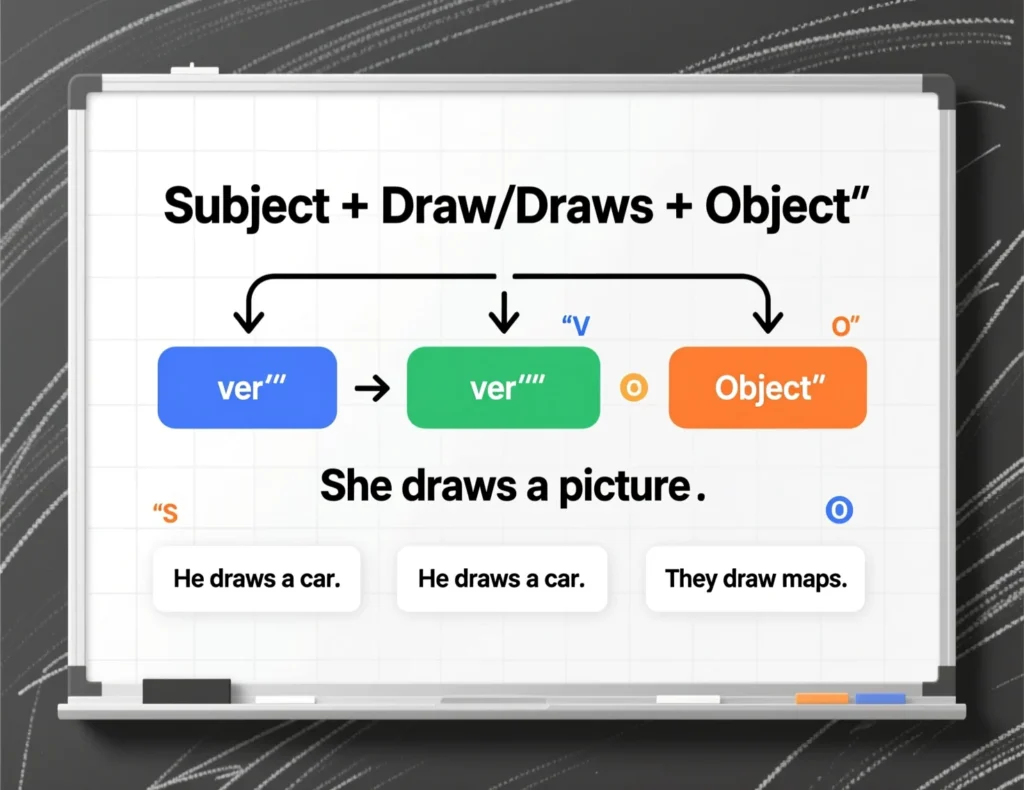
A simple present tense sentence with draw follows this structure:
- Subject + Base Verb (draw/draws): “I draw” or “She draws.”
- Add an object for clarity: “They draw pictures.”
- Adverbs or time expressions (e.g., daily, now) can be included: “We draw beautifully every morning.”
Formation
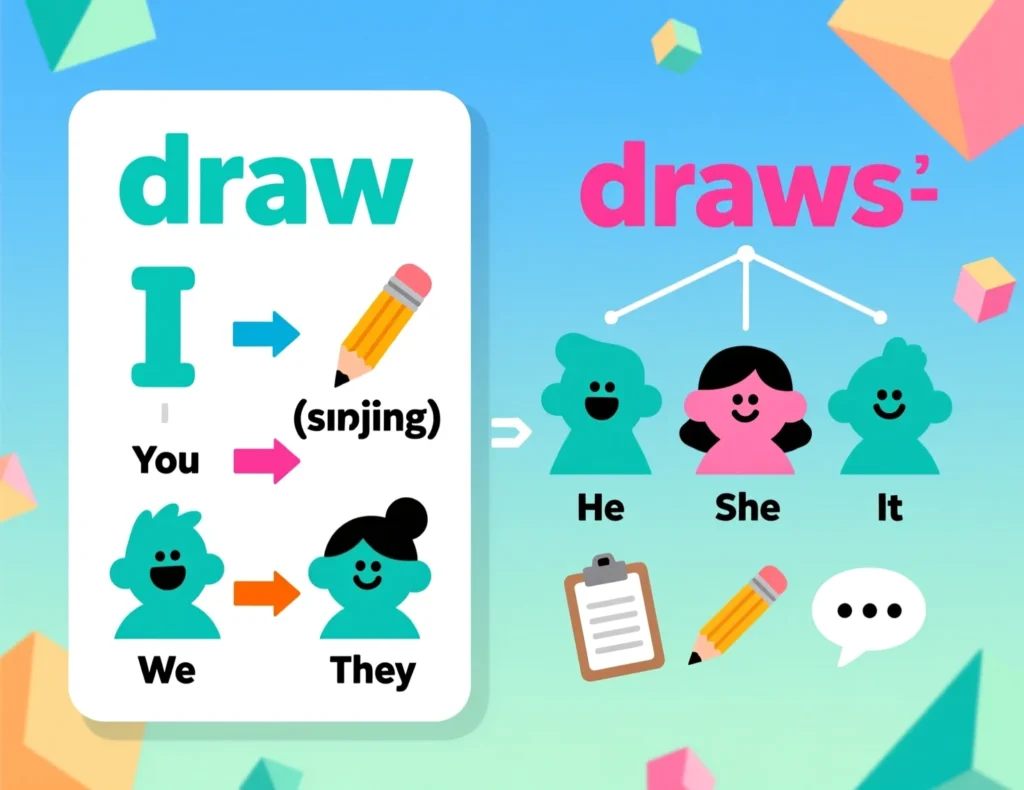
To form the present tense of draw:
- Use draw for I, you, we, they.
- Use draws for he, she, it.
- Example: “I draw a sketch.” / “He draws a sketch.”
Verbs
The verb draw is irregular, with forms like drew (past) and drawn (past participle). In the present tense, it’s straightforward: draw or draws.
Helping Verbs
The present tense of draw typically doesn’t require helping verbs in simple sentences. However, in present continuous or present perfect, use:
- Is/are/am for continuous: “She is drawing a picture.”
- Have/has for perfect: “They have drawn portraits.”
Explanation of Some Verbs with Reference to “Draw Present Tense”
Related verbs like sketch, paint, or illustrate share creative contexts. For example:
- Sketch: Quick, informal drawing. “She sketches ideas daily.”
- Paint: Using colors. “He paints landscapes.”
Unlike draw, these verbs may imply specific tools or outcomes but align with draw in artistic expression.
Table of Some Regular or Irregular Verbs in “Drew” (Past Tense)
| Verb | Present Tense | Past Tense | Past Participle |
| Draw | Draw/Draws | Drew | Drawn |
| Sketch | Sketch/Sketches | Sketched | Sketched |
| Paint | Paint/Paints | Painted | Painted |
| Illustrate | Illustrate/Illustrates | Illustrated | Illustrated |
Simple Sentence Examples
- I draw a flower every morning.
- You draw amazing portraits.
- He draws cartoons for fun.
- She draws animals beautifully.
- It draws attention instantly.
- We draw maps for projects.
- They draw sketches daily.
- John draws realistic faces.
- The kids draw colorful pictures.
- The artist draws live.
Negative Sentence Examples
- I don’t draw very often.
- You don’t draw landscapes.
- He doesn’t draw cartoons.
- She doesn’t draw animals.
- It doesn’t draw crowds.
- We don’t draw maps.
- They don’t draw daily.
- John doesn’t draw faces.
- The kids don’t draw well.
- The artist doesn’t draw live.
Interrogative Sentence Examples
- Do I draw well?
- Do you draw portraits?
- Does he draw cartoons?
- Does she draw animals?
- Does it draw attention?
- Do we draw maps?
- Do they draw sketches?
- Does John draw faces?
- Do the kids draw pictures?
- Does the artist draw live?
Negative and Interrogative Sentence Examples
- Don’t I draw well?
- Don’t you draw portraits?
- Doesn’t he draw cartoons?
- Doesn’t she draw animals?
- Doesn’t it draw attention?
- Don’t we draw maps?
- Don’t they draw sketches?
- Doesn’t John draw faces?
- Don’t the kids draw pictures?
- Doesn’t the artist draw live?
How to Conjugate “Draw Present Tense”
To conjugate draw in the present tense:
- I draw pictures daily.
- You draw creative designs.
- He draws detailed sketches.
- She draws beautiful landscapes.
- It draws large crowds.
- We draw maps for fun.
- They draw cartoons together.
- John draws realistic portraits.
- The kids draw colorful scenes.
- The artist draws live shows.
Conjugation Table (for All Subjects)
| Subject | Conjugation |
| I | Draw |
| You | Draw |
| He/She/It | Draws |
| We | Draw |
| They | Draw |
Spelling Changes or Irregularities
The verb draw has no spelling changes in the present tense, but it’s irregular in other tenses (drew, drawn). Ensure draws is used for third-person singular subjects.
Sentence Examples with Different Subjects
- I draw a tree every day.
- You draw fantastic comics.
- He draws a portrait weekly.
- She draws flowers skillfully.
- It draws curious onlookers.
- We draw plans together.
- They draw murals annually.
- John draws detailed sketches.
- The kids draw colorful art.
- The artist draws live daily.
- My friend draws cartoons.
- The team draws diagrams.
- Sarah draws animals beautifully.
- The event draws crowds.
- I draw simple shapes.
Common Mistakes with “Draw Present Tense”
- Using draws with plural subjects: “They draws” (Incorrect). Use draw.
- Forgetting -s for third-person singular: “She draw” (Incorrect). Use draws.
- Mixing tenses: “She draws yesterday” (Incorrect). Use drew.
- Omitting do/does in questions: “She draws well?” (Incorrect). Use Does she draw?
- Incorrect negative form: “He not draw” (Incorrect). Use doesn’t draw.
- Using drawing in simple present: “I drawing now” (Incorrect). Use draw.
- Confusing draw with drew: “I drew now” (Incorrect). Use draw.
- Overusing helping verbs: “I am draw” (Incorrect). Use am drawing.
- Incorrect subject-verb agreement: “The kids draws” (Incorrect). Use draw.
- Misusing adverbs: “She draw beautiful” (Incorrect). Use draws beautifully.
How to Avoid Common Mistakes
- Always check subject-verb agreement: Use draws for he/she/it, draw for others.
- Use do/does for questions and negatives.
- Avoid mixing draw with past tense drew.
- Practice simple present for habits, not drawing.
- Double-check third-person singular forms.
- Use adverbs correctly (e.g., beautifully).
- Review sentence structure before writing.
- Read sentences aloud to catch errors.
- Practice with quizzes to reinforce rules.
- Use grammar checkers for accuracy.
Related Verbs and Synonyms for “Draw Present Tense”
Synonyms for draw include sketch, illustrate, trace, and doodle. Related verbs:
- Sketch: Quick drawing. “She sketches ideas” vs. “She draws portraits.”
- Illustrate: Detailed visuals. “He illustrates books” vs. “He draws comics.”
- Trace: Copying outlines. “They trace patterns” vs. “They draw freely.”
Confused verbs: Draw (attract) vs. pull. “The event draws crowds” vs. “He pulls a cart.”
Tips to Practice Using “Draw Present Tense”
- Draw and describe your sketch in sentences.
- Write daily about what you draw.
- Create a comic and use draw in captions.
- Practice questions: “Do you draw?”
- Use negatives: “I don’t draw landscapes.”
- Join art forums and describe your work.
- Teach someone how you draw.
- Use flashcards for conjugation practice.
- Write a story using draw repeatedly.
- Check your sentences with a grammar tool.
Frequently Asked Questions
- What is the present tense of draw? It’s draw or draws.
- When is draws used? For he/she/it subjects.
- Can draw mean attract? Yes, e.g., “It draws crowds.”
- Is draw irregular? Yes, in past (drew) and participle (drawn).
- How to form questions? Use do/does: “Does she draw?”
- What’s a common mistake? Using draws with plural subjects.
- How to practice draw? Write sentences daily.
- Are synonyms like sketch the same? Similar, but context varies.
- Can I use drawing in simple present? No, use draw.
- How to avoid errors? Check subject-verb agreement.
Exercises
- Write 5 sentences using draw.
- Convert 3 sentences to negative form.
- Make 3 interrogative sentences with draw.
- Correct: “They draws pictures.”
- Use draw in a short story.
- Conjugate draw for all subjects.
- Write a sentence with draw and an adverb.
- Create a dialogue using draw.
- Describe a drawing using draw.
- Combine draw with another verb.
Quizzes
- What is the correct form: “She __ pictures”? (Draws)
- Is “I draws” correct? (No, use draw)
- What’s the negative of “He draws“? (He doesn’t draw)
- Conjugate for “they”: (Draw)
- True/False: Draws is used for “we.” (False)
- Fix: “You draws well.” (You draw well)
- Question form of “They draw“? (Do they draw?)
- Synonym for draw? (Sketch)
- Is “She drawing” correct? (No, use draws)
- Past tense of draw? (Drew)
True/False
- “She draws” is correct. (True)
- “They draws” is correct. (False)
- Draw is irregular. (True)
- “I draw now” is always correct. (False)
- Draws is for he/she/it. (True)
- “We don’t draw” is correct. (True)
- “He draw” is correct. (False)
- Sketch is a synonym for draw. (True)
- Questions use do/does. (True)
- “I drawing” is simple present. (False)
Conclusion
Mastering the present tense of draw is a valuable skill for clear communication.
Whether you’re sketching art or describing attractions, using draw correctly enhances your writing and speech.
By understanding its conjugation, avoiding common mistakes, and practicing with real-life examples, you can confidently use this verb.
Try writing sentences with draw daily, or use a grammar checker to refine your skills.
Keep exploring verb tenses to boost your language mastery.
Share your sentences in the comments or try our quizzes to test your knowledge!