
The past tense of run is a fundamental concept for anyone learning English grammar.
If you’re a student, language learner, writer, or grammar enthusiast, understanding how to use the past tense of run correctly can enhance your communication skills.
The verb “run” is irregular, meaning it doesn’t follow standard conjugation rules, which can make it tricky.
This article, we’ll break down the definition, usage, and examples of the past tense of run in a beginner-friendly way.
You’ll find clear explanations, practical examples, and tips to master this verb tense.
From sentence structures to common mistakes, we’ve got you covered with everything you need to confidently use ran, the past tense of run, in everyday conversations and writing.
Let’s dive into the world of verb conjugation and explore how to make your sentences shine!
What Is the Past Tense of Run?

The past tense of run is ran. Unlike regular verbs that add “-ed” to form the past tense, “run” is an irregular verb, so its past tense form changes entirely. The verb “run” describes actions like moving quickly on foot, managing something, or operating. In the past tense, ran indicates these actions happened in the past. For example, “She ran to the store yesterday” shows a completed action. Understanding verb tense examples like this helps clarify how ran fits into sentences. It’s used to describe actions that are finished, often with time markers like “yesterday,” “last week,” or “in 2020.”
How to Recognize the Past Tense of Run?

Recognizing the past tense of run is simple once you know the key indicators. Look for:
- The word ran in place of “run.”
- Time expressions like yesterday, last night, or ago that signal a past event.
- Contexts describing completed actions, such as “He ran a marathon.”
By spotting ran with these clues, you can identify the past tense in sentences. For example, “They ran home after school” clearly uses the past tense due to the time marker “after school” and the verb ran.
Structure of a Sentence in Past Tense

A past tense sentence with “run” follows this basic structure:
- Subject + ran + object (optional) + time expression (optional).
For example: - “I ran to the park.”
- “She ran a race last weekend.”
The subject (I, she, they, etc.) is followed by ran, and additional details like objects or time phrases provide context. No helping verbs are needed for simple past tense sentences with ran, making the structure straightforward.
Formation of the Past Tense of Run
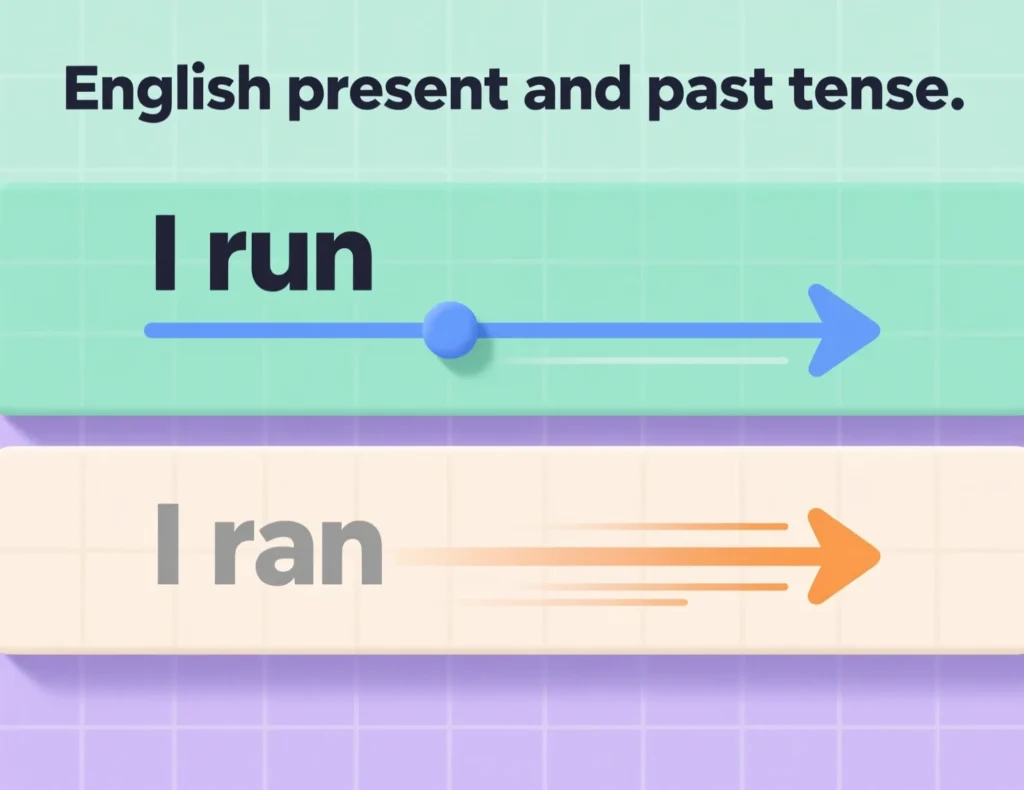
The past tense of run is formed by replacing “run” with ran for all subjects (I, you, he, she, it, we, they). Unlike regular verbs, there’s no suffix like “-ed.” For example:
- Present: I run every day.
- Past: I ran yesterday.
This change applies universally, regardless of the subject, making ran easy to use once you understand its irregularity.
Verbs in the Past Tense
The verb “run” belongs to a group of irregular verbs that don’t follow the standard “-ed” ending. Other examples include:
- Go → Went
- Eat → Ate
- Sing → Sang
These verbs require memorization, as their past tense forms are unique. Understanding ran as the past tense of run helps you grasp similar irregular patterns.
Helping Verbs
In the simple past tense, ran doesn’t require helping verbs like “have” or “had.” However, in other tenses like the past perfect (e.g., “had run”), helping verbs are used. For this article, we focus on the simple past tense, where ran stands alone.
Explanation of Some Verbs with Reference to Past Tense of Run
The verb “run” is versatile, used in physical, metaphorical, or idiomatic contexts. In the past tense, ran reflects:
- Physical movement: “She ran to catch the bus.”
- Managing something: “He ran the meeting last week.”
- Idiomatic use: “They ran into trouble yesterday.”
Like ran, other irregular verbs (e.g., went, saw) change form entirely in the past tense, requiring careful attention to their unique conjugations.
Table of Some Regular and Irregular Verbs in Past Tense
| Present Tense | Past Tense | Regular/Irregular |
| Run | Ran | Irregular |
| Walk | Walked | Regular |
| Go | Went | Irregular |
| Talk | Talked | Regular |
| Sing | Sang | Irregular |
| Dance | Danced | Regular |
| Eat | Ate | Irregular |
| Write | Wrote | Irregular |
| Play | Played | Regular |
| See | Saw | Irregular |
Simple Sentence Examples
- I ran to the store this morning.
- She ran a marathon last month.
- He ran after the dog in the park.
- We ran to catch the train.
- They ran around the field yesterday.
- You ran faster than me last time.
- It ran across the road quickly.
- The kids ran home after school.
- My friend ran a successful campaign.
- The team ran drills all day.
Negative Sentence Examples
- I didn’t run to the store today.
- She didn’t run in the race.
- He didn’t run after the cat.
- We didn’t run in the park yesterday.
- They didn’t run out of energy.
- You didn’t run the meeting last week.
- It didn’t run across the yard.
- The kids didn’t run home after class.
- My friend didn’t run for office.
- The team didn’t run enough laps.
Interrogative Sentence Examples
- Did I run fast enough?
- Did she run in the marathon?
- Did he run after the thief?
- Did we run to the right place?
- Did they run around the track?
- Did you run the entire distance?
- Did it run into the woods?
- Did the kids run home safely?
- Did your friend run the event?
- Did the team run yesterday?
Negative and Interrogative Sentence Examples
- Didn’t I run fast enough yesterday?
- Didn’t she run in the last race?
- Didn’t he run after the bus?
- Didn’t we run to the wrong gate?
- Didn’t they run in the park?
- Didn’t you run the meeting well?
- Didn’t it run across the street?
- Didn’t the kids run home early?
- Didn’t your friend run for mayor?
- Didn’t the team run enough drills?
How to Conjugate the Past Tense of Run
The past tense of run is straightforward because ran is used for all subjects. Here’s how it works:
- Use ran for singular subjects (I, he, she, it).
- Use ran for plural subjects (we, you, they).
- No helping verbs are needed in simple past tense.
- Add time markers for clarity (e.g., “yesterday”).
- Use didn’t + run for negatives.
- Use did + subject + run for questions.
- Ensure the context shows a completed action.
- Avoid using “run” in past tense contexts.
- Practice with different subjects to master usage.
- Memorize ran as the irregular form.
Conjugation Table for Past Tense of Run
| Subject | Simple Past | Negative | Interrogative |
| I | I ran | I didn’t run | Did I run? |
| You | You ran | You didn’t run | Did you run? |
| He/She/It | He ran | He didn’t run | Did he run? |
| We | We ran | We didn’t run | Did we run? |
| They | They ran | They didn’t run | Did they run? |
Spelling Changes or Irregularities
The verb “run” is irregular, so its past tense form, ran, doesn’t follow the regular “-ed” ending. There are no spelling changes within ran itself, but learners must remember:
- Run becomes ran, not “runned.”
- The past participle (used in perfect tenses) is run (e.g., “I have run“).
- No additional letters or variations apply to ran.
Sentence Examples with Different Subjects
- I ran to the gym yesterday.
- You ran a great race last week.
- He ran into an old friend.
- She ran the store smoothly.
- It ran across the field quickly.
- We ran out of time yesterday.
- They ran around the park.
- The dog ran after the ball.
- My friends ran a charity event.
- The kids ran home excitedly.
- John ran a marathon in 2020.
- The team ran drills all morning.
- You all ran faster than expected.
- The cat ran from danger.
- I ran into trouble last night.
Common Mistakes with Past Tense of Run
- Using runned instead of ran.
- Forgetting didn’t + run in negatives.
- Mixing up ran with run in past contexts.
- Omitting did in questions.
- Using ran in present tense sentences.
- Confusing ran with the past participle run.
- Incorrectly adding “-ed” to run.
- Misplacing time markers (e.g., “I ran tomorrow”).
- Overusing had when simple past is needed.
- Not matching subject and verb correctly.
How to Avoid These Mistakes
- Memorize ran as the past tense of run.
- Practice negative forms: didn’t run.
- Use did + run for questions.
- Check for time markers to confirm past tense.
- Review run vs. ran in sentences.
- Practice with irregular verb lists.
- Avoid adding “-ed” to irregular verbs.
- Read sentences aloud to catch errors.
- Use grammar checkers for feedback.
- Write practice sentences daily.
Related Verbs and Synonyms for Past Tense of Run
Synonyms for “run” in the past tense include rushed, hurried, dashed, or sprinted. Related verbs often confused with ran include:
- Go (went): “She went home” vs. “She ran home.”
- Walk (walked): “He walked slowly” vs. “He ran quickly.”
Sentence Comparisons
- Ran vs. Went: “I ran to the store” (speed) vs. “I went to the store” (general movement).
- Ran vs. Walked: “She ran to school” (fast) vs. “She walked to school” (slow).
Tips to Practice Using the Past Tense of Run
- Write 5 sentences daily using ran.
- Read books and highlight ran in context.
- Practice negative sentences with didn’t run.
- Create interrogative sentences with did.
- Use flashcards to memorize run → ran.
- Speak sentences aloud to build confidence.
- Join language forums to discuss verb conjugation.
- Try writing a short story using ran.
- Use apps like Duolingo for grammar practice.
- Check your sentences with a grammar tool.
Frequently Asked Questions
- What is the past tense of run? It’s ran.
- Is run a regular or irregular verb? Irregular.
- How do you form a negative sentence? Use didn’t run.
- How do you ask a question in past tense? Use did + subject + run.
- Can ran be used with all subjects? Yes.
- What’s the past participle of run? It’s run.
- Why isn’t it runned? Because run is irregular.
- How do I avoid mixing run and ran? Check the time context.
- Are there synonyms for ran? Yes, like rushed or sprinted.
- How can I practice ran? Write and speak sentences daily.
Exercises
- Write 3 sentences using ran with different subjects.
- Convert 5 present tense “run” sentences to past tense.
- Create 3 negative sentences with didn’t run.
- Form 3 interrogative sentences with did.
- Rewrite a paragraph using ran instead of “run.”
- Identify ran in a short story.
- Make a list of 5 synonyms for ran.
- Write a dialogue using ran in past tense.
- Correct 5 incorrect sentences using runned.
- Practice saying 5 sentences with ran aloud.
Quizzes
- What is the past tense of run? (A) Run (B) Runned (C) Ran (D) Running
- Is ran used for all subjects? (A) Yes (B) No
- How do you form a negative? (A) Don’t run (B) Didn’t run (C) Doesn’t run
- What’s the interrogative form? (A) Did + subject + run (B) Do + subject + run
- Is run regular or irregular? (A) Regular (B) Irregular
- What’s a synonym for ran? (A) Walked (B) Rushed (C) Sat
- What’s the past participle? (A) Ran (B) Run (C) Running
- Can you say “I runned”? (A) Yes (B) No
- Does ran need a helping verb? (A) Yes (B) No
- What’s a common mistake? (A) Using ran correctly (B) Saying runned
True or False
- The past tense of run is ran. (True)
- Run is a regular verb. (False)
- Ran requires a helping verb in simple past. (False)
- Didn’t run is the negative form. (True)
- Runned is correct. (False)
- Ran is used for all subjects. (True)
- The past participle is ran. (False)
- Time markers help identify ran. (True)
- Ran can mean managing something. (True)
- Run and ran are interchangeable. (False)
Conclusion
Mastering the past tense of run is a key step in improving your English grammar.
By understanding how to use ran in simple, negative, and interrogative sentences, you can express past actions clearly and confidently.
This article has provided a comprehensive guide to the definition, conjugation, and usage of ran, along with practical examples and tips to avoid common mistakes.
If you’re a student, writer, or language learner, practicing with verb tense examples like these will boost your skills.
Try writing your own sentences using ran, or use a grammar checker to refine your work.
Keep practicing, and soon using the past tense of run will feel natural! Share your sentences in the comments or test your knowledge with our quizzes and exercises.