The ir future tense in Spanish is a powerful tool for expressing plans, intentions, or predictions about the future.
If you’re a student, language learner, writer, or grammar enthusiast, mastering the ir future tense (often referred to as the “periphrastic future”) is essential for clear communication.
This tense, formed with the verb ir (to go) plus an infinitive, is beginner-friendly and widely used in everyday conversations.
For example, saying “Voy a aprender español” means “I am going to learn Spanish.” In this article, we’ll break down the ir future tense, its structure, conjugation, and usage with real-life verb tense examples. You’ll find simple explanations, tables, and practical tips to help you use this tense confidently.
Let’s dive into how to use the ir future tense correctly and make your Spanish sound natural!
What Is the “Ir Future Tense”?
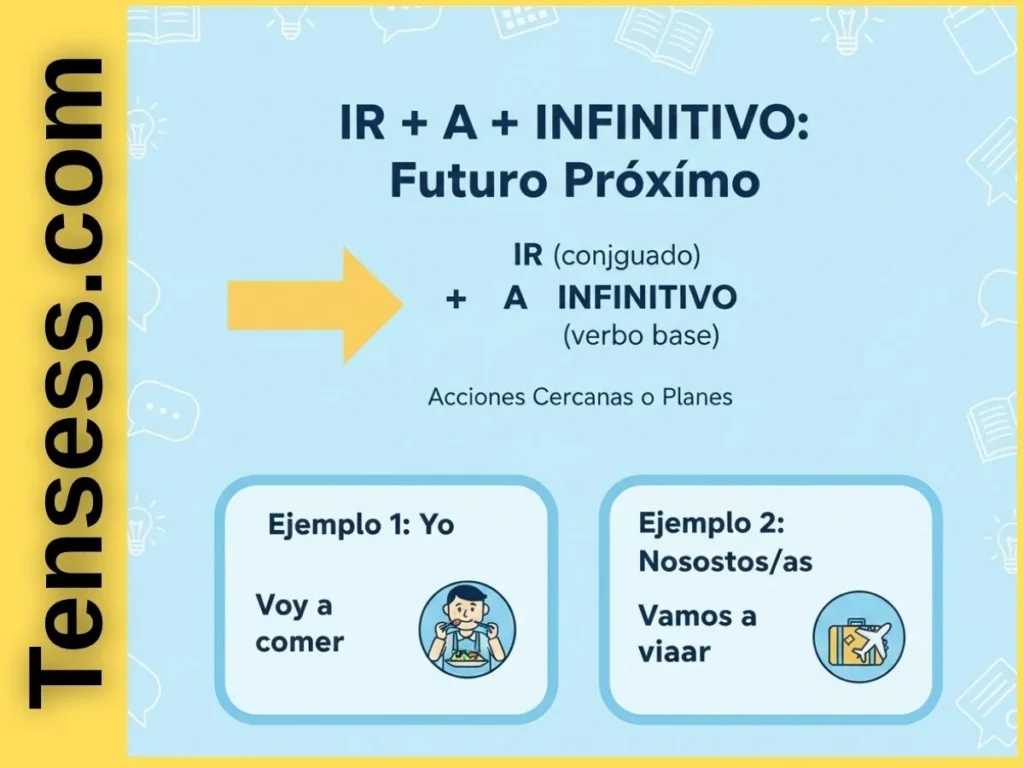
The ir future tense is a way to talk about future actions or events in Spanish. Unlike the simple future tense (e.g., “aprenderé” for “I will learn”), the ir future tense uses the verb ir conjugated in the present tense, followed by the preposition a, and then an infinitive verb. It’s often translated as “going to” in English, making it intuitive for English speakers. For example:
- Voy a comer (I am going to eat).
- Vamos a viajar (We are going to travel).
This tense is commonly used for plans, intentions, or predictions based on current evidence, like saying, “It’s going to rain” when you see dark clouds.
How to Recognize the “Ir Future Tense”?
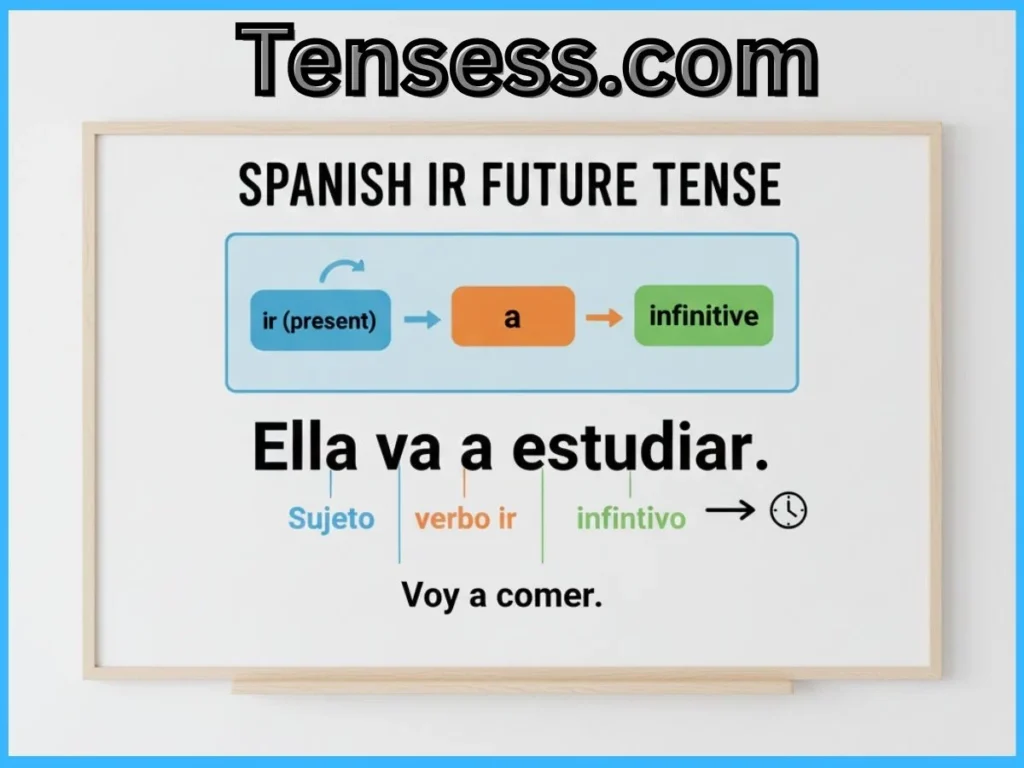
Recognizing the ir future tense is straightforward. Look for these clues:
- The verb ir (to go) conjugated in the present tense.
- The preposition a following ir.
- An infinitive verb (ending in -ar, -er, or -ir) after a.
For example, in “Ella va a estudiar” (She is going to study), va is the conjugated form of ir, a is the preposition, and estudiar is the infinitive.
Structure of Sentence
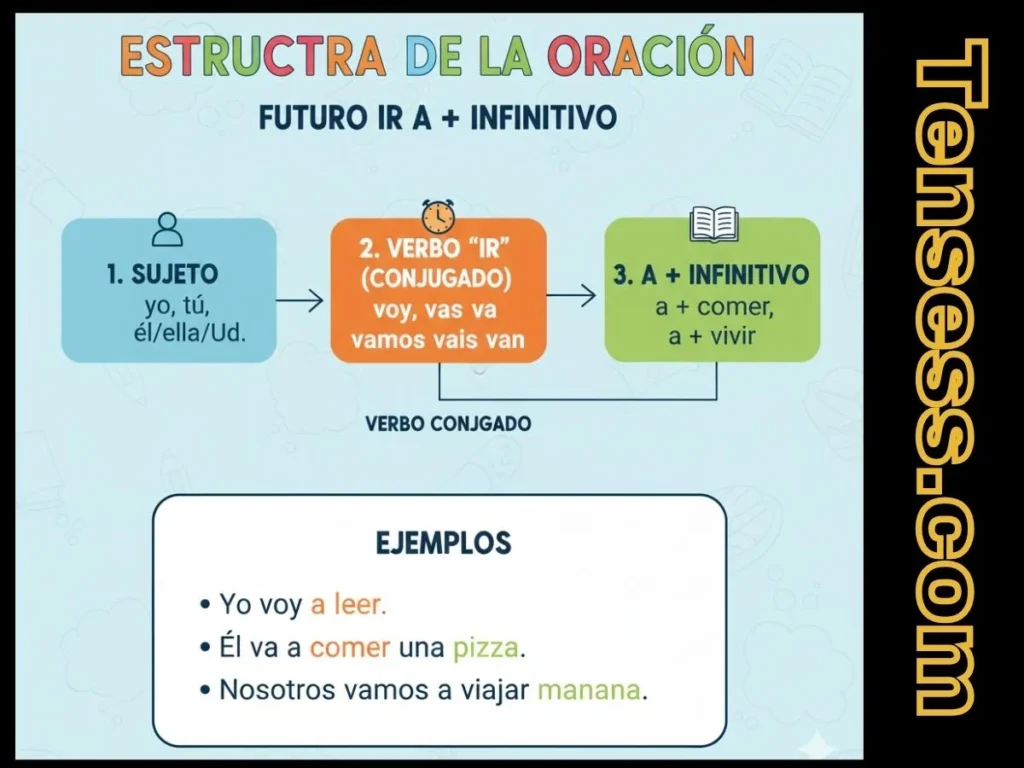
The ir future tense follows this structure:
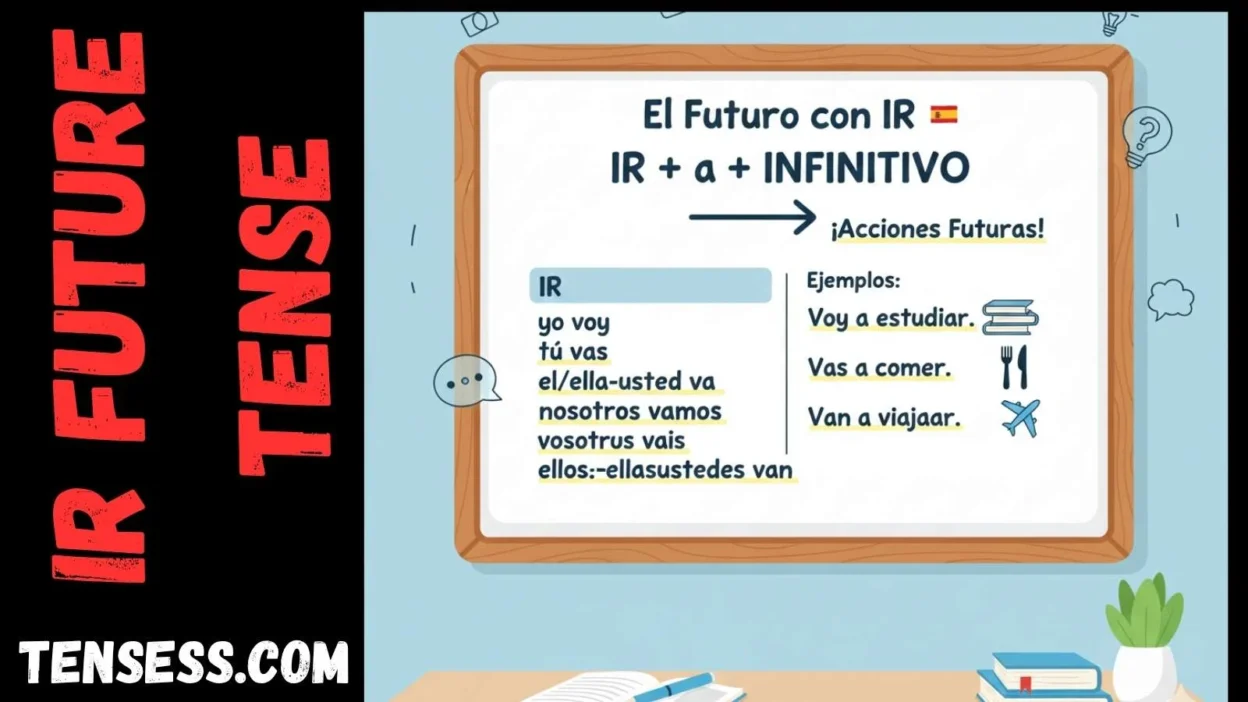
Subject + ir (present tense) + a + infinitive verb
Examples:
- Yo voy a leer (I am going to read).
- Ellos van a correr (They are going to run).
This structure is consistent across all subjects, making it easy to form sentences.
Formation
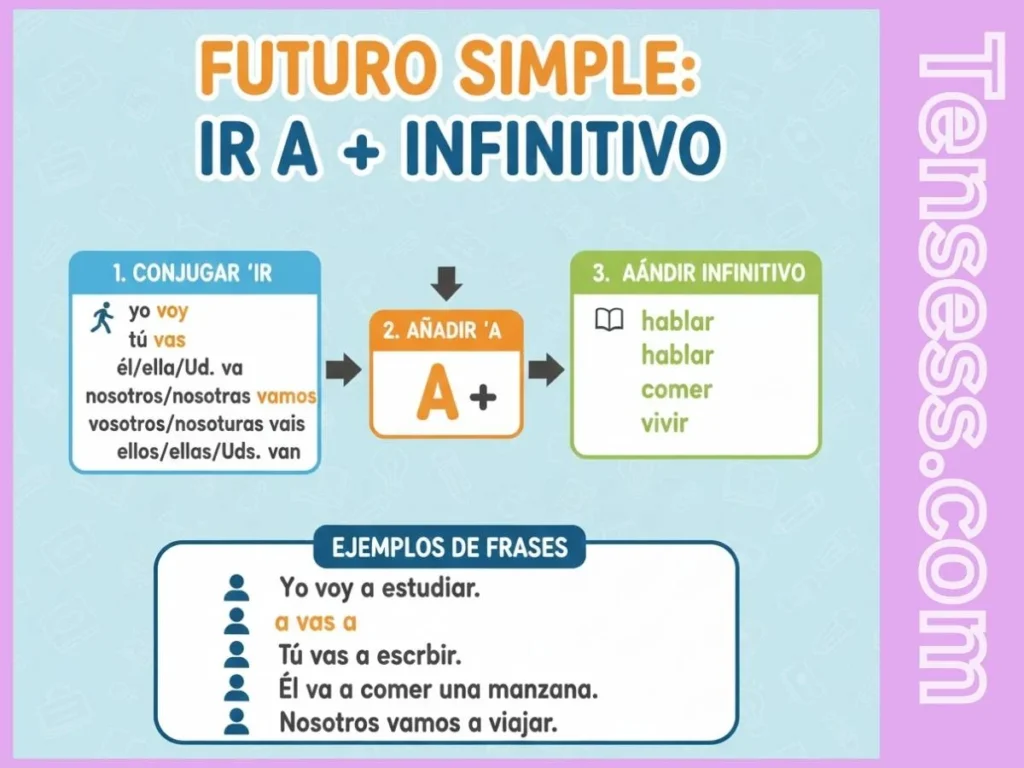
To form the ir future tense, follow these steps:
- Conjugate ir in the present tense based on the subject.
- Add the preposition a.
- Add the infinitive verb (unchanged).
For example:
- Tú vas a escribir (You are going to write).
- Nosotros vamos a bailar (We are going to dance).
Verbs
The ir future tense works with any infinitive verb in Spanish, including:
- -ar verbs: hablar (to speak), caminar (to walk).
- -er verbs: comer (to eat), aprender (to learn).
- -ir verbs: vivir (to live), escribir (to write).
The infinitive remains unchanged, so no additional conjugation is needed.
Helping Verbs
The ir future tense relies on the verb ir as the helping verb. It’s conjugated in the present tense as follows:
- Yo voy (I go)
- Tú vas (You go)
- Él/Ella/Usted va (He/She/You formal go)
- Nosotros vamos (We go)
- Vosotros vais (You all go)
- Ellos/Ellas/Ustedes van (They/You all go)
The helping verb ir carries the subject agreement, while the infinitive verb describes the action.
Explanation of Some Verbs with Reference to “Ir Future Tense”
Here’s how common verbs work in the ir future tense:
- Hablar (to speak): “Voy a hablar con mi amigo” (I am going to speak with my friend).
- Comer (to eat): “Vamos a comer pizza” (We are going to eat pizza).
- Vivir (to live): “Ella va a vivir en México” (She is going to live in Mexico).
Each verb retains its infinitive form, making this tense versatile and easy to use.
Table of Some Regular or Irregular Verbs in “Ir Future Tense”
| Verb | Infinitive | Example in Ir Future Tense |
| Hablar | to speak | Voy a hablar (I am going to speak) |
| Comer | to eat | Va a comer (He is going to eat) |
| Vivir | to live | Vamos a vivir (We are going to live) |
| Ir | to go | Van a ir (They are going to go) |
| Ser | to be | Vas a ser (You are going to be) |
| Estar | to be | Voy a estar (I am going to be) |
| Hacer | to do/make | Va a hacer (She is going to do) |
| Tener | to have | Vamos a tener (We are going to have) |
| Decir | to say | Van a decir (They are going to say) |
| Salir | to leave | Voy a salir (I am going to leave) |
Simple Sentence Examples
- Yo voy a estudiar español esta noche. (I am going to study Spanish tonight.)
- Tú vas a viajar a España. (You are going to travel to Spain.)
- Él va a trabajar mañana. (He is going to work tomorrow.)
- Ella va a cantar en el concierto. (She is going to sing at the concert.)
- Nosotros vamos a leer un libro. (We are going to read a book.)
- Vosotros vais a jugar fútbol. (You all are going to play soccer.)
- Ellos van a correr en el parque. (They are going to run in the park.)
- Usted va a aprender rápido. (You formal are going to learn quickly.)
- Mi perro va a dormir todo el día. (My dog is going to sleep all day.)
- Las niñas van a bailar en la fiesta. (The girls are going to dance at the party.)
Negative Sentence Examples
- Yo no voy a estudiar hoy. (I am not going to study today.)
- Tú no vas a viajar este año. (You are not going to travel this year.)
- Él no va a trabajar el domingo. (He is not going to work on Sunday.)
- Ella no va a cantar en público. (She is not going to sing in public.)
- Nosotros no vamos a leer ese libro. (We are not going to read that book.)
- Vosotros no vais a jugar ahora. (You all are not going to play now.)
- Ellos no van a correr por la mañana. (They are not going to run in the morning.)
- Usted no va a aprender eso hoy. (You formal are not going to learn that today.)
- Mi gato no va a dormir aquí. (My cat is not going to sleep here.)
- Los niños no van a bailar en la escuela. (The kids are not going to dance at school.)
Interrogative Sentence Examples
- ¿Vas a estudiar esta noche? (Are you going to study tonight?)
- ¿Va a viajar ella a Francia? (Is she going to travel to France?)
- ¿Van a trabajar ellos mañana? (Are they going to work tomorrow?)
- ¿Voy a cantar en la fiesta? (Am I going to sing at the party?)
- ¿Vamos a leer este libro? (Are we going to read this book?)
- ¿Vais a jugar al tenis? (Are you all going to play tennis?)
- ¿Va a correr él en la carrera? (Is he going to run in the race?)
- ¿Va a aprender usted rápido? (Are you formal going to learn quickly?)
- ¿Va a dormir el perro aquí? (Is the dog going to sleep here?)
- ¿Van a bailar las niñas hoy? (Are the girls going to dance today?)
Negative and Interrogative Sentence Examples
- ¿No vas a estudiar para el examen? (Aren’t you going to study for the exam?)
- ¿No va a viajar ella este verano? (Isn’t she going to travel this summer?)
- ¿No van a trabajar ellos hoy? (Aren’t they going to work today?)
- ¿No voy a cantar en el coro? (Am I not going to sing in the choir?)
- ¿No vamos a leer ese libro? (Aren’t we going to read that book?)
- ¿No vais a jugar con nosotros? (Aren’t you all going to play with us?)
- ¿No va a correr él mañana? (Isn’t he going to run tomorrow?)
- ¿No va a aprender usted esto? (Aren’t you formal going to learn this?)
- ¿No va a dormir el gato aquí? (Isn’t the cat going to sleep here?)
- ¿No van a bailar los niños? (Aren’t the kids going to dance?)
How to Conjugate “Ir Future Tense” Tense
Conjugating the ir future tense is simple because only the verb ir is conjugated. Follow these steps:
- Choose the subject (e.g., yo, tú, él).
- Conjugate ir in the present tense.
- Add a and the infinitive verb.
Examples:
- Yo voy a hablar. (I am going to speak.)
- Tú vas a comer. (You are going to eat.)
- Él va a vivir. (He is going to live.)
- Ella va a estudiar. (She is going to study.)
- Nosotros vamos a viajar. (We are going to travel.)
- Vosotros vais a bailar. (You all are going to dance.)
- Ellos van a trabajar. (They are going to work.)
- Usted va a aprender. (You formal are going to learn.)
- Mi amigo va a escribir. (My friend is going to write.)
- Las chicas van a cantar. (The girls are going to sing.)
Conjugation Table (for All Subjects)
| Subject | Conjugation of Ir | Example with Infinitive (Hablar) |
| Yo | voy | Voy a hablar |
| Tú | vas | Vas a hablar |
| Él/Ella/Usted | va | Va a hablar |
| Nosotros | vamos | Vamos a hablar |
| Vosotros | vais | Vais a hablar |
| Ellos/Ellas/Uds | van | Van a hablar |
Spelling Changes or Irregularities
The ir future tense is highly regular because the infinitive verb remains unchanged. The only conjugation happens with ir, which is irregular in the present tense (e.g., voy instead of vo). However, there are no spelling changes or irregularities in the infinitive verb itself, making this tense easy to master.
Sentence Examples with Different Subjects
- Yo voy a estudiar matemáticas. (I am going to study math.)
- Tú vas a viajar a Italia. (You are going to travel to Italy.)
- Él va a trabajar en la oficina. (He is going to work in the office.)
- Ella va a cantar una canción. (She is going to sing a song.)
- Nosotros vamos a comer tacos. (We are going to eat tacos.)
- Vosotros vais a bailar salsa. (You all are going to dance salsa.)
- Ellos van a jugar al fútbol. (They are going to play soccer.)
- Usted va a leer un libro. (You formal are going to read a book.)
- Mi hermano va a escribir un correo. (My brother is going to write an email.)
- Las estudiantes van a aprender español. (The students are going to learn Spanish.)
- El perro va a dormir en el sofá. (The dog is going to sleep on the sofa.)
- La profesora va a enseñar mañana. (The teacher is going to teach tomorrow.)
- Mis amigos van a salir esta noche. (My friends are going to go out tonight.)
- Mi madre va a cocinar paella. (My mother is going to cook paella.)
- Los niños van a correr en el parque. (The kids are going to run in the park.)
Common Mistakes with “Ir Future Tense”
- Forgetting a: Saying “Voy estudiar” instead of Voy a estudiar.
- Using the wrong form of ir: Using “vo” instead of voy.
- Conjugating the infinitive: Saying “Voy a estudia” instead of Voy a estudiar.
- Omitting the subject: Leaving out “yo” or “tú” when context requires it.
- Using ir in the wrong tense: Using future tense “iré” instead of voy.
- Mixing with simple future: Using “estudiaré” instead of voy a estudiar.
- Incorrect word order: Saying “A voy estudiar” instead of Voy a estudiar.
- Using en instead of a: Saying “Voy en estudiar” is incorrect.
- Overusing the tense: Using ir future tense for distant predictions where simple future fits better.
- Mispronouncing ir: Pronouncing voy as “vay” instead of “voi.”
How to Avoid Common Mistakes
- Always include a after ir.
- Memorize ir conjugations: voy, vas, va, vamos, vais, van.
- Keep the infinitive unchanged (e.g., estudiar, not estudia).
- Clarify the subject if needed for context.
- Use present tense ir, not future tense iré.
- Practice ir future tense for plans/intentions, not distant hypotheticals.
- Follow the structure: ir + a + infinitive.
- Use a, not other prepositions like en.
- Practice speaking to master pronunciation of voy and va.
- Compare with simple future tense to understand context.
Related Verbs and Synonyms for “Ir Future Tense”
The ir future tense is unique but can be confused with:
- Simple future tense: Uses endings like -é, -ás (e.g., hablaré).
- Present tense for future: Using present tense for scheduled events (e.g., “Mañana estudio” for “Tomorrow I study”).
- Querer (to want): “Quiero estudiar” (I want to study) vs. Voy a estudiar (I am going to study).
Sentence Comparisons:
- Ir future tense: “Voy a viajar mañana.” (I am going to travel tomorrow.)
- Simple future: “Viajaré mañana.” (I will travel tomorrow.)
- Present tense: “Viajo mañana.” (I travel tomorrow, for fixed plans.)
- Querer: “Quiero viajar mañana.” (I want to travel tomorrow.)
Tips to Practice Using “Ir Future Tense”
- Write 5 daily plans using voy a (e.g., “Voy a leer un libro”).
- Practice with a partner, asking, “¿Vas a estudiar hoy?”
- Create flashcards for ir conjugations.
- Translate English “going to” sentences into Spanish.
- Listen to native speakers using ir future tense in podcasts.
- Write a short story about your weekend plans.
- Use apps like Duolingo for ir future tense exercises.
- Record yourself saying sentences and check pronunciation.
- Make a chart of 10 verbs in ir future tense.
- Practice negative and interrogative forms daily.
Frequently Asked Questions
- What is the ir future tense? It’s a tense using ir + a + infinitive to express future plans.
- How is it different from simple future? It uses ir instead of future endings like -é.
- Can I use any verb? Yes, any infinitive verb works.
- Is ir conjugated? Yes, in the present tense (e.g., voy, vas).
- When should I use it? For plans, intentions, or predictions based on evidence.
- Can it be negative? Yes, add “no” before ir (e.g., “No voy a comer”).
- Is it formal or informal? It’s neutral, used in both contexts.
- Does the infinitive change? No, it stays in its base form.
- Can I use it for questions? Yes, like “¿Vas a estudiar?”
- Is it common in spoken Spanish? Very common, especially for plans.
Exercises
- Conjugate ir for “tú” and add comer. (Answer: Vas a comer)
- Write a sentence with “nosotros” and viajar.
- Make “Ella va a bailar” negative.
- Turn “Voy a leer” into a question.
- Use estudiar with “ellos” in ir future tense.
- Translate: “I am going to write a letter.”
- Create a sentence with “usted” and aprender.
- Make “Van a trabajar” negative and interrogative.
- Use cantar with “yo” in ir future tense.
- Write a sentence with “vosotros” and jugar.
Quizzes
- What’s the correct form for “I am going to speak”? (A) Voy a hablar (B) Va a hablar
- How do you say “Are they going to run?” (A) ¿Van a correr? (B) ¿Van correr?
- What’s wrong with “Voy estudiar”? (A) Missing a (B) Wrong verb
- Conjugate ir for “ella”. (A) Va (B) Vas
- Translate: “We are going to eat.” (A) Vamos a comer (B) Comemos
- Make “Tú vas a leer” negative. (A) No vas a leer (B) No lees
- Which is correct? (A) Voy a ser (B) Voy ser
- What’s the infinitive in “Va a vivir”? (A) Vivir (B) Va
- Turn “Ellos van a jugar” into a question. (A) ¿Van a jugar? (B) ¿Juegan?
- What’s the helping verb in ir future tense? (A) Ir (B) Estar
True or False
- The ir future tense uses ir in the present tense. (True)
- The infinitive verb is conjugated. (False)
- “Voy a estudiar” means “I am going to study.” (True)
- You can use en instead of a. (False)
- It’s only used in formal Spanish. (False)
- “Vas a comer” is for “tú”. (True)
- The ir future tense is the same as the simple future. (False)
- You can use any infinitive verb. (True)
- “No voy a leer” is a negative example. (True)
- “¿Va a trabajar?” is an interrogative example. (True)
Conclusion
The ir future tense is a versatile and beginner-friendly way to express future plans, intentions, or predictions in Spanish.
By mastering the structure ir + a + infinitive, you can talk about what you’re going to do with confidence