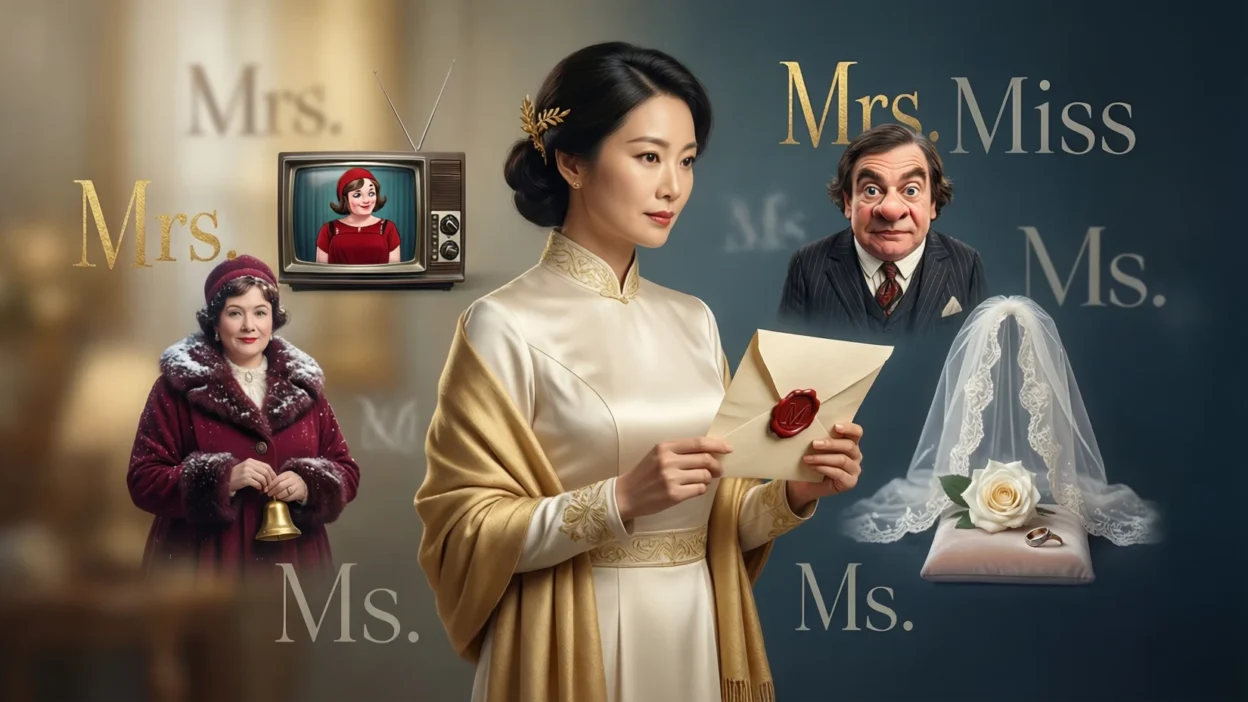
Definition: Mrs.is a formal title used before a woman’s last name to indicate that she is married. Pronounced “missiz,” it is traditionally applied to women who have taken their husband’s surname, though modern usage can vary.
The title “Mrs.” distinguishes married women from Miss, which refers to unmarried women, and Ms., which is neutral and does not indicate marital status.
Example: Mrs. Jane Smith – a married woman, traditionally using her husband’s surname.
It is commonly used in letters, emails, invitations, and formal introductions, and also appears in pop culture, such as The Marvelous Mrs. Maisel and Mrs. Doubtfire, reflecting both traditional and modern usage.
Originally derived from “Mistress,” Mrs. historically indicated marital status, but today it is often a personal choice. Characters like Mrs. Maisel and Mrs. Harris show how the title conveys identity and respect.
In this article, we’ll cover the meaning, history, modern usage, differences from Miss and Ms., etiquette tips, and pop culture examples like Mrs. (film)and Mrs. Claus, so you can confidently use Mrs.in any context.
The History of “Mrs.”
The title “Mrs.” has a fascinating history dating back several centuries. Originally, it was derived from “Mistress,” which referred to any woman of authority or respect. Over time, it evolved to specifically indicate a married woman, distinguishing her from unmarried women, who were called Miss.
By the 18th and 19th centuries, Mrs. became a marker of social status as well as marital status. Women were often addressed using “Mrs.” followed by their husband’s full name (e.g., Mrs. John Smith) rather than their own first name, reflecting social norms of the time.
Today, historical awareness helps us understand why Mrs. is still considered formal and respectful, whether addressing Mrs. Poindexter or a character like Mrs. Roper in cultural references.
Example of historical usage:
- 1800s letter: “To Mrs. John Thompson, esteemed guest at the ball…”
Mrs. vs. Miss vs. Ms.: What’s the Difference?
Many people get confused between Mrs., Miss, and Ms., but each has a distinct meaning and usage.
1. Mrs.
- Meaning: Married woman
- Usage: Traditionally follows her husband’s surname (Mrs. John Smith) or her own full name (Mrs. Jane Smith)
- Context: Letters, invitations, introductions
2. Miss
- Meaning: Unmarried woman
- Usage: Often for young women or girls (Miss Emily Brown)
- Context: Schools, letters, social introductions
3. Ms.
- Meaning: Neutral, no marital status
- Usage: Professional settings, modern correspondence (Ms. Sarah Johnson)
- Context: Emails, workplace, unknown marital status
Quick Comparison Table:
| Title | Marital Status | Usage Example | Modern Usage |
| Mrs. | Married | Mrs. Jane Smith | Formal, respectful |
| Miss | Unmarried | Miss Emily Brown | Traditional, less common today |
| Ms. | Any | Ms. Sarah Johnson | Professional, neutral |
Example in pop culture:
- TV Show: “The Marvelous Mrs. Maisel” uses Mrs. to show marital status and social identity.
- Film: “Mrs. Doubtfire” also showcases the title humorously while retaining traditional recognition.
Proper Usage of Mrs. in Writing and Speech
Using Mrs. correctly shows respect and professionalism.
1. Writing Formal Letters or Emails
- Always use Mrs. with the surname or full name
- Example: “Dear Mrs. Thompson, I hope this message finds you well.”
2. Invitations
- Traditional: “Mr. and Mrs. Robert Johnson request the pleasure of your company…”
- Modern: “Mr. John Johnson and Mrs. Jane Johnson invite you…”
3. Introducing Someone in Speech
- Example: “Please meet Mrs. Sarah Williams, our keynote speaker.”
4. Addressing Widowed or Divorced Women
- Widows may keep Mrs. with their late husband’s surname
- Divorced women may choose Mrs., Ms., or maiden name
Example:
- Correct: “Dear Mrs. Laura Green, thank you for attending the seminar.”
- Incorrect: “Dear Mrs. Laura, thank you…”
How “Mrs.” is Used Today
Mrs. has evolved in modern society:
- Married Women: Can use husband’s surname or own name (Mrs. Jessica Thompson)
- Widows and Divorced Women: May retain Mrs., switch to Ms., or use maiden name
- Professional Contexts: Ms. is often preferred, but Mrs. remains appropriate in formal settings
- Cultural Variations: Some countries maintain stricter rules, while others are flexible
Pop Culture Examples:
- Mrs. Claus embodies tradition and recognition in cultural storytelling.
- Characters like Mrs. Davis or Mrs. Poindexter reflect classic usage in literature and media.
- Modern shows like Mrs. America highlight evolving perspectives on identity and marital titles.
Common Misconceptions About “Mrs.”
- Only married women can use Mrs.: False; widows or divorced women may also use it
- Always requires husband’s last name: Modern etiquette allows the woman’s own full name
- Outdated title: Still widely used in formal settings
- Can be used with first name only: Incorrect; always pair with surname
- Meaning is universal: Cultural differences exist; follow local norms
Example:
- Correct: “Mrs. Laura Johnson, we are honored to have you.”
- Incorrect: “Mrs. Laura, welcome!”
Etiquette Tips for Addressing a Mrs.
- Formal Letters/Emails: Use full name (Mrs. Thompson)
- Invitations: Traditional: “Mr. and Mrs. John Smith”, Modern: “Mr. John Smith and Mrs. Jane Smith”
- Introductions in Speech: “Please welcome Mrs. Sarah Williams.”
- Ask Preferences: If unsure, politely ask
- Widows/Divorced Women: Follow personal choice
- Avoid Mistakes: Don’t use with unmarried women, or without surname
Frequently Asked Questions About Mrs.
Q1: Can a woman use “Mrs.” if unmarried?
- Traditionally no, but widows/divorced women may.
Q2: Can “Mrs.” be used with her first name?
- Yes, modern etiquette allows Mrs. Jane Smith.
Q3: Is “Mrs.” still relevant today?
- Yes, in letters, invitations, professional settings, and media like “Mrs. (film)”.
Q4: Difference between “Mrs. Smith” and “Ms. Smith”?
- Mrs.: Married, Ms.: Neutral
Q5: How to address a widowed woman?
- Retain Mrs. or use Ms., depending on preference
Q6: Can divorced women use “Mrs.”?
- Yes, if they choose to keep the surname
Q7: Formal invitation examples?
- Traditional: “Mr. and Mrs. John Smith”, Modern: “Mr. John Smith and Mrs. Jane Smith”
Conclusion: Understanding “Mrs.” in Today’s World
The title Mrs.remains an important part of etiquette, signifying m a woman’s married statuswhile showing respect in social and professional settings. From its historical origins as “Mistress”to modern usage, Mrs.continues to be meaningful.
Understanding Mrs., Miss, and Ms. ensures respectful communication. Proper usage in letters, emails, invitations, and introductions demonstrates professionalism and cultural literacy. Modern usage emphasizes personal choice, with widows and divorced women deciding how they wish to be addressed.
By following etiquette tips, respecting preferences, and avoiding common mistakes, you can confidently address women as Mrs., whether in formal contexts or inspired by pop culture references like The Marvelous Mrs. Maisel, Mrs. Doubtfire, Mrs. Claus, or Mrs. Harris Goes to Paris.
Key Takeaways:
- Mrs. indicates a married woman but may reflect personal choice
- Pair Mrs. with a surname in formal contexts
- Ms. is safe if unsure of marital status
- Respect individual and cultural preferences
Read More Articles: