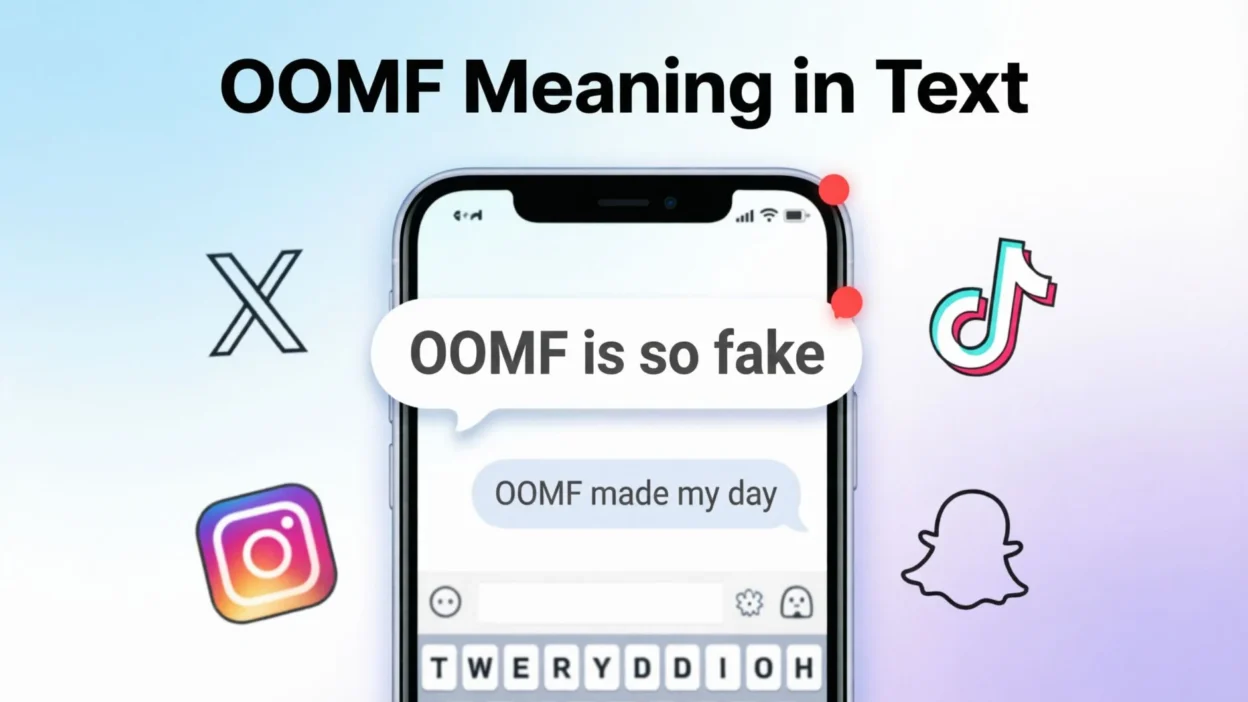
OOMF means “One Of My Followers” in text. People use it on social media to talk about a follower without directly naming them. It’s usually seen on Twitter/X, TikTok, or Instagram when someone wants to stay indirect.
You might notice OOMF in posts like, “OOMF is so fake,” or “OOMF made my day.” It’s internet slang, not an official acronym, and it’s mostly used in casual online conversations.
Many people search for this term after seeing it in a tweet, comment, or story caption and feeling confused. Social media slang changes quickly, and OOMF is one of those subtle terms that makes more sense once you understand the context.
Here’s exactly what OOMF meaning in text is, how it’s used, and how you should reply when someone says it.
OOMF Meaning in Text Explained
Let’s break this down clearly.
OOMF Meaning in Text
OOMF meaning in text stands for “One Of My Followers.” It refers to someone who follows you on a social platform, but you don’t mention their name directly.
It’s often used when:
- You want to talk about someone indirectly
- You don’t want drama
- You’re hinting at someone without tagging them
- You want to be subtle
OOMF Slang Meaning
As slang, OOMF is:
- An acronym
- Informal
- Social-media based
- Indirect communication style
It’s not a phonetic spelling or typing mistake. It’s a deliberate acronym used mostly in online culture.
What Does OOMF Mean in Chat?
In chat, OOMF usually means:
- “One of my followers did something.”
- “One of my followers said something.”
- “I’m talking about someone here without saying who.”
Example:
“OOMF really needs to relax.”
That means the person is calling out one follower indirectly.
OOMF Meaning Across Social Media Platforms
Different platforms shape how slang feels. Let’s look at how OOMF meaning changes slightly depending on where it’s used.
OOMF Meaning on Snapchat
On Snapchat, OOMF is less common but still used in stories.
Example:
“OOMF snapped me something wild.”
Here it means:
- Someone who follows you (or is connected) sent you something
- You don’t want to expose them
Tone: Slightly secretive or playful.
OOMF Meaning on TikTok
On TikTok, OOMF appears in captions or comment sections.
Example:
“OOMF always liking my posts but never commenting.”
Tone here is:
- Slightly shady
- Sometimes flirty
- Sometimes passive-aggressive
TikTok culture loves indirect communication. OOMF fits perfectly.
OOMF Meaning on Instagram
On Instagram, OOMF often appears in:
- Stories
- Close Friends posts
- Subtle call-out captions
Example:
“OOMF thinks I don’t notice.”
Tone:
- Dramatic
- Playful
- Mysterious
OOMF Meaning on WhatsApp
On WhatsApp, it’s less common unless someone is talking about Instagram or TikTok followers.
Example:
“OOMF blocked me.”
This usually means:
- Someone who follows them on another platform blocked them.
OOMF Meaning in SMS Texting
In regular SMS, OOMF isn’t very popular unless both people are active on social media.
It may confuse older users because:
- It’s highly internet-based
- It assumes social media context
OOMF Tone & Context Variations
The meaning stays the same, but the tone changes everything.
Here’s how OOMF feels in different moods.
Funny Tone
A: “OOMF thinks pineapple belongs on pizza.”
B: “Unfollow them immediately.”
A: “I should honestly.”
Here it’s lighthearted.
Sarcastic Tone
A: “OOMF really said they’re always right.”
B: “Of course they did.”
A: “The confidence is wild.”
Here it’s indirect criticism.
Romantic Tone
A: “Lowkey OOMF is kinda cute.”
B: “Oh really?”
A: “I didn’t say who.”
Now it becomes flirtatious and secretive.
Angry Tone
A: “OOMF needs to stop acting fake.”
B: “Who?”
A: “They know who they are.”
This version is passive-aggressive.
Playful Tone
A: “OOMF always views my story in 2 seconds.”
B: “Secret admirer?”
A: “Maybe.”
This feels teasing.
More Real Chat Examples (Quick List)
- “OOMF really unfollowed me over that?”
- “OOMF posted something shady.”
- “OOMF always copying my style.”
- “I think OOMF likes me.”
- “OOMF needs better music taste.”
- “Not OOMF texting me at 3am.”
- “OOMF acting different lately.”
- “OOMF better see this.”
- “Why is OOMF so dramatic?”
- “OOMF is lowkey my favorite follower.”
These examples show how flexible the slang is.
Grammar & Language Role of OOMF
Let’s simplify this.
Part of Speech
OOMF functions as:
- A noun phrase
- A replacement for a person
Example:
“OOMF said that.”
It replaces “one of my followers.”
Sentence Role
It can appear:
- At the beginning: “OOMF did this.”
- In the middle: “I think OOMF likes me.”
- Rarely at the end.
Does It Replace a Full Sentence?
No.
It replaces:
- A subject
- A person reference
Not an entire statement.
Formal vs Informal Usage
- 100% informal
- Social-media slang
- Not suitable for professional emails
Using OOMF in work chat would look unprofessional.
Tone Impact
Using OOMF:
- Creates mystery
- Avoids confrontation
- Signals internet culture awareness
It can also:
- Create drama
- Cause confusion
How to Reply When Someone Says “OOMF”
This section is important because many people don’t know how to respond.
Funny Replies
- “Drop the name.”
- “Expose them.”
- “We need details.”
- “Why you being secret?”
- “Tell me in private.”
Serious Replies
- “Did they upset you?”
- “What happened?”
- “Are you okay?”
- “Should you talk to them directly?”
- “Do they know you feel that way?”
Flirty Replies
- “Is it me?”
- “I hope it’s me.”
- “Plot twist: I’m OOMF.”
- “You talking about your favorite follower?”
- “I’ll behave if it’s me.”
Neutral Replies
- “Interesting.”
- “That’s wild.”
- “Social media drama again?”
- “People are strange.”
- “Hope it works out.”
Your reply depends entirely on tone.
Is OOMF Rude or Bad?
Let’s clarify this clearly.
Is OOMF Rude?
No, the word itself is not rude.
However:
- It can be used in a rude way.
- It can be passive-aggressive.
Is It Disrespectful?
It depends on how it’s used.
Example:
“OOMF is annoying.”
That can feel disrespectful if the follower sees it.
Is It a Bad Word?
No.
It’s not profanity.
It’s safe for general conversation.
Can You Use It in School?
Among friends, yes.
In formal writing, no.
Can You Use It at Work?
Not recommended.
Most professional environments won’t understand it.
Who Uses OOMF?
Age Group
Primarily:
- Gen Z
- Younger Millennials
Regions
Most common in:
- United States
- UK
- Global English-speaking internet
It spreads through social media culture.
Platforms
- Twitter/X
- TikTok
Rare in offline speech.
Origin & Internet Culture
OOMF likely originated on Twitter (now X).
Why there?
Because:
- Twitter thrives on indirect commentary
- Users often talk about followers publicly
- It allows drama without tagging someone
There isn’t a clear documented first use, but it became popular in early 2010s Twitter culture.
It fits into:
- Subtweet culture
- Indirect communication trends
- Online social signaling
Comparison Table: OOMF vs Similar Slang
| Term | Meaning | Formal/Informal | Tone | Popularity | Confusion Risk |
|---|---|---|---|---|---|
| OOMF | One Of My Followers | Informal | Indirect | Moderate | Medium |
| IDK | I Don’t Know | Informal | Neutral | Very High | Low |
| ION | I Don’t | Informal | Casual | Medium | High |
| Dunno | Don’t Know | Informal | Casual | High | Low |
| IDC | I Don’t Care | Informal | Blunt | Very High | Low |
OOMF has higher confusion risk because it’s platform-specific.
Real-World Usage Insight
From observing real social media conversations, OOMF is often used when someone wants attention without confrontation.
It creates curiosity.
Sometimes the person being talked about knows it’s them. Other times, it creates unnecessary drama.
It’s subtle but powerful in digital culture.
Frequently Asked Questions About OOMF
What Does OOMF Mean in Text Messages and Online Chat?
OOMF means “One Of My Followers.” It’s used to talk about a follower indirectly without tagging or naming them.
What Does OOMF Mean on Snapchat and TikTok?
On TikTok and Snapchat, it still means “One Of My Followers,” but it’s often used in playful or dramatic captions.
Is OOMF Rude, Disrespectful, or Harmless Slang?
The word itself is harmless. The tone determines whether it feels rude or playful.
How Should You Reply When Someone Says “OOMF”?
You can reply:
- Playfully: “Is it me?”
- Seriously: “What happened?”
- Neutrally: “That’s interesting.”
Match their tone.
Is OOMF the Same as IDK or Different?
No.
IDK means “I Don’t Know.”
OOMF refers to a follower.
They are completely different in meaning and usage.
Can You Use OOMF in School or Work?
In casual conversation, yes.
In professional communication, avoid it.
Final Thoughts: When to Use OOMF and When to Avoid It
OOMF meaning in text is simple: One Of My Followers.
Use it when:
- You want to stay indirect
- You’re joking with friends
- You’re referencing online interactions
Avoid it when:
- You’re in professional settings
- You want clarity
- You’re trying to resolve conflict directly
Common Mistakes
- Thinking it means “Oh My Friend”
- Using it outside social media context
- Assuming everyone understands it
Slang works best when your audience understands it.
If they don’t, it creates confusion instead of connection.