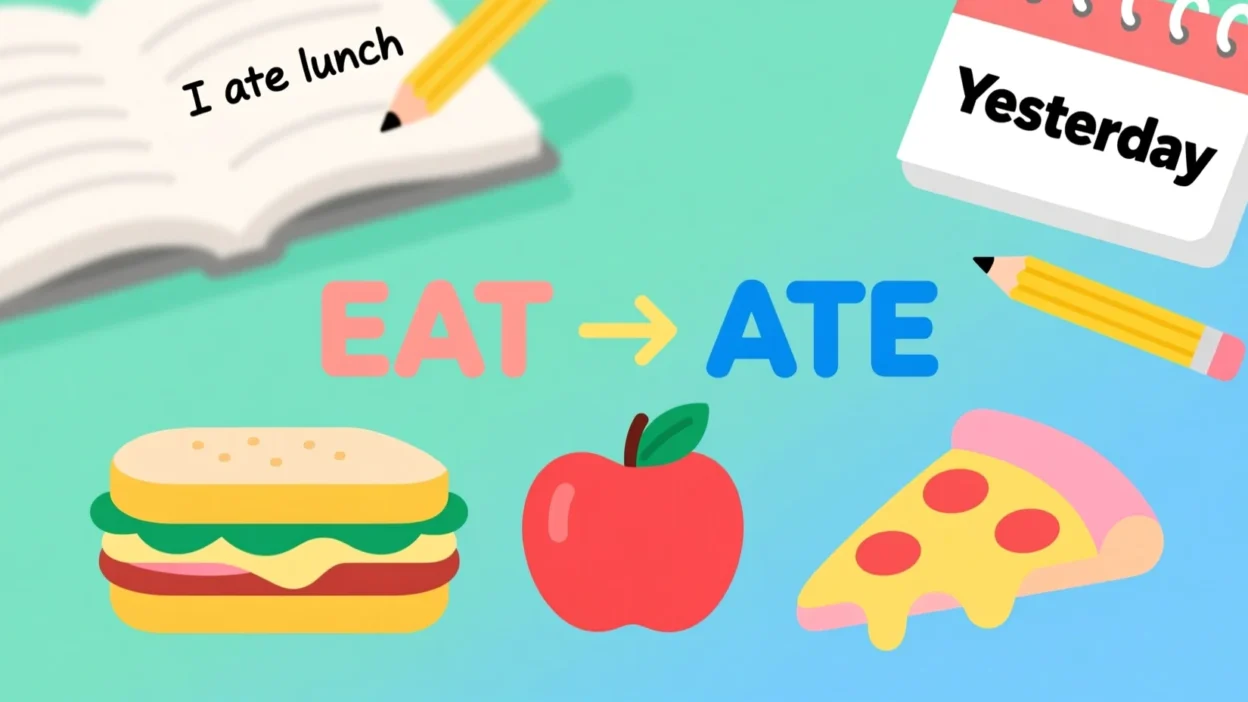
The past tense of eat is an essential grammar concept for students, language learners, writers, and grammar enthusiasts.
Understanding how to use ate, the past tense form of the verb eat, helps you communicate clearly about actions that happened in the past.
If you’re describing what you had for lunch yesterday or writing a story, mastering this verb tense is key to clear communication.
This article, we’ll break down the past tense of eat, including its definition, formation, sentence structures, and practical examples.
We’ll also cover common mistakes, conjugation tips, and practice exercises to make learning engaging and beginner-friendly.
By the end, you’ll feel confident using ate in everyday conversations and writing. Let’s dive in and explore how to use the past tense of eat correctly!
What Is the Past Tense of Eat?
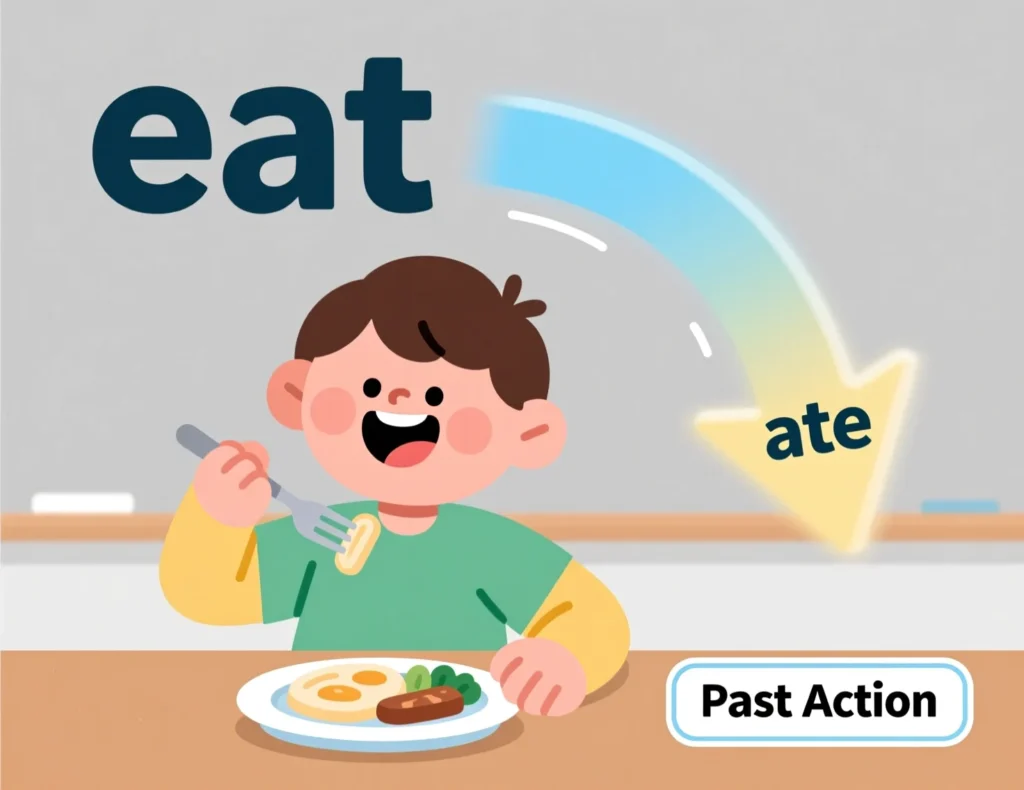
The past tense of eat is ate. It describes an action of consuming food that occurred in the past. For example, “I ate a sandwich yesterday” indicates a completed action. The verb eat is irregular, meaning it doesn’t follow the standard “-ed” ending for regular verbs like “walk” (walked). Instead, eat changes to ate in the simple past tense. This verb is used across all subjects (I, you, he, she, it, we, they) without additional changes, making it straightforward to use once you understand its irregularity.
How to Recognize the Past Tense of Eat?
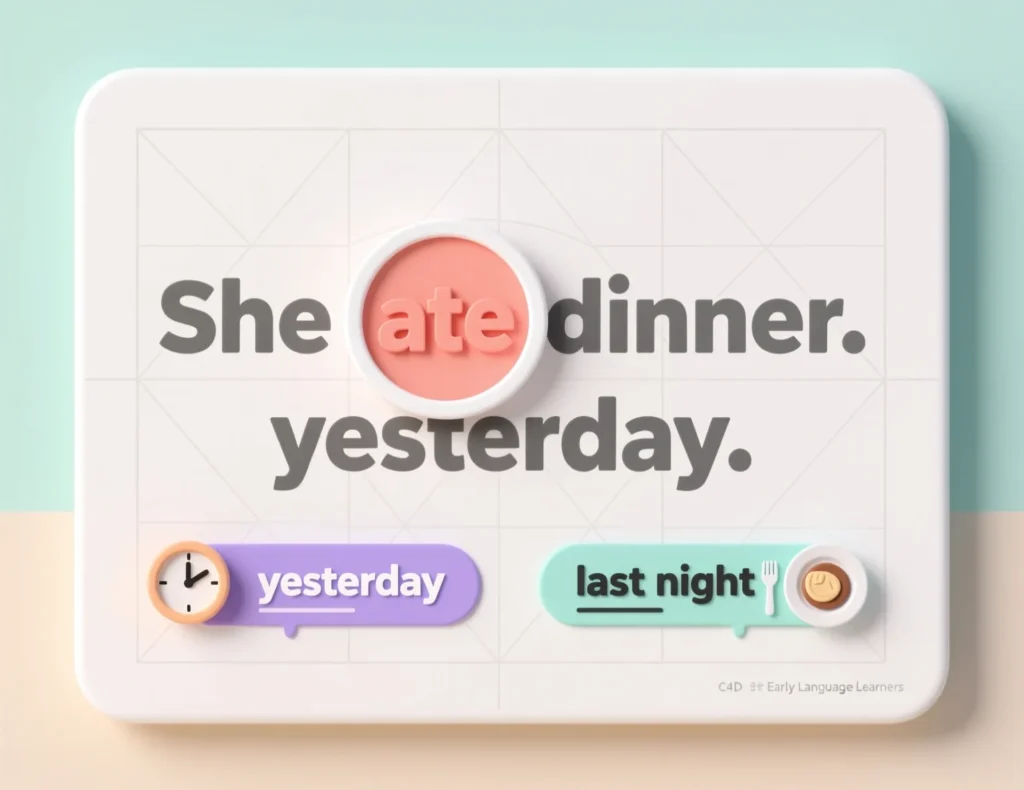
To recognize the past tense of eat, look for the word ate in a sentence describing a completed action. It often appears with time markers like “yesterday,” “last week,” or “in 2020.” For example:
- She ate dinner at 7 PM.
- They ate all the cookies last night.
These sentences show a clear past action. Unlike regular verbs, eat doesn’t use a predictable pattern, so spotting ate is key.
Structure of a Sentence
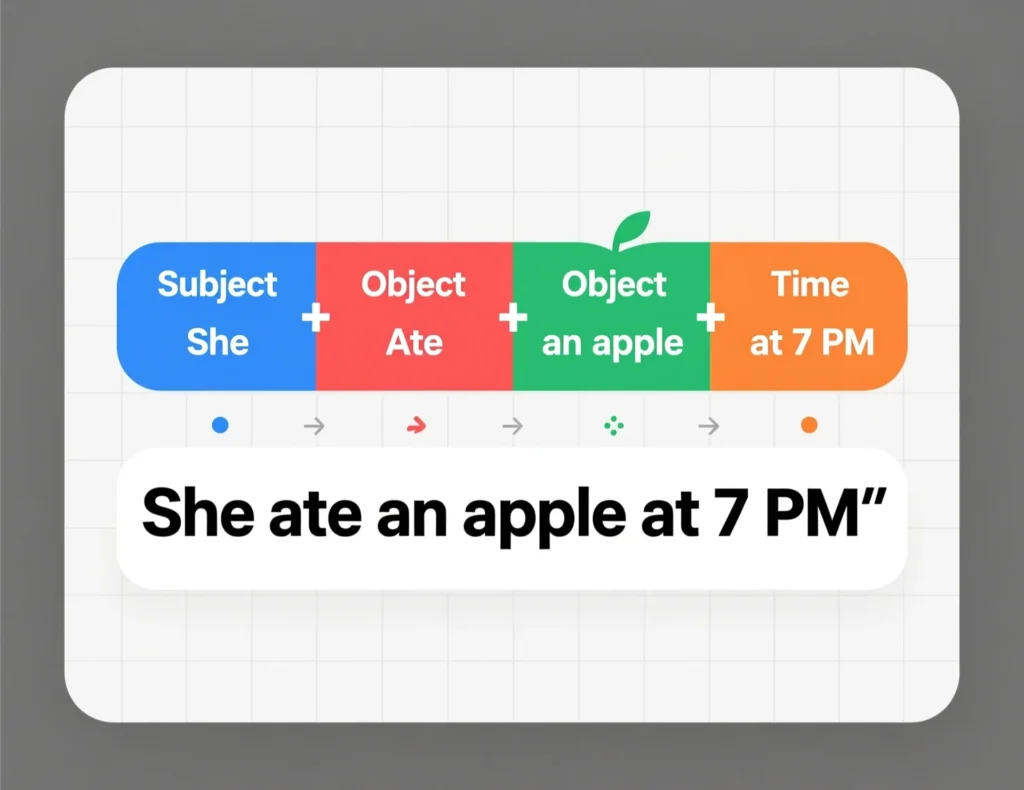
A simple sentence in the past tense of eat follows this structure:
Subject + ate + object (optional) + time marker (optional).
- Example: I ate an apple yesterday.
- Negative: Subject + did not + eat + object. (Example: I did not eat an apple.)
- Interrogative: Did + subject + eat + object? (Example: Did you eat an apple?)
Formation
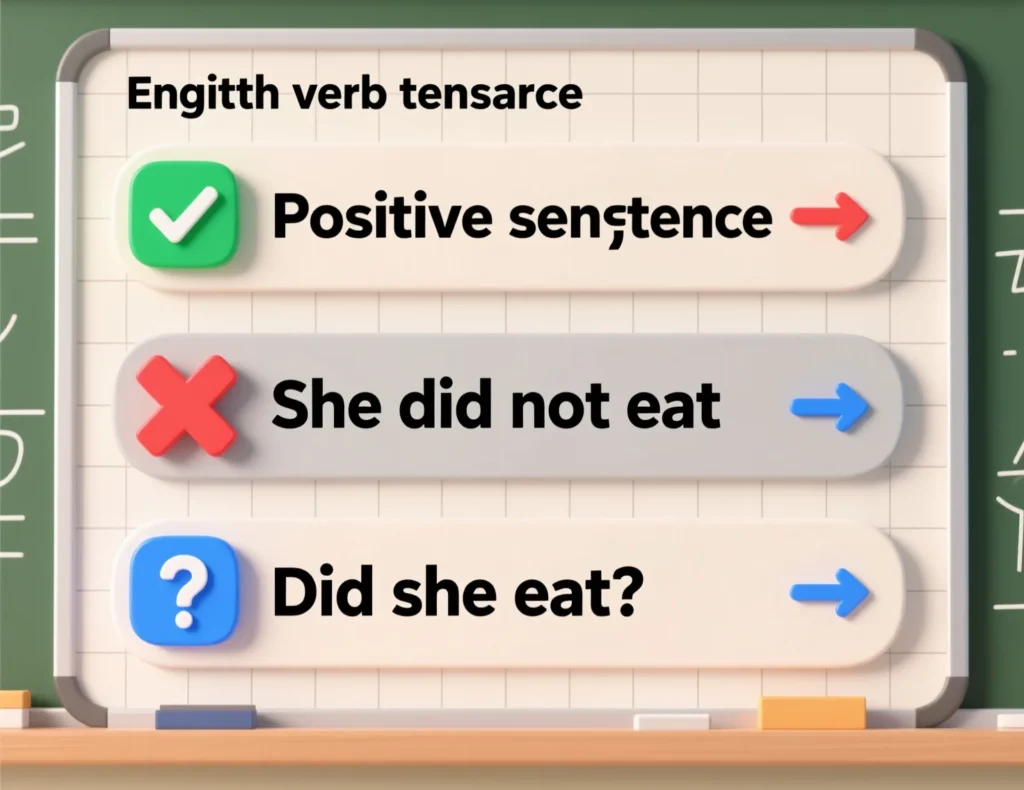
The past tense of eat is formed by using ate for all subjects. For negatives and questions, use the helping verb did with the base form eat:
- Positive: She ate the cake.
- Negative: She did not eat the cake.
- Interrogative: Did she eat the cake?
No additional endings are needed, as ate is consistent across subjects.
Verbs
The verb eat is irregular. Its forms are:
- Base: eat
- Past: ate
- Past Participle: eaten (used with perfect tenses, e.g., “I have eaten.”)
Helping Verbs
In the past tense of eat, the helping verb did is used for:
- Negatives: Subject + did not + eat.
- Questions: Did + subject + eat?
Example: Did you eat breakfast? / I did not eat breakfast.
Explanation of Some Verbs with Reference to Past Tense of Eat
Other irregular verbs follow similar patterns to eat. For example:
- Drink: Base (drink), Past (drank), Past Participle (drunk).
- Sing: Base (sing), Past (sang), Past Participle (sung).
Like ate, these verbs change their vowel sounds in the past tense. Compare: “I ate food” and “I drank water.”
Table of Some Regular or Irregular Verbs in Past Tense
| Base Verb | Past Tense | Type |
| Eat | Ate | Irregular |
| Drink | Drank | Irregular |
| Sing | Sang | Irregular |
| Walk | Walked | Regular |
| Talk | Talked | Regular |
| Run | Ran | Irregular |
| Write | Wrote | Irregular |
| Read | Read | Irregular |
| Play | Played | Regular |
| Sleep | Slept | Irregular |
Simple Sentence Examples
- I ate pizza for dinner.
- You ate an apple this morning.
- He ate sushi last night.
- She ate a salad for lunch.
- It (the dog) ate its food quickly.
- We ate tacos at the party.
- They ate cake at the wedding.
- John ate noodles yesterday.
- The kids ate snacks after school.
- My friend ate fruit for breakfast.
Negative Sentence Examples
- I did not eat pizza yesterday.
- You did not eat breakfast today.
- He did not eat the soup.
- She did not eat any candy.
- It did not eat its dinner.
- We did not eat at the restaurant.
- They did not eat the cake.
- John did not eat spicy food.
- The kids did not eat vegetables.
- My friend did not eat dessert.
Interrogative Sentence Examples
- Did I eat too much?
- Did you eat breakfast?
- Did he eat the pizza?
- Did she eat lunch yet?
- Did it eat its food?
- Did we eat all the snacks?
- Did they eat at the party?
- Did John eat sushi?
- Did the kids eat candy?
- Did my friend eat dinner?
Negative and Interrogative Sentence Examples
- Didn’t I eat enough vegetables?
- Didn’t you eat the cake?
- Didn’t he eat breakfast?
- Didn’t she eat the soup?
- Didn’t it eat its treat?
- Didn’t we eat at that café?
- Didn’t they eat the pizza?
- Didn’t John eat tacos?
- Didn’t the kids eat fruit?
- Didn’t my friend eat lunch?
How to Conjugate Past Tense of Eat
The past tense of eat is simple because ate is used for all subjects. Here’s how it works:
- Use ate for positive statements (e.g., I ate).
- Use did not eat for negatives (e.g., I did not eat).
- Use did + subject + eat for questions (e.g., Did I eat?).
- No additional endings are needed.
- The verb remains ate regardless of singular or plural subjects.
- Avoid using eaten (past participle) in simple past tense.
- Use time markers for clarity (e.g., yesterday, last night).
- Combine with adverbs for detail (e.g., She ate quickly).
- Practice with different subjects to master usage.
- Check sentence context to ensure past tense fits.
Conjugation Table for All Subjects
| Subject | Positive | Negative | Interrogative |
| I | I ate | I did not eat | Did I eat? |
| You | You ate | You did not eat | Did you eat? |
| He | He ate | He did not eat | Did he eat? |
| She | She ate | She did not eat | Did she eat? |
| It | It ate | It did not eat | Did it eat? |
| We | We ate | We did not eat | Did we eat? |
| They | They ate | They did not eat | Did they eat? |
Spelling Changes or Irregularities
The verb eat is irregular, so it doesn’t follow the “-ed” rule. Key points:
- Base form: eat.
- Past tense: ate (vowel change from “ea” to “a”).
- Past participle: eaten (used with “have” or “had”).
- No spelling changes occur across subjects.
- Common error: Using eated (incorrect) instead of ate.
Sentence Examples with Different Subjects
- I ate a burger for lunch.
- You ate too many cookies.
- He ate his dinner quietly.
- She ate a healthy salad.
- It (the cat) ate the fish.
- We ate at a fancy restaurant.
- They ate homemade pasta.
- John ate spicy tacos.
- The kids ate ice cream.
- My dog ate its bone.
- Sarah ate fruit yesterday.
- The team ate pizza after the game.
- You all ate at the party.
- My parents ate early today.
- The baby ate mashed potatoes.
Common Mistakes with Past Tense of Eat
- Using eated instead of ate. (Incorrect: I eated.)
- Confusing ate with eaten. (Incorrect: I eaten pizza.)
- Forgetting did in negatives. (Incorrect: I not ate.)
- Omitting did in questions. (Incorrect: Ate you lunch?)
- Using ate in present tense. (Incorrect: I ate now.)
- Mixing tenses in a sentence. (Incorrect: I ate and eat.)
- Using eaten without “have/had”. (Incorrect: I eaten.)
- Incorrect subject-verb agreement. (Correct: They ate, not They ates.)
- Misplacing time markers. (Incorrect: I ate yesterday pizza.)
- Overusing did in positive sentences. (Incorrect: I did ate.)
How to Avoid Common Mistakes
- Always use ate for simple past tense, not eated.
- Use eaten only with “have” or “had” (e.g., I have eaten).
- Include did not for negatives (e.g., I did not eat).
- Start questions with did (e.g., Did you eat?).
- Use present tense eat for current actions.
- Keep tenses consistent in a sentence.
- Double-check for eaten misuse in simple past.
- Ensure subject agreement (e.g., They ate, not ates).
- Place time markers correctly (e.g., I ate pizza yesterday).
- Avoid did in positive sentences.
Related Verbs and Synonyms for Past Tense of Eat
Synonyms for eat include consume, devour, munch, nibble, and dine. Related verbs:
- Drink (past: drank): I drank juice; I ate bread.
- Chew: I chewed gum; I ate steak.
- Swallow: I swallowed the pill; I ate soup.
Sentence comparison: She ate the cake vs. She devoured the cake (implies faster eating).
Tips to Practice Using Past Tense of Eat
- Write 5 sentences daily using ate.
- Describe yesterday’s meals using ate.
- Create negative sentences with did not eat.
- Ask friends questions like, “Did you eat breakfast?”
- Read books and spot ate in past tense contexts.
- Use flashcards for eat, ate, eaten.
- Practice with online grammar quizzes.
- Record yourself using ate in stories.
- Correct mistakes in sample sentences.
- Join language forums to discuss verb tense examples.
Frequently Asked Questions
- What is the past tense of eat? It’s ate.
- Is eat a regular verb? No, it’s irregular.
- What’s the past participle of eat? It’s eaten.
- Can I say “I eated”? No, use ate.
- How do I form a negative? Use did not eat.
- How do I ask a question? Use Did + subject + eat.
- Does ate change with subjects? No, it’s the same.
- What’s a synonym for eat? Consume or devour.
- Can I use eaten in simple past? No, use ate.
- How do I practice ate? Write and speak sentences.
Exercises
- Write 3 sentences using ate.
- Convert: “I eat pizza” to past tense.
- Make a negative sentence with eat.
- Ask a question using did and eat.
- Correct: “I eated cake.”
- Write a sentence with ate and “yesterday.”
- Use ate with “they” as the subject.
- Create a sentence with ate and “lunch.”
- Form a question with “she” and eat.
- Write a negative question with didn’t and eat.
Quizzes
- What is the past tense of eat? (Answer: ate)
- Is “I eated” correct? (Answer: No)
- What’s the negative of “She ate”? (Answer: She did not eat)
- How do you ask, “Did he eat?” (Answer: Did he eat?)
- What’s the past participle of eat? (Answer: eaten)
- Correct: “They ates.” (Answer: They ate)
- Synonym for eat? (Answer: Devour)
- Form a question with “we.” (Answer: Did we eat?)
- Is eat regular or irregular? (Answer: Irregular)
- Negative of “I ate”? (Answer: I did not eat)
True or False
- Ate is the past tense of eat. (True)
- “I eated” is correct. (False)
- Eaten is used in simple past. (False)
- Did is used in questions. (True)
- Ate changes with subjects. (False)
- “I did not eat” is correct. (True)
- Eat is a regular verb. (False)
- Synonyms include consume. (True)
- “Did you ate?” is correct. (False)
- Time markers like “yesterday” help. (True)
Conclusion
Mastering the past tense of eat is a simple yet powerful step for students, language learners, and writers.
By understanding how to use ate, forming negatives with did not eat, and asking questions with did, you can confidently describe past actions.
This article covered the essentials: sentence structures, conjugation, common mistakes, and practice tips.
With examples, exercises, and quizzes, you have the tools to practice effectively.
Keep writing sentences, spotting ate in reading, and using grammar checkers to refine your skills.
Try creating your own sentences with ate today, or use a grammar tool to perfect your writing.
Share your progress in the comments or explore more verb tense examples to boost your grammar confidence!