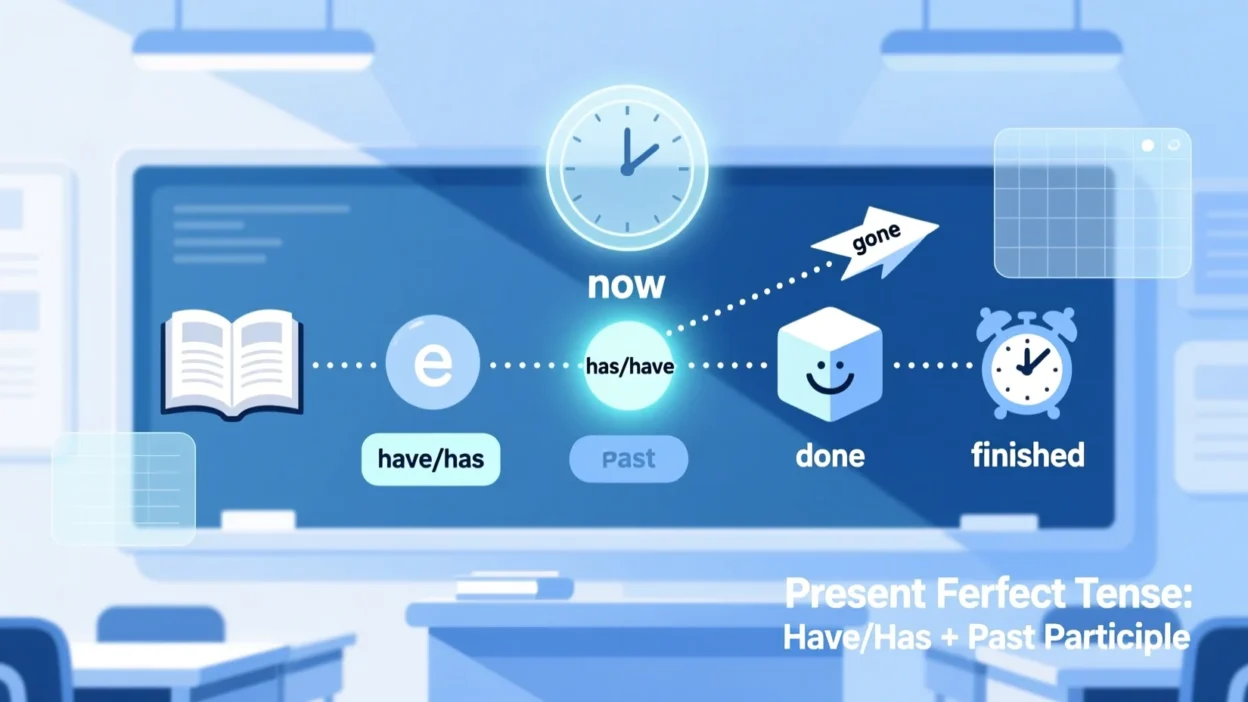
The present perfect tense is a versatile verb tense that connects past actions to the present moment, making it essential for clear communication.
If you’re a student, language learner, writer, or grammar enthusiast, mastering the present perfect tense helps you express experiences, achievements, or changes with precision.
This tense answers questions like “What has happened so far?” or “What have you done recently?”
This SEO-optimized guide, we’ll break down the present perfect tense examples, its structure, usage, and common pitfalls in a beginner-friendly way.
With real-life examples, conjugation tips, and practice exercises, you’ll gain confidence in using this tense correctly.
Let’s dive into how the present perfect tense works and why it’s so useful!
What Is the Present Perfect Tense?
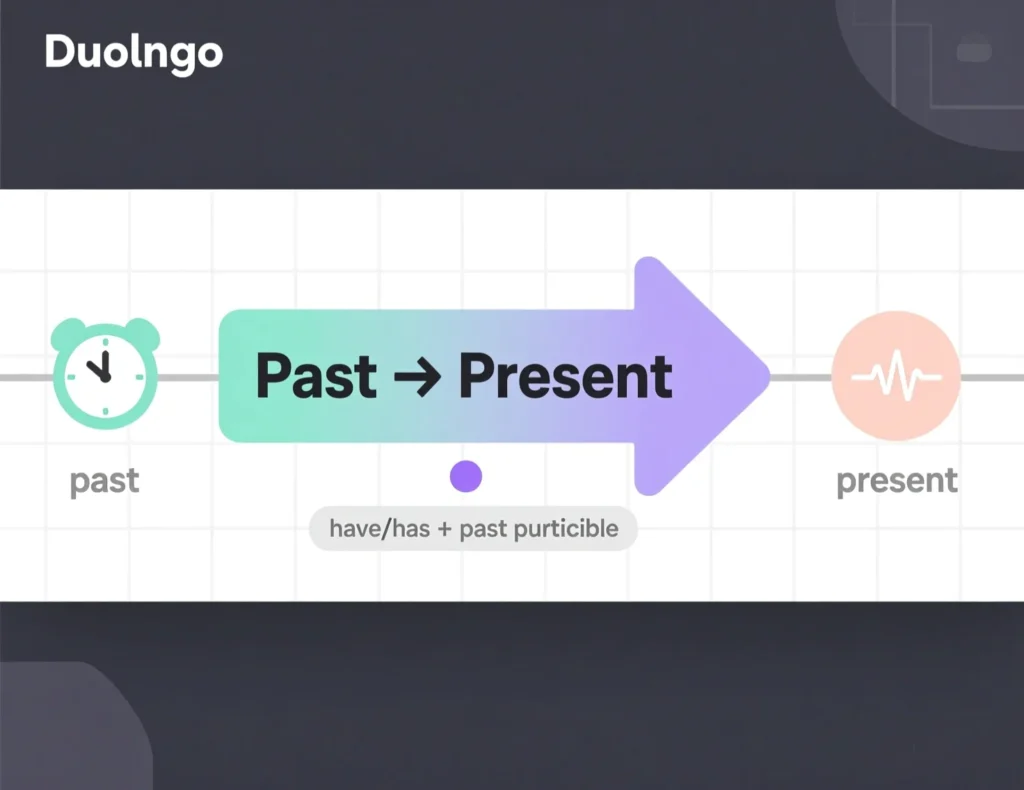
The present perfect tense describes actions that happened at an unspecified time in the past or actions that still have relevance today. For example, “I have just finished writing this article” shows a completed action with a present connection. It’s often used to talk about life experiences, recent events, or ongoing results. Unlike the simple past, which focuses on specific past moments (e.g., “I wrote an article yesterday”), the present perfect tense emphasizes relevance or completion without pinpointing when.
How to Recognize the Present Perfect Tense?
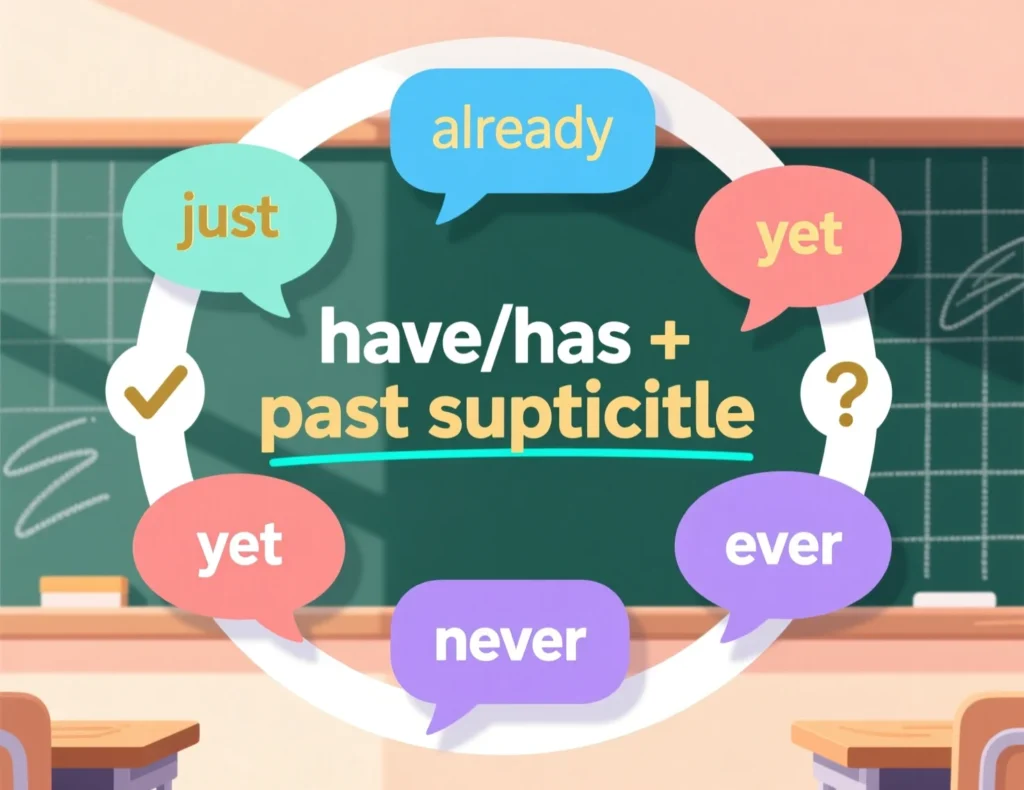
You can spot the present perfect tense by looking for the auxiliary verb have or has followed by a past participle. Common markers include words like just, already, yet, ever, never, and since. For instance, “She has already eaten lunch” uses has (auxiliary) and eaten (past participle). These clues help distinguish it from other tenses like the simple past or present continuous.
Structure of a Sentence
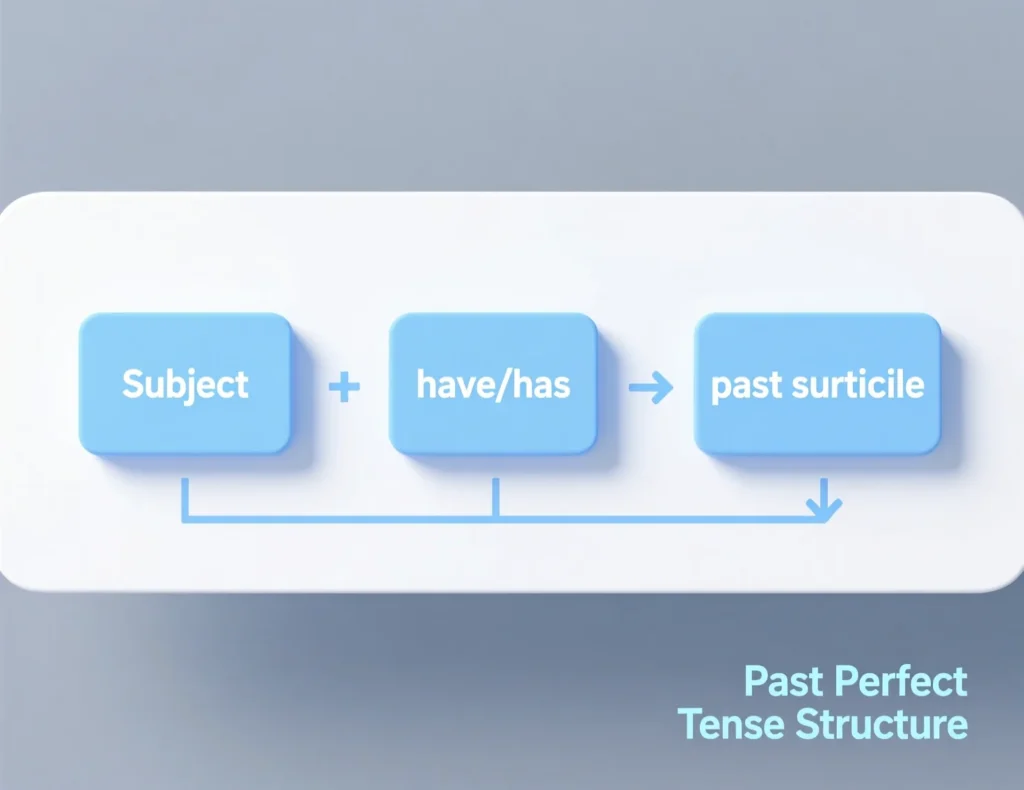
The basic structure of a present perfect tense sentence is:
Subject + have/has + past participle + (object/complement)
- Example: “They have studied English.”
- Negative: “They have not studied English.”
- Interrogative: “Have they studied English?”
This structure remains consistent across subjects, with have used for I, you, we, they, and has for he, she, it.
Formation
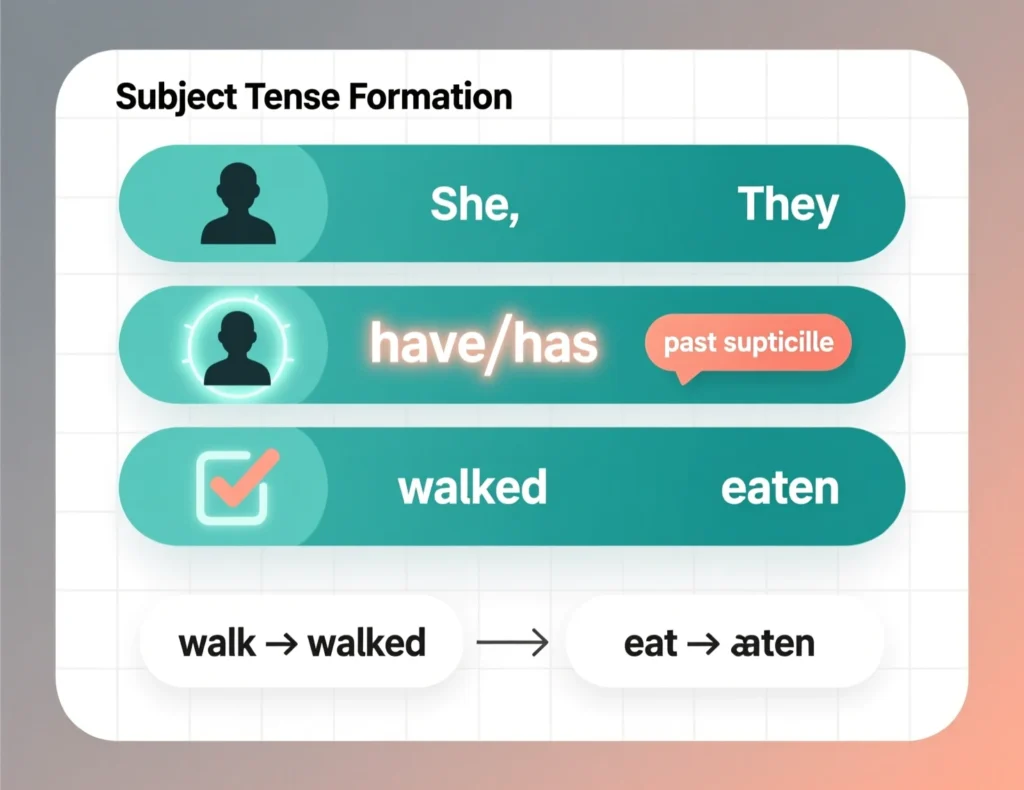
To form the present perfect tense, combine:
- Subject: The doer of the action (e.g., I, she, they).
- Auxiliary verb: Have or has, depending on the subject.
- Past participle: The verb’s third form (e.g., gone, eaten, written).
For regular verbs, add -ed to the base verb (e.g., walk → walked). For irregular verbs, use forms like go → gone or eat → eaten.
Verbs
The present perfect tense works with both regular and irregular verbs. Regular verbs follow a predictable pattern (add -ed), while irregular verbs have unique past participles. For example:
- Regular: “I have played soccer.”
- Irregular: “She has sung beautifully.”
Understanding verb types is key to mastering present perfect tense examples.
Helping Verbs
The helping verbs in the present perfect tense are have and has. Use:
- Have with I, you, we, they.
- Has with he, she, it.
Example: “We have traveled to Japan” vs. “He has traveled to Japan.” These auxiliaries are essential for forming the tense correctly.
Explanation of Some Verbs with Reference to Present Perfect Tense
Here’s how some verbs transform in the present perfect tense:
- Go (irregular): Base form → gone. “I have gone to the store.”
- Eat (irregular): Base form → eaten. “She has eaten sushi.”
- Walk (regular): Base form → walked. “They have walked home.”
Each verb’s past participle is critical for correct usage in present perfect tense examples.
Table of Some Regular or Irregular Verbs in Present Perfect Tense
| Base Verb | Past Participle | Example Sentence |
| Go | Gone | I have gone to Paris. |
| Eat | Eaten | She has eaten breakfast. |
| Write | Written | They have written a book. |
| Walk | Walked | We have walked five miles. |
| Sing | Sung | He has sung at the concert. |
| Play | Played | You have played chess. |
| See | Seen | I have seen that movie. |
| Take | Taken | She has taken the test. |
| Run | Run | They have run a marathon. |
| Break | Broken | He has broken a glass. |
Simple Sentence Examples
- I have just finished my homework.
- She has visited London twice.
- They have learned Spanish.
- He has painted the house.
- We have watched the new series.
- You have cooked a delicious meal.
- It has rained all morning.
- The team has won the championship.
- I have read three books this month.
- She has cleaned the room.
Negative Sentence Examples
- I have not finished my homework yet.
- She has not visited London.
- They have not learned Spanish.
- He has not painted the house.
- We have not watched the new series.
- You have not cooked dinner tonight.
- It has not rained this week.
- The team has not won any games.
- I have not read that book.
- She has not cleaned the kitchen.
Interrogative Sentence Examples
- Have you finished your homework?
- Has she visited London before?
- Have they learned Spanish yet?
- Has he painted the house?
- Have we watched the new series?
- Have you cooked dinner tonight?
- Has it rained today?
- Has the team won the championship?
- Have I read that book before?
- Has she cleaned the room?
Negative and Interrogative Sentence Examples
- Haven’t you finished your homework yet?
- Hasn’t she visited London before?
- Haven’t they learned Spanish?
- Hasn’t he painted the house yet?
- Haven’t we watched the new series?
- Haven’t you cooked dinner tonight?
- Hasn’t it rained this week?
- Hasn’t the team won any games?
- Haven’t I read that book before?
- Hasn’t she cleaned the kitchen?
How to Conjugate Present Perfect Tense
Conjugating the present perfect tense is straightforward:
- Use have for I, you, we, they; has for he, she, it.
- Add the past participle of the main verb.
- Keep the structure consistent: Subject + have/has + past participle.
- Example with “eat”: I have eaten, she has eaten.
- Use regular verbs (add -ed) or irregular verbs (e.g., go → gone).
- Adjust for negative: Add not (e.g., I have not eaten).
- For questions, invert subject and auxiliary: Have you eaten?
- Ensure the past participle matches the verb type (regular/irregular).
- Use time markers like just or yet for clarity.
- Practice with different subjects to master conjugation.
Conjugation Table
| Subject | Auxiliary | Verb (Eat) | Example Sentence |
| I | Have | Eaten | I have eaten breakfast. |
| You | Have | Eaten | You have eaten lunch. |
| He/She/It | Has | Eaten | She has eaten dinner. |
| We | Have | Eaten | We have eaten sushi. |
| They | Have | Eaten | They have eaten pizza. |
| I | Have not | Eaten | I have not eaten today. |
| You | Have not | Eaten | You have not eaten lunch. |
| He/She/It | Has not | Eaten | He has not eaten dinner. |
| We | Have not | Eaten | We have not eaten sushi. |
| They | Have not | Eaten | They have not eaten pizza. |
Spelling Changes or Irregularities
- Regular verbs: Add -ed (e.g., walk → walked, play → played).
- Verbs ending in -e: Add -d (e.g., live → lived).
- Consonant + y: Change y to -ied (e.g., study → studied).
- One-syllable verbs (consonant-vowel-consonant): Double the consonant and add -ed (e.g., stop → stopped).
- Irregular verbs: Use unique past participles (e.g., go → gone, eat → eaten).
Check verb lists for irregular forms, as they don’t follow standard rules.
Sentence Examples with Different Subjects
- I have just finished writing this blog.
- You have traveled to Spain recently.
- He has bought a new car.
- She has written a novel.
- It has stopped raining.
- We have learned French this year.
- They have visited the museum.
- I have seen that movie twice.
- You have cooked a great meal.
- She has sung at the event.
- He has run a marathon.
- We have painted the house.
- They have studied for the exam.
- It has been a long day.
- You have helped me a lot.
Common Mistakes with Present Perfect Tense
- Using specific time expressions (e.g., “I have gone yesterday” → Use simple past: “I went yesterday”).
- Forgetting the auxiliary verb (e.g., “I eaten” → Correct: “I have eaten”).
- Using have instead of has for he/she/it (e.g., “She have eaten” → Correct: “She has eaten”).
- Incorrect past participle (e.g., “I have went” → Correct: “I have gone”).
- Overusing just or already unnecessarily.
- Confusing with simple past for ongoing relevance (e.g., “I saw it” vs. “I have seen it”).
- Omitting not in negatives (e.g., “I have eaten” → Correct: “I have not eaten”).
- Incorrect word order in questions (e.g., “You have eaten?” → Correct: “Have you eaten?”).
- Mixing tenses in one sentence.
- Ignoring irregular verb forms (e.g., “I have drinked” → Correct: “I have drunk”).
How to Avoid Common Mistakes
- Avoid specific time markers like “yesterday” with present perfect tense.
- Always include have/has before the past participle.
- Double-check subject-verb agreement (e.g., has for she, have for they).
- Memorize irregular verb past participles (e.g., go → gone).
- Use time markers like yet or already appropriately.
- Practice distinguishing present perfect from simple past.
- Form negatives correctly with have not/has not.
- Follow the structure for questions: Have/Has + subject + past participle.
- Review your sentences for tense consistency.
- Use a verb chart for irregular forms to avoid errors.
Related Verbs and Synonyms
Verbs like complete, finish, achieve, or experience often align with present perfect tense usage. For example:
- Finish (synonym for complete): “I have finished my work” vs. “I have completed my work.”
- Experience (synonym for live through): “I have experienced snow” vs. “I have seen snow.”
Be cautious with verbs confused with present perfect, like simple past forms (e.g., “saw” vs. “have seen”).
Sentence comparisons: - “I have eaten sushi” (present perfect, ongoing relevance) vs. “I ate sushi yesterday” (simple past, specific time).
- “She has finished her homework” vs. “She finished her homework last night.”
Tips to Practice Using Present Perfect Tense
- Write 10 sentences about your life experiences using have/has.
- Describe recent events with just or already.
- Practice negatives with have not/has not.
- Form questions starting with Have/Has.
- Use irregular verbs like go, eat, or see.
- Read English texts and highlight present perfect tense examples.
- Speak with a partner about things you’ve done this year.
- Use apps like Duolingo for grammar exercises.
- Create flashcards with past participles.
- Check your writing with a grammar tool to catch errors.
Frequently Asked Questions
- What’s the difference between present perfect and simple past? Present perfect connects to the present; simple past is for specific past events.
- When do I use have vs. has? Use have for I/you/we/they, has for he/she/it.
- Can I use yesterday with present perfect? No, use simple past for specific times like yesterday.
- What are past participles? The third form of a verb (e.g., go → gone).
- Is present perfect used for recent actions? Yes, with words like just or recently.
- Can I use never with present perfect? Yes, e.g., “I have never been to Paris.”
- How do I form a question? Start with Have/Has + subject + past participle.
- What’s a common mistake? Using the wrong past participle (e.g., “have went” → “have gone”).
- Are irregular verbs tricky? Yes, memorize their past participles.
- How can I practice? Write sentences and use grammar apps.
Exercises
- Write 5 present perfect tense sentences about your week.
- Convert 5 simple past sentences to present perfect.
- Create 3 negative present perfect sentences.
- Form 3 interrogative sentences with have/has.
- Use just in 2 present perfect sentences.
- Combine never and an irregular verb in a sentence.
- Write a sentence with already and eat.
- Practice with go: Write a positive, negative, and question.
- Use seen in a present perfect sentence.
- Describe an experience using have been.
Quizzes
- What is the past participle of “go”? (Answer: Gone)
- Which auxiliary is used for “she”? (Answer: Has)
- Is “I have went” correct? (Answer: No, it’s “I have gone”)
- What’s wrong with “I have eaten yesterday”? (Answer: Use simple past for “yesterday”)
- Form a question with “you” and “see”. (Answer: Have you seen it?)
- What’s the negative of “She has run”? (Answer: She has not run)
- Which verb fits: “They ___ finished”? (Answer: Have)
- Is “Has he wrote a book?” correct? (Answer: No, it’s “written”)
- What marker fits: “I have ___ finished”? (Answer: Just)
- Convert “I ate” to present perfect. (Answer: I have eaten)
True or False
- Present perfect uses have/has + past participle. (True)
- You can say “I have gone yesterday.” (False)
- Has is used for they. (False)
- Irregular verbs have unique past participles. (True)
- Present perfect connects past to present. (True)
- “I have not eaten” is a negative sentence. (True)
- Questions start with the subject. (False)
- Regular verbs add -ed for past participle. (True)
- “She have eaten” is correct. (False)
- Never is used with present perfect. (True)
Conclusion
The present perfect tense is a powerful tool for expressing past actions with present relevance, perfect for students, writers, and language learners.
By mastering its structure—have/has + past participle—and practicing with present perfect tense examples, you can communicate experiences, achievements, and recent events clearly.
Avoid common mistakes like incorrect past participles or mixing tenses, and use our exercises and quizzes to build confidence.
Try writing your own sentences or using a grammar checker to perfect your skills.
Keep practicing, and soon the present perfect tense will feel natural! Share your favorite present perfect sentences in the comments or explore more grammar tips on our site.