The ser past tense is a cornerstone of Spanish grammar, essential for students, language learners, writers, and grammar enthusiasts.
If you’re describing a past event, identity, or characteristic, ser—meaning “to be”—helps you express existence, identity, or qualities in the past.
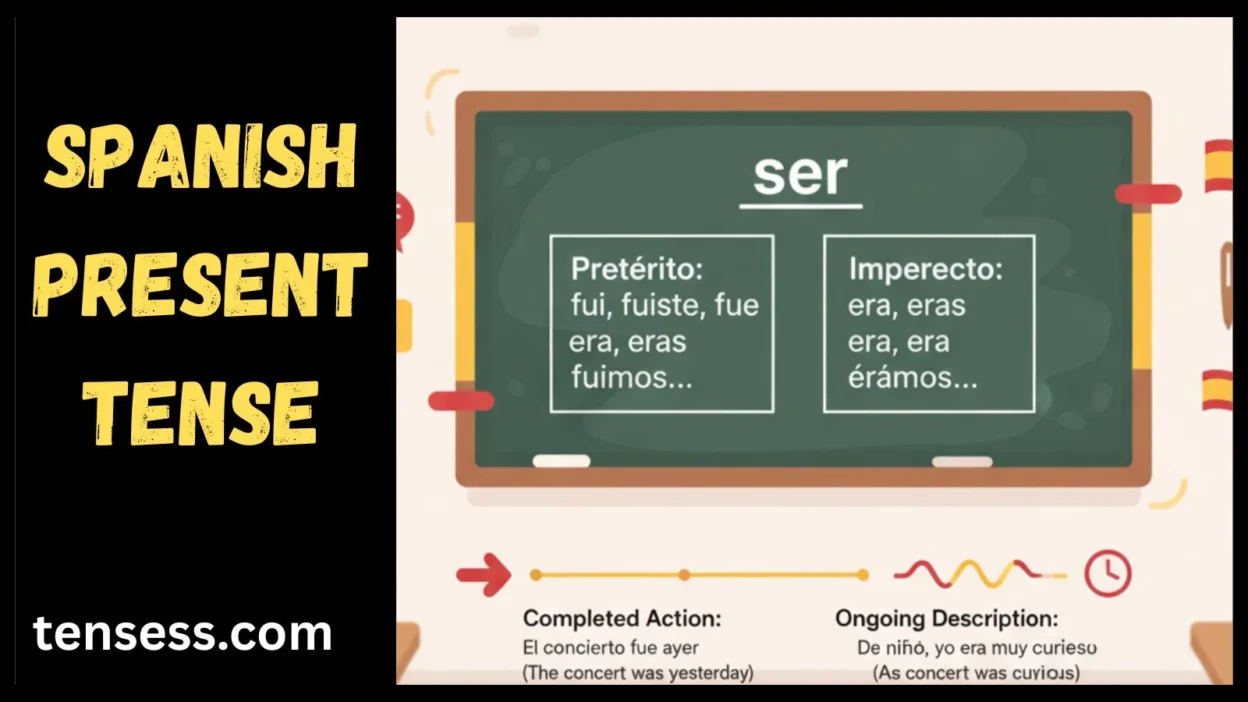
In Spanish, ser in the past tense primarily takes two forms: the preterite (fue, fuiste, etc.) and the imperfect (era, eras, etc.).
Each has distinct uses, making them vital for clear communication. This beginner-friendly guide explains the ser past tense, its conjugation, sentence structures, and practical examples.
We’ll also cover common mistakes, practice tips, and engaging exercises to help you master this verb tense.
By the end, you’ll confidently use ser past tense in conversations and writing.
Let’s dive into this essential Spanish grammar topic and make it easy to understand!
What Is the Ser Past Tense?
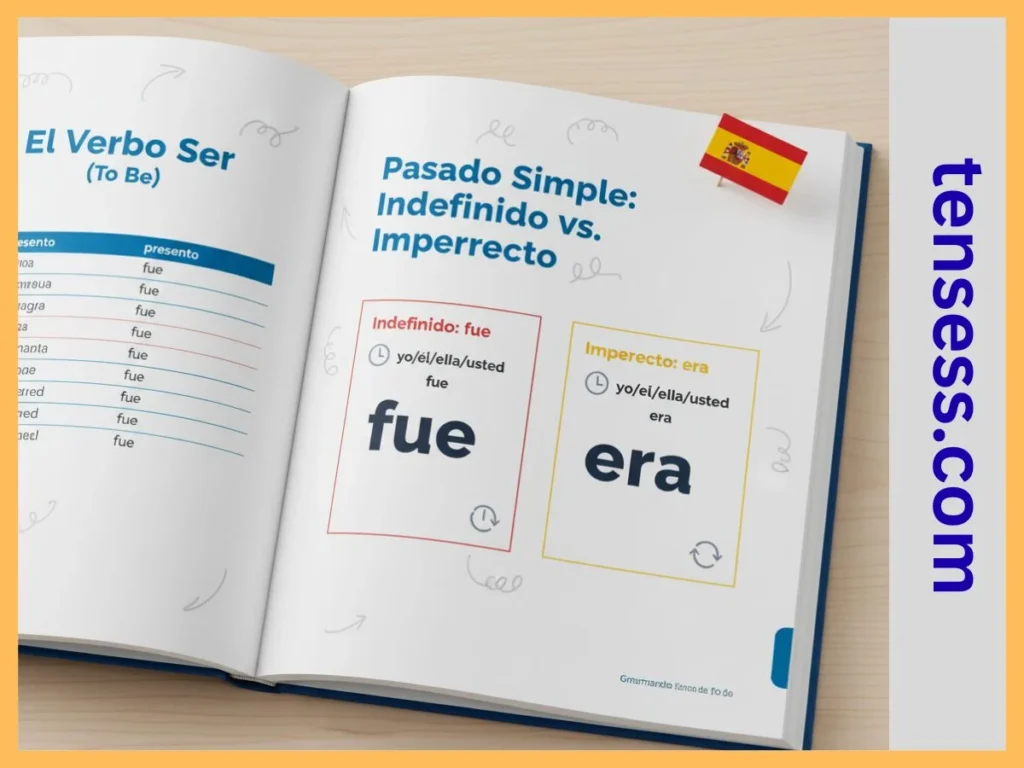
The ser past tense refers to the verb ser conjugated in either the preterite or imperfect tense to describe past states or events. The preterite (e.g., fue, fuimos) is used for completed actions or specific moments in the past, like “She was the winner.” The imperfect (e.g., era, eran) describes ongoing, habitual, or background states, like “He was kind as a child.” Understanding when to use each form is key to mastering Spanish verb conjugation. For example, ser in the preterite often highlights a one-time event, while the imperfect paints a picture of a recurring or prolonged state. This distinction makes ser past tense unique and versatile in storytelling and descriptions.
How to Recognize the Ser Past Tense?
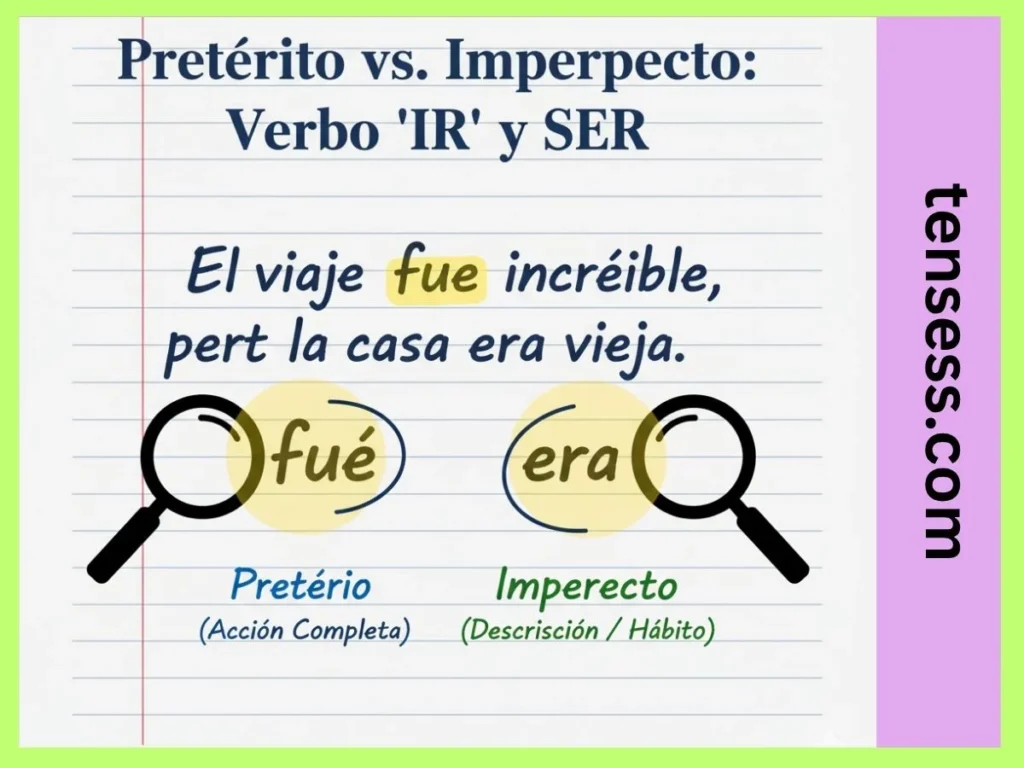
Recognizing the ser past tense involves identifying its conjugated forms in a sentence. Look for fue, fuiste, fui, fuimos, or fueron for the preterite, indicating a specific, completed action. For the imperfect, spot era, eras, éramos, erais, or eran, suggesting ongoing or habitual past states. Context clues like time expressions (“yesterday” for preterite, “always” for imperfect) also help. For example, in “Ella fue reina por un día” (She was queen for a day), fue signals a one-time event. In contrast, “Ella era reina en su infancia” (She was a queen in her childhood) uses era for a prolonged state. Practice spotting these forms in texts to improve your verb tense recognition.
Structure of Sentence
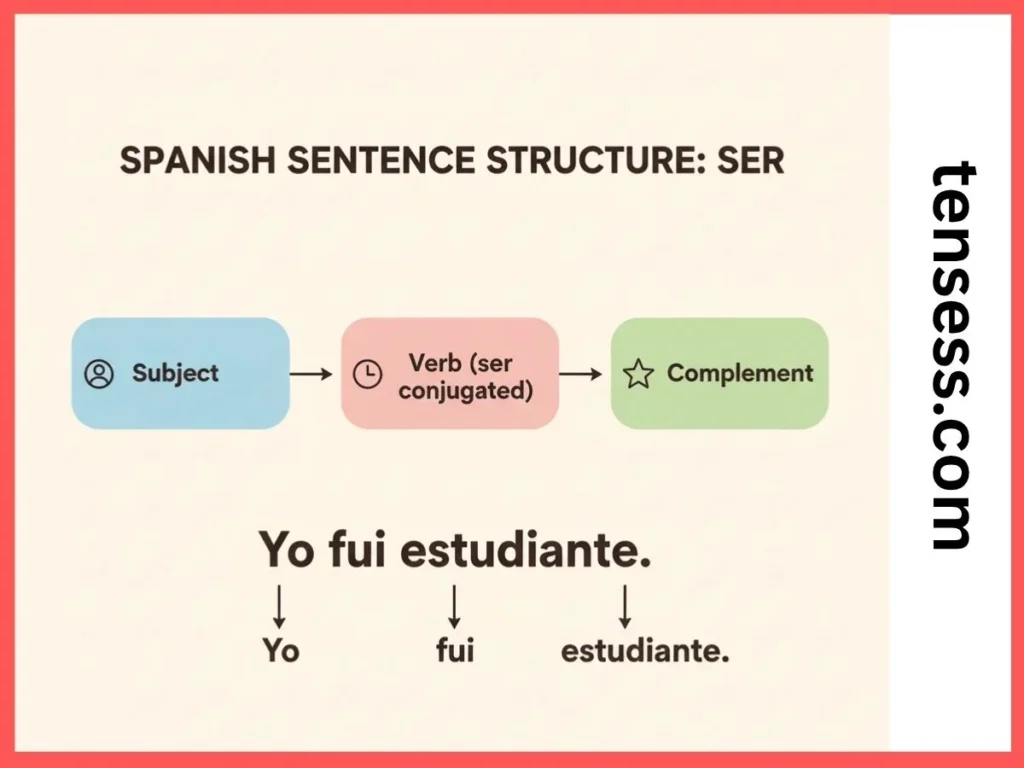
Sentences with the ser past tense typically follow the structure: Subject + ser (conjugated) + complement. The complement can be a noun, adjective, or prepositional phrase describing the subject. For example:
- Preterite: Yo fui estudiante (I was a student).
- Imperfect: Nosotros éramos amigos (We were friends).
Time expressions like ayer (yesterday) or siempre (always) often clarify the tense. Word order remains flexible in Spanish, but the conjugated ser must agree with the subject in number and person. This structure makes ser past tense sentences straightforward yet expressive.
Formation
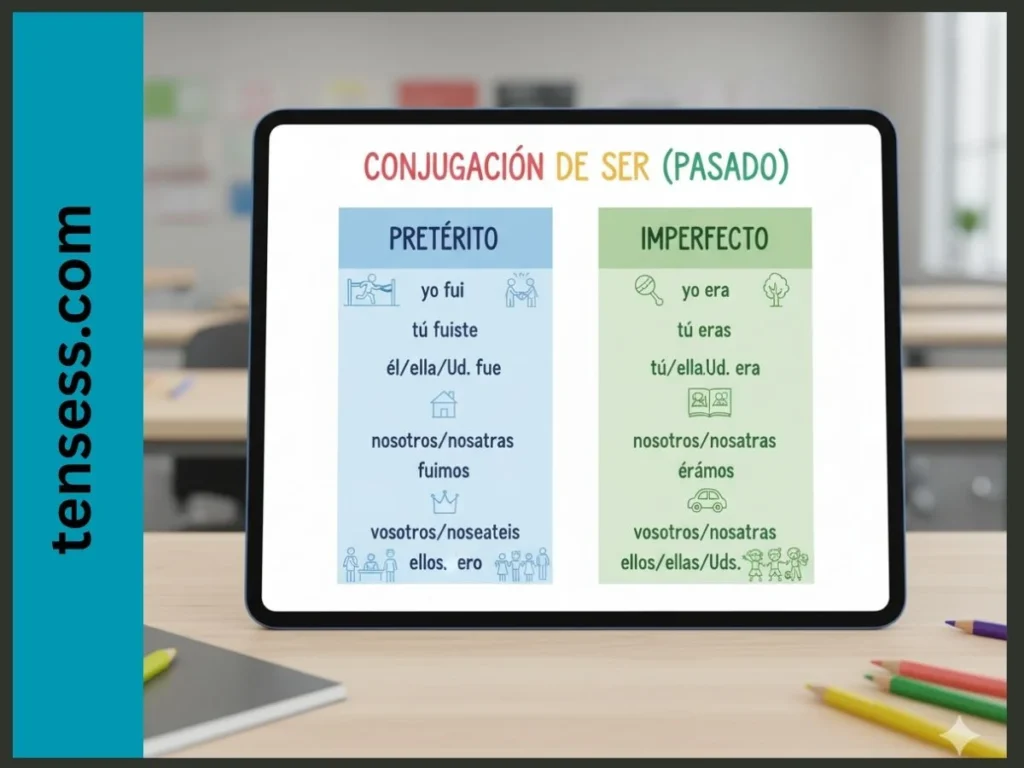
To form the ser past tense, conjugate ser based on the subject and tense:
- Preterite: Used for specific, completed actions. Stems from fui- or fu- (e.g., fui, fue, fuimos).
- Imperfect: Used for ongoing or habitual past actions. Stems from er- (e.g., era, eras, eran).
The formation depends on the subject pronoun (yo, tú, él/ella, etc.) and the chosen tense. Below, we’ll explore the conjugation table for clarity.
Verbs
The verb ser is unique because it’s irregular in both the preterite and imperfect tenses. Unlike regular verbs, ser doesn’t follow standard patterns, making it essential to memorize its forms. It’s one of two Spanish verbs meaning “to be” (the other is estar), but ser focuses on identity, characteristics, or permanent states in the past. No other verbs directly replace ser, though context may involve related verbs like parecer (to seem) or convertirse (to become).
Helping Verbs
The ser past tense doesn’t typically require helping verbs in simple sentences. However, in compound tenses like the past perfect (e.g., había sido – had been), the auxiliary verb haber is used with the past participle sido. For example:
- Ella había sido profesora (She had been a teacher).
This structure is less common in beginner contexts but useful for advanced learners.
Explanation of Some Verbs with Reference to Ser Past Tense
The verb ser in the past tense often interacts with other verbs or concepts in specific ways:
- Ser vs. Estar: Unlike estar (used for temporary states or locations), ser describes permanent characteristics or identities. E.g., Ella fue feliz (She was happy, preterite, a specific moment) vs. Ella estaba feliz (She was happy, temporary state).
- Parecer: Can resemble ser in describing traits. E.g., Parecía amable (He seemed kind) vs. Era amable (He was kind).
- Convertirse: Implies a change, unlike ser. E.g., Se convirtió en líder (He became a leader) vs. Fue líder (He was a leader).
These distinctions are crucial for accurate verb tense usage.
Table of Some Regular or Irregular Verbs in Ser Past Tense
| Subject | Preterite (Ser) | Imperfect (Ser) |
| Yo | fui | era |
| Tú | fuiste | eras |
| Él/Ella/Ud | fue | era |
| Nosotros | fuimos | éramos |
| Vosotros | fuisteis | erais |
| Ellos/Uds | fueron | eran |
Note: Ser is irregular in both tenses, with no stem changes but unique forms.
Simple Sentence Examples
- Yo fui médico por diez años. (I was a doctor for ten years.)
- Tú fuiste muy valiente. (You were very brave.)
- Ella fue presidenta en 2020. (She was president in 2020.)
- Nosotros fuimos estudiantes. (We were students.)
- Ellos fueron campeones. (They were champions.)
- Él era alto de niño. (He was tall as a child.)
- Vosotros erais amigos cercanos. (You all were close friends.)
- Ellas eran artistas famosas. (They were famous artists.)
- Tú eras siempre puntual. (You were always punctual.)
- Yo era tímido antes. (I was shy before.)
Negative Sentence Examples
- Yo no fui a la fiesta. (I wasn’t at the party.)
- Tú no fuiste el primero. (You weren’t the first.)
- Ella no fue amable ayer. (She wasn’t kind yesterday.)
- Nosotros no fuimos ricos. (We weren’t rich.)
- Ellos no fueron honestos. (They weren’t honest.)
- Él no era feliz en esa ciudad. (He wasn’t happy in that city.)
- Vosotros no erais pacientes. (You all weren’t patient.)
- Ellas no eran maestras. (They weren’t teachers.)
- Tú no eras el líder. (You weren’t the leader.)
- Yo no era fuerte entonces. (I wasn’t strong then.)
Interrogative Sentence Examples
- ¿Fui yo el ganador? (Was I the winner?)
- ¿Fuiste tú el responsable? (Were you the responsible one?)
- ¿Fue ella la jefa? (Was she the boss?)
- ¿Fuimos nosotros los últimos? (Were we the last ones?)
- ¿Fueron ellos los héroes? (Were they the heroes?)
- ¿Era él muy joven? (Was he very young?)
- ¿Erais vosotros los mejores? (Were you all the best?)
- ¿Eran ellas las dueñas? (Were they the owners?)
- ¿Eras tú siempre alegre? (Were you always cheerful?)
- ¿Era yo demasiado serio? (Was I too serious?)
Negative and Interrogative Sentence Examples
- ¿No fui yo el elegido? (Wasn’t I the chosen one?)
- ¿No fuiste tú el que llamó? (Weren’t you the one who called?)
- ¿No fue ella la ganadora? (Wasn’t she the winner?)
- ¿No fuimos nosotros los primeros? (Weren’t we the first?)
- ¿No fueron ellos los culpables? (Weren’t they the guilty ones?)
- ¿No era él muy amable? (Wasn’t he very kind?)
- ¿No erais vosotros los líderes? (Weren’t you all the leaders?)
- ¿No eran ellas las artistas? (Weren’t they the artists?)
- ¿No eras tú el más rápido? (Weren’t you the fastest?)
- ¿No era yo el mejor? (Wasn’t I the best?)
How to Conjugate Ser Past Tense
Conjugating ser in the past tense requires memorizing its irregular forms:
- Preterite: Use for specific, completed actions.
- Yo: fui
- Tú: fuiste
- Él/Ella/Ud.: fue
- Nosotros: fuimos
- Vosotros: fuisteis
- Ellos/Uds.: fueron
- Imperfect: Use for ongoing or habitual states.
- Yo: era
- Tú: eras
- Él/Ella/Ud.: era
- Nosotros: éramos
- Vosotros: erais
- Ellos/Uds.: eran
- Match the conjugation to the subject.
- Use context to choose preterite or imperfect.
- Avoid regular verb endings like -é or -aba.
- Practice with different subjects.
- Memorize forms through repetition.
- Use flashcards for quick recall.
- Test yourself with sentences.
- Listen to native speakers for accuracy.
Conjugation Table (for All Subjects)
| Subject | Preterite | Imperfect |
| Yo | fui | era |
| Tú | fuiste | eras |
| Él/Ella/Ud | fue | era |
| Nosotros | fuimos | éramos |
| Vosotros | fuisteis | erais |
| Ellos/Uds | fueron | eran |
Spelling Changes or Irregularities
The ser past tense is irregular, with no standard stem or predictable endings. In the preterite, forms like fui and fue derive from Latin, not following regular -ar verb patterns. The imperfect uses the stem er-, unlike regular verbs’ -aba. There are no spelling changes within these forms, but the irregularity requires memorization. For example, fue (such as they was) doesn’t resemble regular preterite endings like -ó. Similarly, éramos includes an accent on the é. Learners must practice these unique forms to avoid errors.
Sentence Examples
- Yo fui capitán del equipo. (I was the team captain.)
- Tú fuiste mi mejor amigo. (You were my best friend.)
- Ella fue una gran escritora. (She was a great writer.)
- Nosotros fuimos los ganadores. (We were the winners.)
- Ellos fueron muy generosos. (They were very generous.)
- Él era un niño curioso. (He was a curious child.)
- Vosotros erais los más divertidos. (You all were the most fun.)
- Ellas eran profesoras excelentes. (They were excellent teachers.)
- Tú eras el alma de la fiesta. (You were the life of the party.)
- Yo era muy creativo antes. (I was very creative before.)
- Él fue rey por un día. (He was king for a day.)
- Nosotros éramos vecinos entonces. (We were neighbors then.)
- Ella era siempre amable. (She was always kind.)
- Ellos eran músicos talentosos. (They were talented musicians.)
- Tú fuiste el héroe ayer. (You were the hero yesterday.)
Common Mistakes with Ser Past Tense
- Confusing Ser vs. Estar: Using estar for permanent traits (e.g., Ella estaba alta instead of Ella era alta).
- Mixing Preterite and Imperfect: Using fue for ongoing states (e.g., Fui joven instead of Era joven).
- Incorrect Subject Agreement: Saying Yo fue instead of Yo fui.
- Forgetting Irregular Forms: Applying regular endings like seré for past tense.
- Omitting Accents: Writing eramos instead of éramos.
- Using Present Tense: Saying Es joven instead of Era joven for past descriptions.
- Misplacing Negation: Incorrectly placing no (e.g., Fue no amable instead of No fue amable).
- Overusing Preterite: Using fue for habitual actions (e.g., Fui feliz siempre instead of Era feliz siempre).
- Ignoring Context: Choosing the wrong tense based on time clues.
- Mispronouncing Forms: Pronouncing fui as “foo-ee” instead of “fwee.”
How to Avoid Them:
- Study ser vs. estar rules.
- Practice preterite vs. imperfect with examples.
- Memorize subject-specific forms.
- Use flashcards for irregular conjugations.
- Check for accents in writing.
- Contextualize with time expressions.
- Place no before the verb.
- Review habitual vs. one-time actions.
- Analyze sentence context.
- Practice pronunciation with audio.
Related Verbs and Synonyms for Ser Past Tense
- Estar: Often confused with ser. Use estar for temporary states (e.g., Estaba cansado – He was tired) vs. ser for identity (e.g., Era médico – He was a doctor).
- Parecer: Means “to seem” but can mimic ser in descriptions (e.g., Parecía feliz vs. Era feliz).
- Convertirse: Means “to become,” implying change (e.g., Se convirtió en jefe vs. Fue jefe).
- Resultar: Used for outcomes (e.g., Resultó difícil – It turned out difficult).
- Quedar: Can mean “to be” in specific contexts (e.g., Quedó claro – It was clear).
Sentence Comparisons:
- Ella era alta (She was tall, permanent) vs. Ella estaba alta (She was high, temporary).
- Parecía joven (He seemed young) vs. Era joven (He was young).
- Se convirtió en líder (She became a leader) vs. Fue líder (She was a leader).
- Resultó imposible (It turned out impossible) vs. Era imposible (It was impossible).
- Quedó perfecto (It was perfect) vs. Fue perfecto (It was perfect).
Tips to Practice Using Ser Past Tense
- Write a diary entry using ser in preterite and imperfect.
- Describe your childhood with era/eras.
- Create sentences about past events using fui/fue.
- Practice with a partner, alternating tenses.
- Use flashcards for conjugation recall.
- Read Spanish stories and highlight ser forms.
- Listen to Spanish podcasts for context clues.
- Complete online ser past tense exercises.
- Watch Spanish shows and note tense usage.
- Join a language group to practice speaking.
Frequently Asked Questions
- What’s the difference between fue and era? Fue is preterite (specific events); era is imperfect (ongoing states).
- When do I use ser vs. estar in the past? Use ser for identity/traits; estar for temporary states.
- Is ser regular in the past tense? No, it’s irregular in both preterite and imperfect.
- Can ser be used in compound tenses? Yes, e.g., había sido (past perfect).
- Why is fui used for “I was”? It’s an irregular preterite form of ser.
- How do I know if it’s preterite or imperfect? Check time clues (e.g., “yesterday” vs. “always”).
- Are there synonyms for ser? Not directly, but parecer or convertirse may overlap.
- What’s a common mistake with ser? Confusing it with estar or mixing tenses.
- How do I practice ser? Write sentences, read, and speak with natives.
- Does ser change spelling? No, but its forms are irregular.
Exercises
- Conjugate ser in preterite for tú.
- Write a sentence using era with nosotros.
- Make a negative sentence with fue.
- Form an interrogative sentence with eran.
- Use fui in a sentence about yesterday.
- Describe a past habit using eras.
- Create a sentence with fuimos and a profession.
- Write a negative interrogative with fueron.
- Use era to describe a childhood trait.
- Combine fue with a time expression.
Quizzes
- True/False: Fui is used for ongoing past actions. (False)
- Fill-in: Yo ___ estudiante en 2010. (fui)
- Choose: Era/Eras for “You were kind.” (Eras)
- Identify: Is fue preterite or imperfect? (Preterite)
- Correct: Ella no fue alta or Ella no era alta? (Era)
- Match: Pair fuimos with its subject. (Nosotros)
- Write: A sentence with eran and “friends.”
- True/False: Era describes specific events. (False)
- Fill-in: Ellos ___ campeones ayer. (fueron)
- Choose: Fue/Fui for “I was the leader.” (Fui)
True/False
- Fui is the preterite form for “I was.” (True)
- Era is used for one-time events. (False)
- Fuiste is the imperfect form for “you were.” (False)
- Éramos needs an accent on the é. (True)
- Ser is regular in the past tense. (False)
- Fueron is used for “they were” in preterite. (True)
- Era can describe childhood traits. (True)
- Fue is used for habitual actions. (False)
- Ser requires a helping verb in simple past. (False)
- Eras is the imperfect form for “tú.” (True)
Conclusion
Mastering the ser past tense is a game-changer for Spanish learners, writers, and grammar enthusiasts.
By understanding the preterite (fui, fue) and imperfect (era, eran), you can vividly describe past identities, characteristics, and events.
This guide covered ser past tense conjugation, sentence structures, and real-life examples to make learning accessible and engaging.
Avoid common pitfalls like confusing ser with estar or mixing tenses by practicing with our exercises and tips.
Keep experimenting with verb tense examples in conversations, writing, or even a grammar checker to refine your skills.
Ready to take your Spanish to the next level? Try writing 10 sentences using ser past tense or explore online tools to practice.
Share your progress in the comments or join a language group to keep learning!