The Spanish present tense is a cornerstone of Spanish grammar, essential for anyone looking to communicate fluently.
If you’re a student, language learner, writer, or grammar enthusiast, mastering this tense opens the door to expressing actions, habits, and facts happening right now.
In this article, we’ll break down the Spanish present tense in a clear, beginner-friendly way, covering its definition, structure, conjugation, and real-life examples.
You’ll also find practical tips, common mistakes to avoid, and engaging exercises to solidify your understanding.
By the end, you’ll feel confident using the present tense in conversations, writing, or even casual chats with native speakers.
Let’s dive into the world of Spanish verb conjugation and explore how to use the present tense correctly!
What Is the Spanish Present Tense?
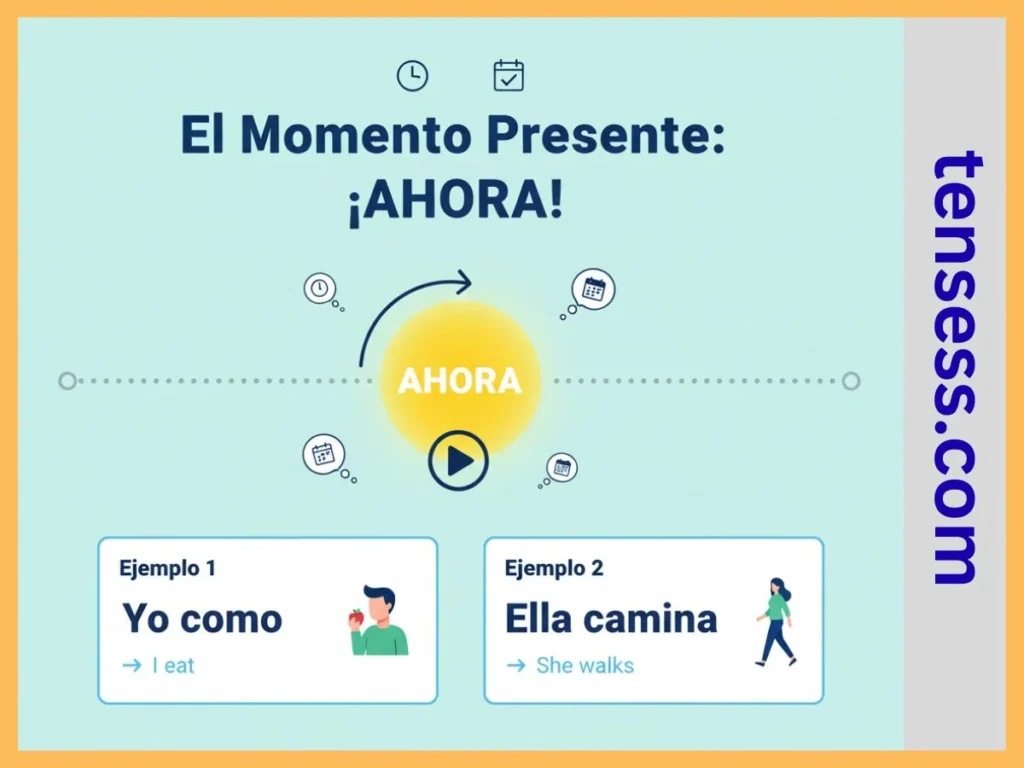
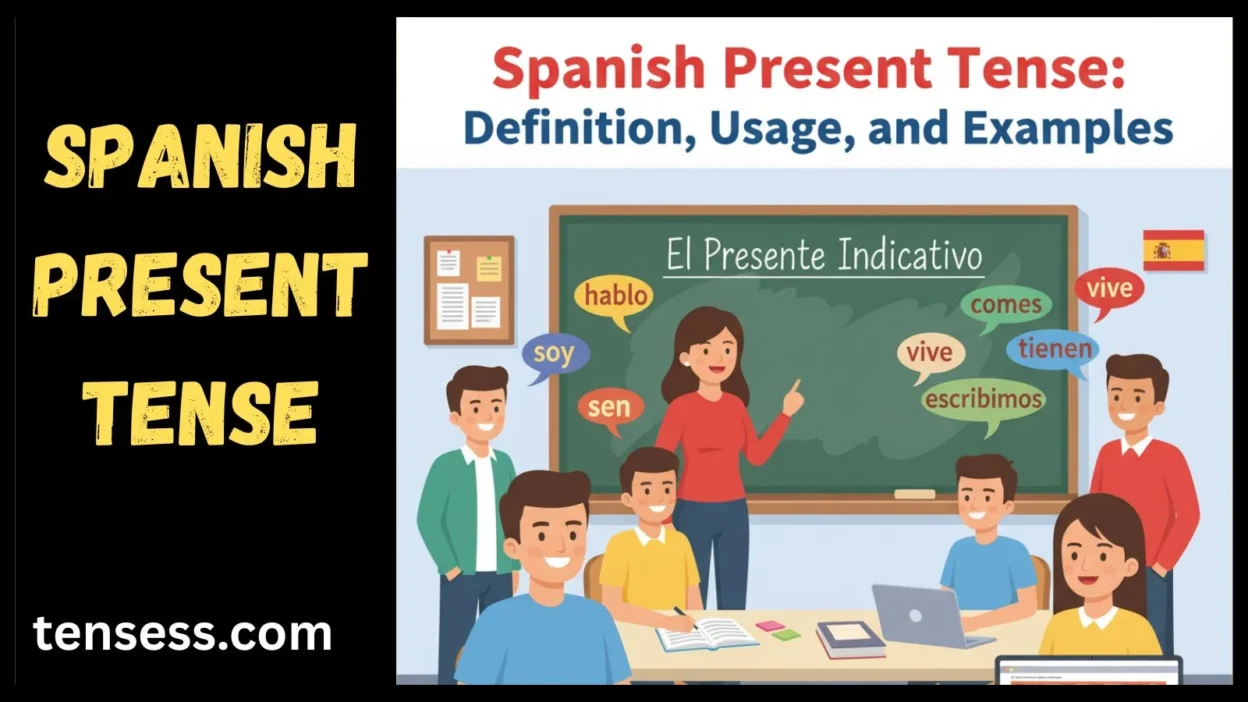
The Spanish present tense, or presente de indicativo, is used to describe actions happening now, general truths, routines, and scheduled events. It’s one of the most versatile tenses in Spanish, allowing you to express what you do, feel, or observe in the moment. For example, “I eat” (Yo como) or “The sun rises” (El sol sale) are present tense statements. It’s also used for habitual actions, like “She walks every day” (Ella camina todos los días), and to state facts, such as “Water boils at 100°C” (El agua hierve a 100°C). Understanding this tense is key to building a strong foundation in Spanish grammar.
How to Recognize the Spanish Present Tense?
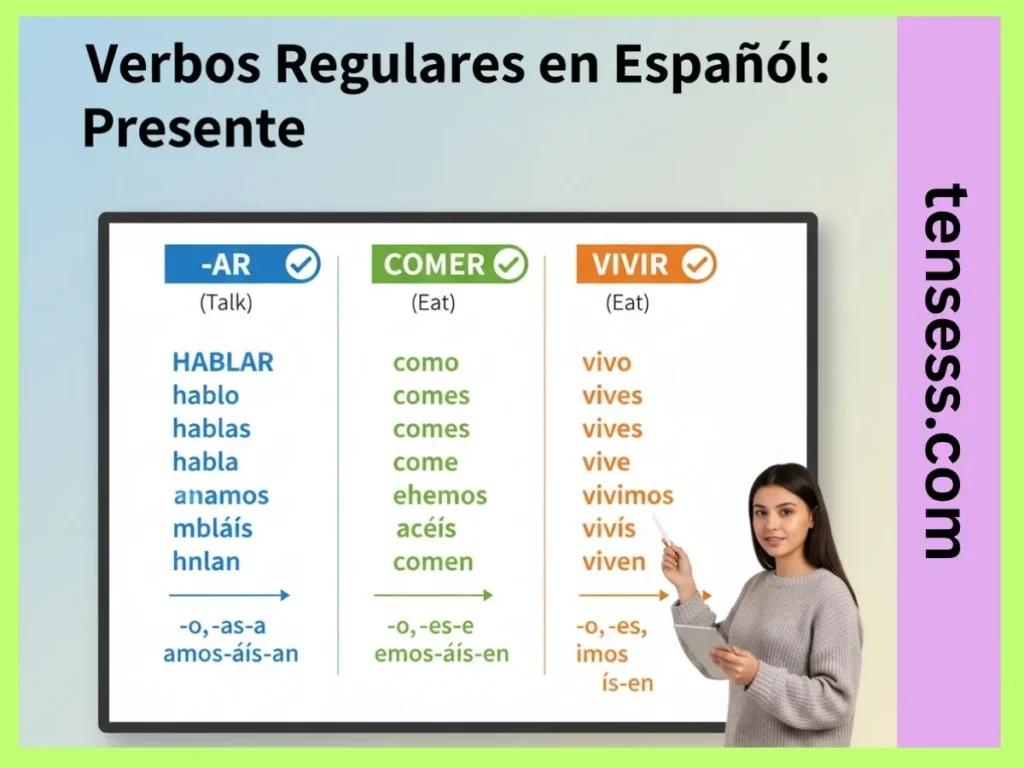
Recognizing the Spanish present tense is simple once you know its endings. Regular verbs follow predictable patterns based on their infinitive endings: -ar, -er, or -ir. For example, hablar (to speak) becomes hablo (I speak), and comer (to eat) becomes como (I eat). Look for these endings in sentences, and note whether the action is happening now or describes a routine. Irregular verbs, like ser (to be) or ir (to go), don’t always follow these patterns but are still used in present tense contexts. Pay attention to the subject and verb agreement to spot this tense in action.
Structure of a Sentence in the Spanish Present Tense
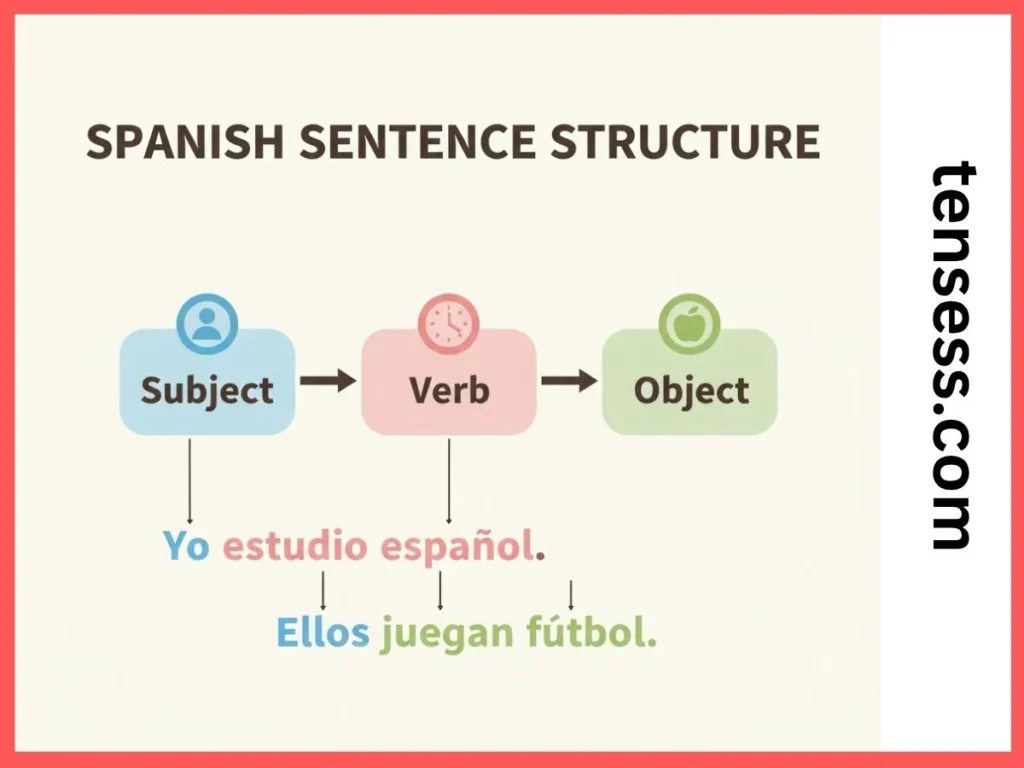
A basic sentence in the Spanish present tense follows this structure: Subject + Verb (conjugated) + Object/Complement. For example:
- Yo estudio español. (I study Spanish.)
- Ellos juegan fútbol. (They play soccer.)
The verb must match the subject in number (singular/plural) and person (first, second, third). Unlike English, Spanish often omits the subject pronoun when it’s clear from context, e.g., Como pizza. (I eat pizza.) The tense is indicated by the verb’s conjugation, not auxiliary verbs like in English.
Formation of the Spanish Present Tense
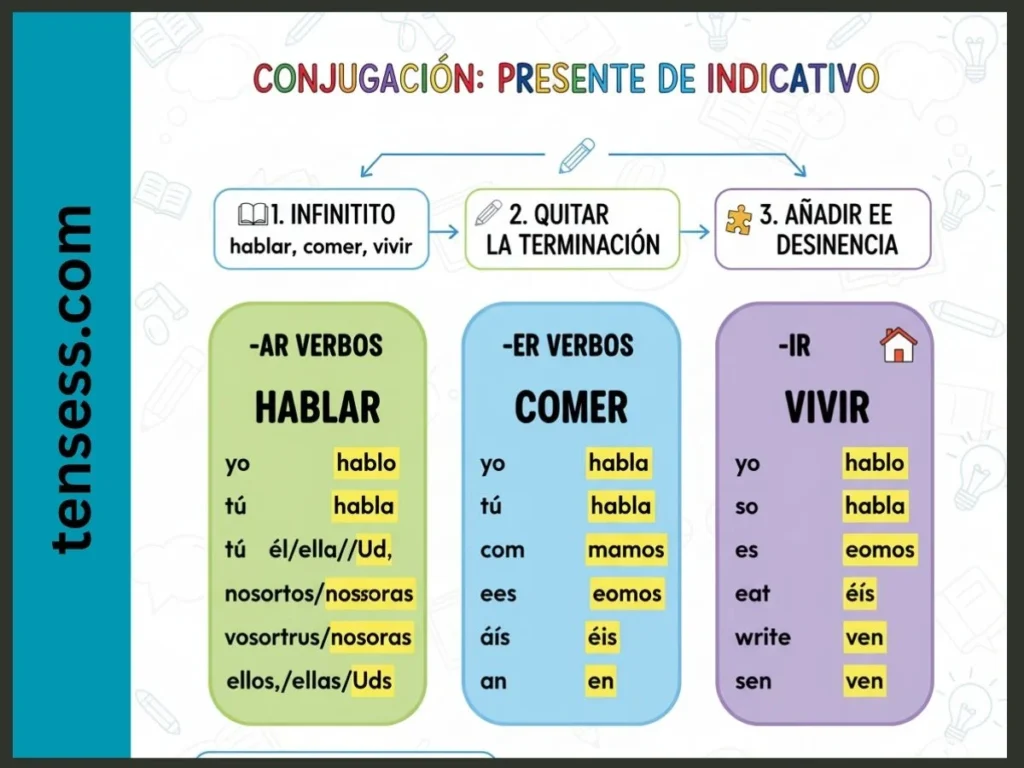
To forman verb in the Spanish present tense, start with the infinitive verb and replace its ending with the appropriate conjugation based on the subject. Here’s a quick overview:
- -ar verbs: hablar → hablo, hablas, habla, hablamos, habláis, hablan
- -er verbs: comer → como, comes, come, comemos, coméis, comen
- -ir verbs: vivir → vivo, vives, vive, vivimos, vivís, viven
Irregular verbs, like tener (to have) or hacer (to do/make), follow unique patterns and must be memorized.
Verbs in the Spanish Present Tense
The Spanish present tense applies to all verbs, including regular, irregular, reflexive, and stem-changing verbs. Regular verbs follow predictable conjugation patterns, while irregular verbs deviate in their stems or endings. Reflexive verbs, like lavarse (to wash oneself), require a reflexive pronoun (e.g., me lavo). Stem-changing verbs, such as querer (to want), change their vowel in the stem (e.g., quiero). Understanding these categories helps you use the present tense effectively.
Helping Verbs in the Spanish Present Tense
Unlike English, the Spanish present tense doesn’t rely on auxiliary verbs like “do” or “am” for simple statements. However, modal verbs like poder (can), querer (want), or deber (must) are often used to add nuance. For example:
- Puedo correr. (I can run.)
- Quiero comer. (I want to eat.)
These verbs are conjugated in the present tense, followed by an infinitive verb.
Explanation of Some Verbs in the Spanish Present Tense
Let’s explore key verbs in the Spanish present tense:
- Hablar (to speak): Regular -ar verb, e.g., Hablo español. (I speak Spanish.)
- Comer (to eat): Regular -er verb, e.g., Como manzanas. (I eat apples.)
- Vivir (to live): Regular -ir verb, e.g., Vivo en Madrid. (I live in Madrid.)
- Ser (to be): Irregular, e.g., Soy estudiante. (I am a student.)
- Ir (to go): Irregular, e.g., Voy al parque. (I go to the park.)
Each verb type follows specific conjugation rules, with irregular verbs requiring extra attention.
Table of Some Regular and Irregular Verbs in the Spanish Present Tense
| Verb | Type | Yo | Tú | Él/Ella | Nosotros | Vosotros | Ellos/Ellas |
| Hablar | Regular | hablo | hablas | habla | hablamos | habláis | hablan |
| Comer | Regular | como | comes | come | comemos | coméis | comen |
| Vivir | Regular | vivo | vives | vive | vivimos | vivís | viven |
| Ser | Irregular | soy | eres | es | somos | sois | son |
| Ir | Irregular | voy | vas | va | vamos | vais | van |
Simple Sentence Examples
- Yo estudio en la biblioteca. (I study in the library.)
- Tú cantas muy bien. (You sing very well.)
- Él juega al tenis. (He plays tennis.)
- Ella escribe un libro. (She writes a book.)
- Nosotros vivimos en México. (We live in Mexico.)
- Vosotros coméis pizza. (You all eat pizza.)
- Ellos bailan salsa. (They dance salsa.)
- Usted habla español. (You [formal] speak Spanish.)
- La niña lee un cuento. (The girl reads a story.)
- El perro corre rápido. (The dog runs fast.)
Negative Sentence Examples
- No estudio en casa. (I don’t study at home.)
- Tú no cantas hoy. (You don’t sing today.)
- Él no juega fútbol. (He doesn’t play soccer.)
- Ella no escribe cartas. (She doesn’t write letters.)
- Nosotros no vivimos aquí. (We don’t live here.)
- Vosotros no coméis carne. (You all don’t eat meat.)
- Ellos no bailan bien. (They don’t dance well.)
- Usted no habla francés. (You [formal] don’t speak French.)
- La niña no lee ahora. (The girl isn’t reading now.)
- El perro no corre lento. (The dog doesn’t run slowly.)
Interrogative Sentence Examples
- ¿Estudias en la universidad? (Do you study at the university?)
- ¿Cantáis en el coro? (Do you all sing in the choir?)
- ¿Juega él al baloncesto? (Does he play basketball?)
- ¿Escribe ella un correo? (Is she writing an email?)
- ¿Vivimos en la misma ciudad? (Do we live in the same city?)
- ¿Coméis vosotros tacos? (Do you all eat tacos?)
- ¿Bailan ellos en la fiesta? (Are they dancing at the party?)
- ¿Habla usted italiano? (Do you [formal] speak Italian?)
- ¿Lee la niña un libro? (Is the girl reading a book?)
- ¿Corre el perro en el parque? (Does the dog run in the park?)
Negative and Interrogative Sentence Examples
- ¿No estudias en la biblioteca? (Don’t you study in the library?)
- ¿No cantas tú hoy? (Aren’t you singing today?)
- ¿No juega él al tenis? (Doesn’t he play tennis?)
- ¿No escribe ella un libro? (Isn’t she writing a book?)
- ¿No vivimos nosotros en México? (Don’t we live in Mexico?)
- ¿No coméis vosotros pizza? (Don’t you all eat pizza?)
- ¿No bailan ellos salsa? (Aren’t they dancing salsa?)
- ¿No habla usted español? (Don’t you [formal] speak Spanish?)
- ¿No lee la niña un cuento? (Isn’t the girl reading a story?)
- ¿No corre el perro rápido? (Doesn’t the dog run fast?)
How to Conjugate the Spanish Present Tense
Conjugating verbs in the Spanish present tense involves these steps:
- Identify the verb’s infinitive ending (-ar, -er, -ir).
- Remove the ending to find the stem (e.g., hablar → habl-).
- Add the appropriate present tense ending based on the subject.
- For -ar verbs: -o, -as, -a, -amos, -áis, -an.
- For -er verbs: -o, -es, -e, -emos, -éis, -en.
- For -ir verbs: -o, -es, -e, -imos, -ís, -en.
- Check if the verb is irregular (e.g., ser: soy, eres, es).
- For stem-changing verbs, modify the stem vowel (e.g., pensar → pienso).
- Add reflexive pronouns for reflexive verbs (e.g., me lavo).
- Practice with different subjects to master conjugation.
Conjugation Table for All Subjects
| Subject | Hablar (-ar) | Comer (-er) | Vivir (-ir) | Ser (Irregular) |
| Yo | hablo | como | vivo | soy |
| Tú | hablas | comes | vives | eres |
| Él/Ella/Usted | habla | come | vive | es |
| Nosotros | hablamos | comemos | vivimos | somos |
| Vosotros | habláis | coméis | vivís | sois |
| Ellos/Ellas | hablan | comen | viven | son |
Spelling Changes or Irregularities
Some verbs undergo spelling changes or are irregular in the Spanish present tense:
- Stem-changing verbs: e → ie (e.g., pensar → pienso), o → ue (e.g., dormir → duermo), e → i (e.g., pedir → pido).
- -cer/-cir verbs: Change c → zc before o or a (e.g., conocer → conozco).
- -ger/-gir verbs: Change g → j before o or a (e.g., escoger → escojo).
- Irregular verbs: Ser, ir, tener, hacer have unique forms (e.g., tengo, hago).
- Vowel changes: Verbs like jugar change u → ue (juego).
- Check for i → y in some -ir verbs (e.g., oír → oigo).
- Memorize fully irregular verbs like dar (doy).
- Reflexive verbs require pronouns (e.g., levantarse → me levanto).
- Practice irregular forms to avoid mistakes.
- Use conjugation charts for reference.
Sentence Examples with Different Subjects
- Yo como frutas frescas. (I eat fresh fruits.)
- Tú lees un libro interesante. (You read an interesting book.)
- Él escribe una carta larga. (He writes a long letter.)
- Ella canta en el escenario. (She sings on stage.)
- Nosotros estudiamos español. (We study Spanish.)
- Vosotros bailáis en la fiesta. (You all dance at the party.)
- Ellos corren en el parque. (They run in the park.)
- Usted vive en una casa grande. (You [formal] live in a big house.)
- La niña juega con su perro. (The girl plays with her dog.)
- Los chicos escuchan música. (The boys listen to music.)
- Yo quiero un café. (I want a coffee.)
- Tú tienes un gato. (You have a cat.)
- Ella duerme mucho. (She sleeps a lot.)
- Nosotros pensamos en ti. (We think about you.)
- Ellos saben la verdad. (They know the truth.)
Common Mistakes with the Spanish Present Tense
- Forgetting subject-verb agreement: Ensure the verb matches the subject (e.g., Ella canta, not Ella canto).
- Using English auxiliary verbs: Avoid “do” or “does” (e.g., say ¿Hablas?, not ¿Tú haces hablar?).
- Ignoring stem changes: Apply changes like e → ie (e.g., pienso, not penso).
- Misusing irregular verbs: Memorize forms like soy, not sero.
- Overusing pronouns: Omit pronouns when clear (e.g., Como, not always Yo como).
- Confusing reflexive verbs: Use pronouns correctly (e.g., Me lavo, not Lavo).
- Incorrect negative placement: Place no before the verb (e.g., No como, not Como no).
- Mixing tenses: Stick to present for current actions (e.g., Vivo aquí, not Viví aquí).
- Spelling errors: Watch for changes like conozco, not conoco.
- Not practicing enough: Regular practice prevents errors.
Related Verbs and Synonyms for the Spanish Present Tense
Some verbs are often confused with Spanish present tense verbs due to similar meanings:
- Hablar vs. Conversar: Both mean “to speak/talk,” but conversar implies a two-way conversation.
- Hablo con mi amigo. (I speak with my friend.) vs. Conversamos toda la noche. (We talked all night.)
- Comer vs. Almorzar: Comer is “to eat,” while almorzar means “to have lunch.”
- Como una manzana. (I eat an apple.) vs. Almuerzo a las doce. (I have lunch at noon.)
- Vivir vs. Residir: Vivir is “to live,” while residir is more formal.
- Vivo en España. vs. Resido en Madrid.
- Ser vs. Estar: Both mean “to be,” but ser is for permanent traits, estar for temporary states.
- Soy alto. (I am tall.) vs. Estoy cansado. (I am tired.)
- Saber vs. Conocer: Saber is “to know facts,” conocer is “to know people/places.”
- Sé la respuesta. (I know the answer.) vs. Conozco a María. (I know María.)
Tips to Practice Using the Spanish Present Tense
- Practice with flashcards for regular and irregular conjugations.
- Write a daily journal using present tense verbs.
- Speak with native speakers to practice real-time conjugation.
- Use language apps like Duolingo for interactive exercises.
- Create sentences with different subjects (e.g., Yo, Tú, Ellos).
- Watch Spanish shows and identify present tense verbs.
- Join a language study group for peer practice.
- Record yourself speaking and review your verb usage.
- Play verb conjugation games online.
- Practice negative and interrogative sentences daily.
Frequently Asked Questions
- What is the Spanish present tense used for? It describes current actions, habits, and facts.
- How do I conjugate regular verbs? Remove the infinitive ending and add the appropriate present tense ending.
- What are stem-changing verbs? Verbs that change their stem vowel (e.g., pensar → pienso).
- Are there irregular verbs in the present tense? Yes, like ser, ir, and tener.
- How do I form negative sentences? Place no before the conjugated verb.
- What’s the difference between ser and estar? Ser is for permanent traits, estar for temporary states.
- Can I omit subject pronouns? Yes, when the subject is clear from context.
- How do I ask questions in the present tense? Use intonation or invert subject and verb.
- What are reflexive verbs? Verbs requiring a reflexive pronoun, like lavarse.
- How can I practice effectively? Use exercises, apps, and real-life conversations.
Exercises
- Conjugate hablar for all subjects in the present tense.
- Write 5 sentences using comer in different forms.
- Create 3 negative sentences with vivir.
- Form 3 interrogative sentences with jugar.
- Conjugate ser and use it in a sentence.
- Identify the stem change in pensar and write a sentence.
- Write a negative interrogative sentence with bailar.
- Use poder in a sentence with another verb.
- Conjugate ir for tú and ellos.
- Write a sentence with a reflexive verb like levantarse.
Quizzes
True or False:
- The Spanish present tense is only used for actions happening now. (False)
- All verbs follow the same conjugation pattern. (False)
- No goes before the verb in negative sentences. (True)
- Ser and estar mean the same thing. (False)
- Reflexive verbs need a pronoun like me or se. (True)
- Hablo is the correct conjugation for yo with hablar. (True)
- Stem-changing verbs change their endings. (False)
- You can omit subject pronouns in Spanish. (True)
- Poder is an irregular verb. (True)
- The present tense can describe habits. (True)
Conclusion
Mastering the Spanish present tense is a game-changer for language learners, enabling you to describe actions, habits, and facts with confidence.
By understanding its structure, conjugation rules, and common pitfalls, you can communicate effectively in everyday situations.
Practice regularly with the exercises and tips provided, and don’t be afraid to make mistakes—they’re part of the learning process! Try writing your own sentences, speaking with native speakers, or using a grammar checker to refine your skills.
With dedication, the present tense will become second nature.
Start practicing today—write five present tense sentences and share them with a friend or language partner!