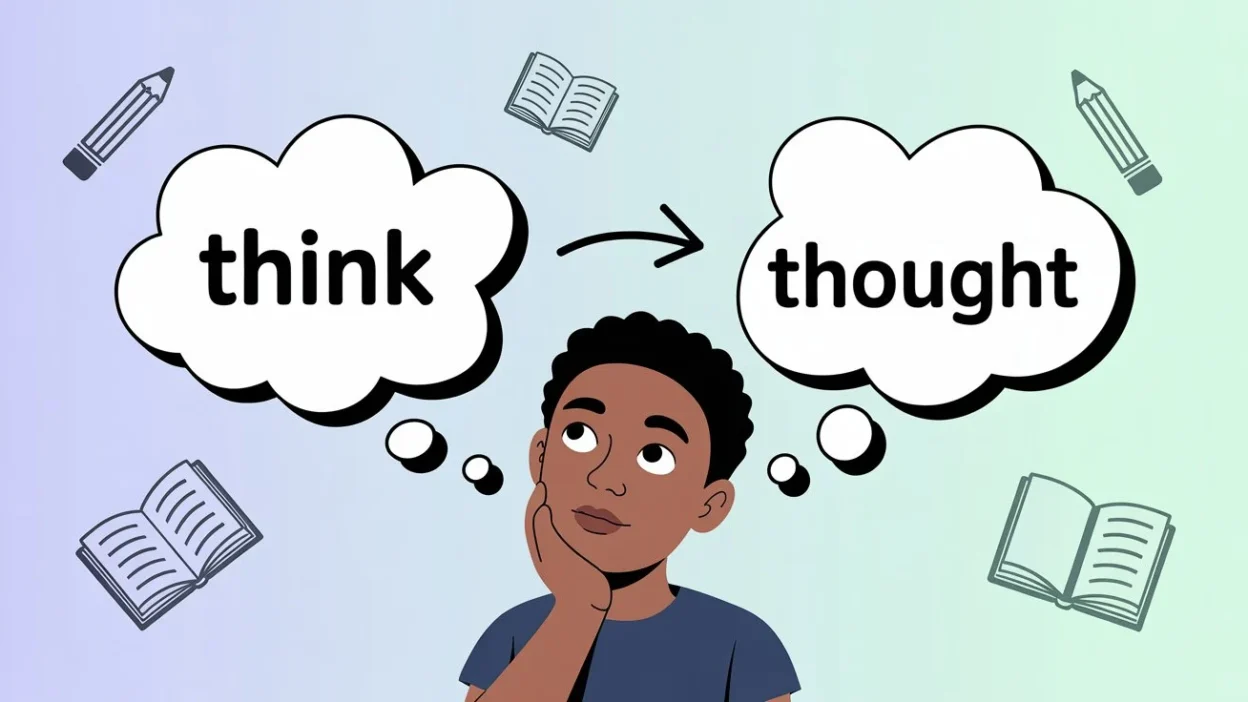
The past tense of think, which is thought, is an essential concept for students, language learners, writers, and grammar enthusiasts.
Understanding how to use thought correctly helps you describe actions or ideas that happened in the past with clarity.
If you’re writing a story, studying for an exam, or improving your English, mastering the past tense of think is key to effective communication.
This beginner-friendly guide, we’ll explore the definition, structure, and usage of thought, along with practical examples to make it easy to understand.
You’ll also find tips to avoid common mistakes, practice exercises, and answers to frequently asked questions.
By the end, you’ll feel confident using thought in your writing and conversations.
Let’s dive into the world of verb tense examples and learn how to use thought like a pro!
What Is the Past Tense of Think?
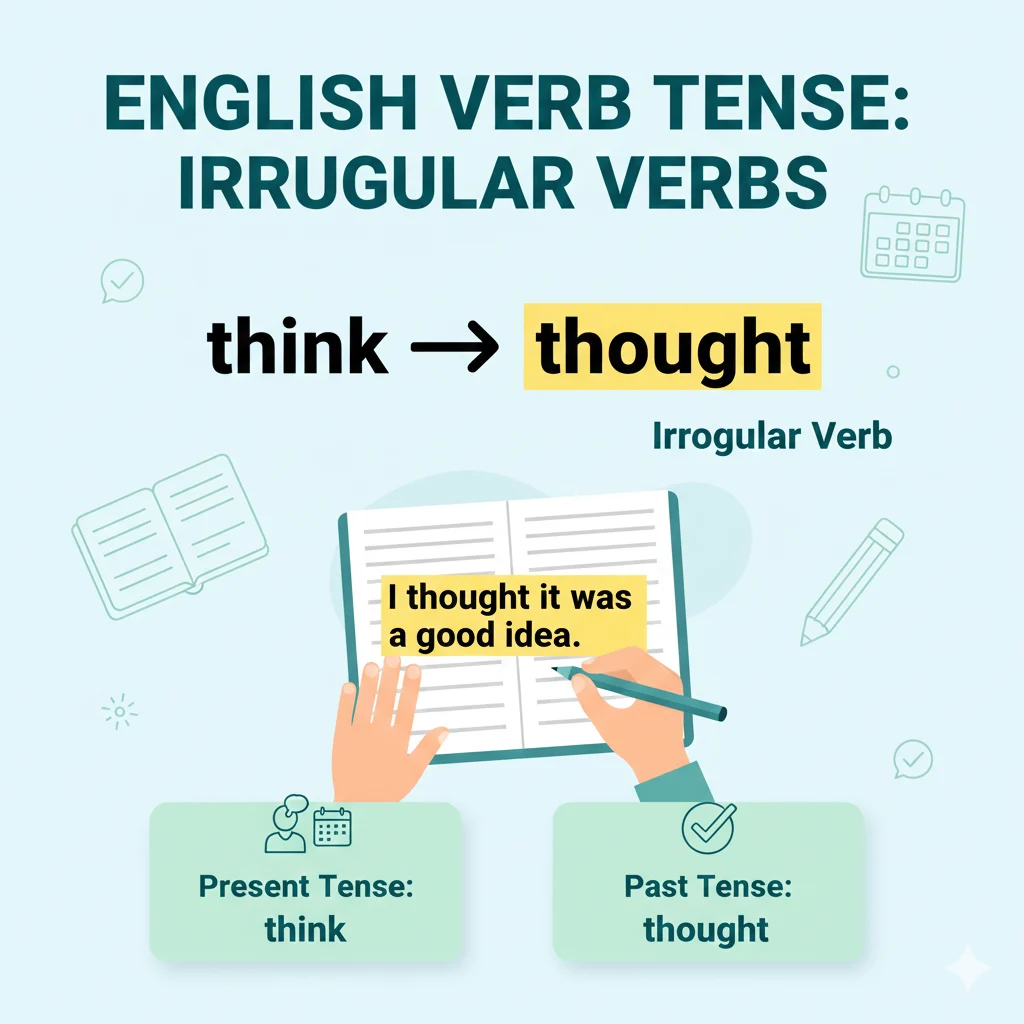
The past tense of think is thought. It’s an irregular verb, meaning it doesn’t follow the standard “-ed” ending for regular verbs like “walked” or “talked.” Instead, think changes to thought to indicate that the action occurred in the past. For example, “I think about the future” becomes “I thought about the future” when referring to a past event. Thought is used to express ideas, opinions, or reflections that took place at a specific time in the past. It’s a simple yet powerful verb that appears in everyday conversations, academic writing, and creative storytelling.
How to Recognize the Past Tense of Think?
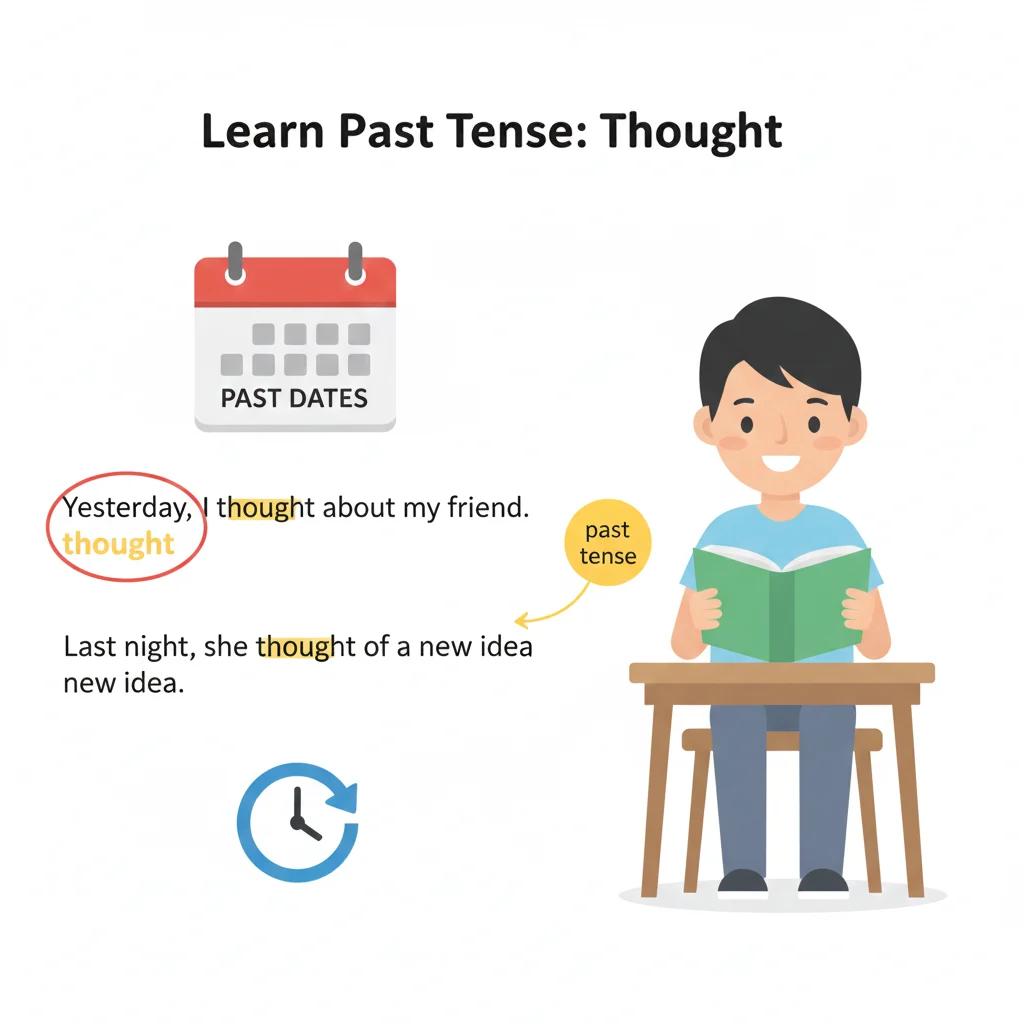
Recognizing thought in a sentence is straightforward. Look for the verb thought used to describe an action or state of mind that happened in the past. It often appears with time indicators like “yesterday,” “last week,” or “in 2020.” For example:
- “She thought about her decision carefully yesterday.”
- “We thought the movie was amazing last night.”
If the verb think is replaced by thought and refers to a completed action, it’s in the past tense. Pay attention to the context and time expressions to confirm.
Structure of Sentence
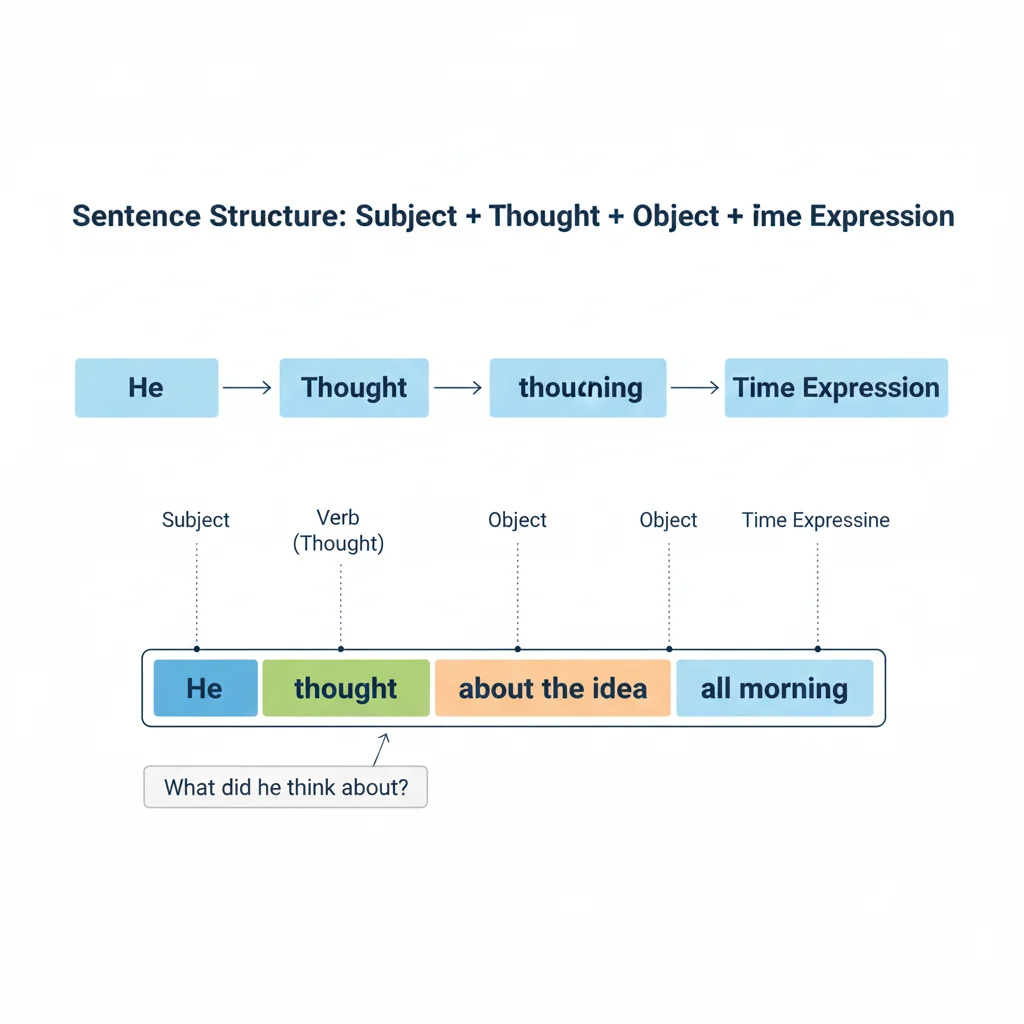
The sentence structure for thought in the past tense follows a simple pattern:
- Subject + thought + object/complement + (optional time expression).
Examples: - I thought about my homework last night.
- They thought the idea was brilliant.
In negative sentences, use didn’t think (more common in informal English):
- She didn’t think the plan would work.
In questions, use Did + subject + think: - Did you think about the consequences?
Formation
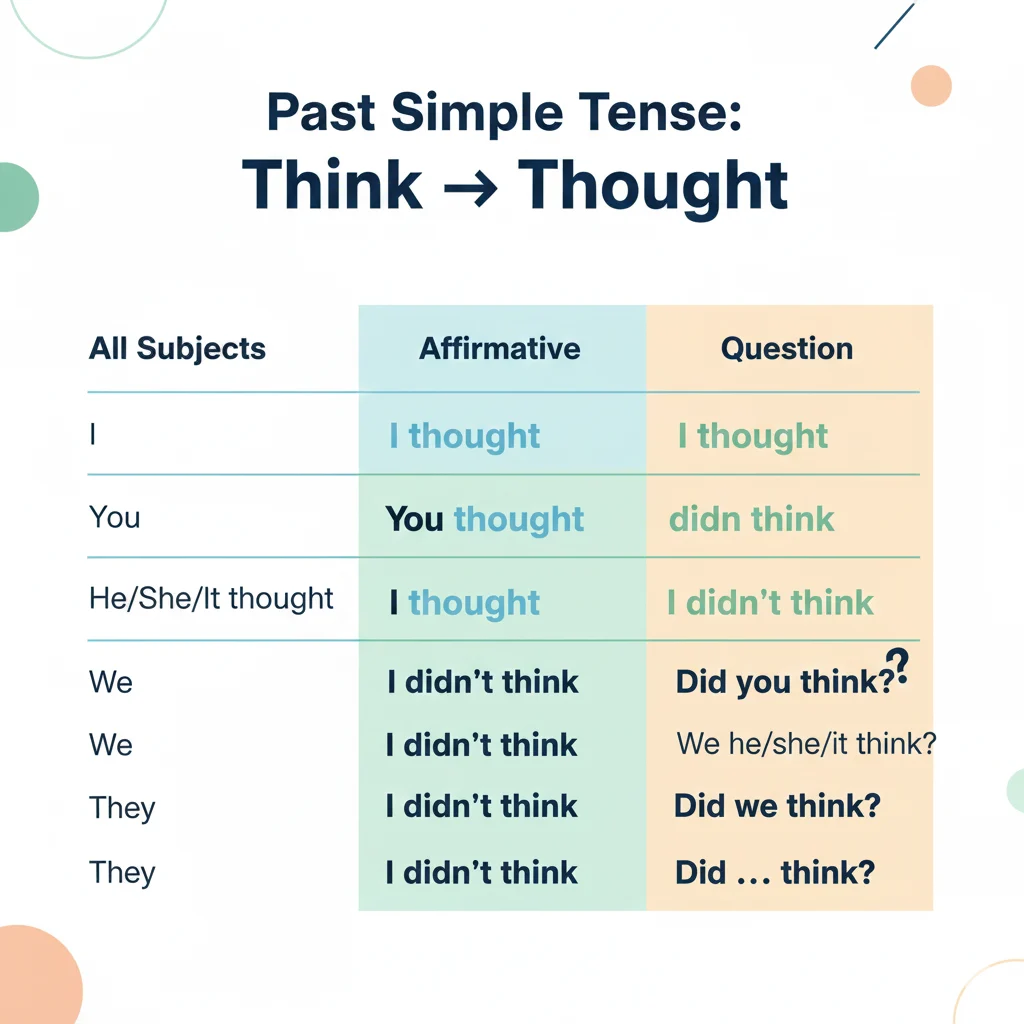
To form the past tense of think, simply use thought for all subjects (I, you, he, she, it, we, they). Unlike regular verbs, think doesn’t require additional endings. For negatives and questions, use the auxiliary verb did:
- Negative: Subject + did not (didn’t) + think + object.
- Example: I didn’t think about the risks.
- Interrogative: Did + subject + think + object?
- Example: Did she think about moving?
Verbs
The verb think is irregular, so its past tense form is thought. It doesn’t follow the regular verb pattern of adding “-ed.” Other similar irregular verbs include bring (brought), buy (bought), and seek (sought). These verbs also change their base form in the past tense without a predictable pattern.
Helping Verbs
In the simple past tense, thought doesn’t typically require helping verbs for affirmative sentences. However, for negative and interrogative sentences, the helping verb did is used:
- Negative: I didn’t think about it.
- Interrogative: Did you think about it?
In past perfect contexts, had is used: “I had thought about calling her.”
Explanation of Some Verbs with Reference to Thought
Some verbs related to thought include considered, believed, and reflected. These verbs also describe mental processes and can sometimes be confused with thought:
- Considered: Suggests careful thinking. Example: “She considered the options” vs. “She thought about the options.”
- Believed: Implies accepting something as true. Example: “He believed in ghosts” vs. “He thought ghosts were real.”
- Reflected: Indicates deep thought. Example: “I reflected on my choices” vs. “I thought about my choices.”
Table of Some Regular or Irregular Verbs in Past Tense
| Base Verb | Past Tense | Regular/Irregular |
| Think | Thought | Irregular |
| Bring | Brought | Irregular |
| Buy | Bought | Irregular |
| Walk | Walked | Regular |
| Talk | Talked | Regular |
| Seek | Sought | Irregular |
| Teach | Taught | Irregular |
| Catch | Caught | Irregular |
| Run | Ran | Irregular |
| Write | Wrote | Irregular |
Simple Sentence Examples
- I thought about my future yesterday.
- You thought the book was boring.
- He thought about moving to Canada.
- She thought the party was fun.
- It thought the food was tasty (referring to a pet).
- We thought the plan was risky.
- They thought about their vacation.
- John thought the movie was too long.
- The team thought the strategy worked.
- My friend thought about quitting her job.
Negative Sentence Examples
- I didn’t think about the consequences.
- You didn’t think the idea was good.
- He didn’t think about the deadline.
- She didn’t think the dress suited her.
- It didn’t think about the danger (referring to an animal).
- We didn’t think the project would succeed.
- They didn’t think about the costs.
- Sarah didn’t think the joke was funny.
- The group didn’t think about the risks.
- My brother didn’t think about calling me.
Interrogative Sentence Examples
- Did I think about the plan?
- Did you think the movie was good?
- Did he think about his future?
- Did she think the book was interesting?
- Did it think about escaping (referring to a pet)?
- Did we think about the consequences?
- Did they think about the budget?
- Did John think the game was fun?
- Did the team think about the strategy?
- Did my friend think about moving?
Negative and Interrogative Sentence Examples
- Didn’t I think about the risks?
- Didn’t you think the show was boring?
- Didn’t he think about his decision?
- Didn’t she think the plan was flawed?
- Didn’t it think about the food (referring to an animal)?
- Didn’t we think about the outcome?
- Didn’t they think about the schedule?
- Didn’t Sarah think the idea was silly?
- Didn’t the group think about the budget?
- Didn’t my sister think about calling?
How to Conjugate Thought Tense
Since thought is the past tense of think, it remains the same for all subjects. Here’s how to use it:
- Use thought for affirmative sentences: “I thought about it.”
- Use didn’t think for negatives: “She didn’t think about it.”
- Use Did + subject + think for questions: “Did you think?”
- Combine with time expressions for clarity: “They thought about it yesterday.”
- Use had thought for past perfect: “I had thought about moving.”
- Avoid adding “-ed” to think; it’s irregular.
- Use thought for all subjects (no changes).
- Pair with adverbs for emphasis: “He thought deeply.”
- Use in reported speech: “She said she thought it was great.”
- Practice in context to ensure correct usage.
Conjugation Table for All Subjects
| Subject | Affirmative | Negative | Interrogative |
| I | I thought | I didn’t think | Did I think? |
| You | You thought | You didn’t think | Did you think? |
| He | He thought | He didn’t think | Did he think? |
| She | She thought | She didn’t think | Did she think? |
| It | It thought | It didn’t think | Did it think? |
| We | We thought | We didn’t think | Did we think? |
| They | They thought | They didn’t think | Did they think? |
Spelling Changes or Irregularities
The verb think is irregular, so it changes to thought in the past tense and past participle. There are no spelling changes based on the subject, unlike some verbs (e.g., “study” becomes “studied”). The irregularity is simple: think → thought. Be cautious not to confuse it with regular verb patterns or other irregular verbs like brought or taught.
Sentence Examples with Different Subjects
- I thought about my goals last night.
- You thought the concert was amazing.
- He thought about his career change.
- She thought the book was inspiring.
- It thought about escaping (referring to a pet).
- We thought about traveling abroad.
- They thought the meeting was productive.
- John thought about his childhood.
- The team thought the plan was solid.
- My friends thought about the party.
- Sarah thought the movie was scary.
- The dog thought about its toy.
- You all thought about the project.
- The kids thought the game was fun.
- I thought about calling you earlier.
Common Mistakes with Thought Tense
- Using thinked instead of thought. (Incorrect: “I thinked about it.”)
- Forgetting did in negatives: “I not thought” is wrong.
- Omitting did in questions: “You thought about it?” is incorrect.
- Confusing thought with taught or brought.
- Using thought in present tense contexts: “I thought about it now” is wrong.
- Adding unnecessary endings: “She thoughted” is incorrect.
- Misplacing time expressions: “I thought yesterday about it” sounds awkward.
- Using had thought incorrectly without past perfect context.
- Confusing thought with synonyms like believed.
- Overusing thought when other verbs like considered are more precise.
How to Avoid Common Mistakes
- Always use thought, not thinked.
- Use didn’t think for negatives.
- Start questions with Did + subject + think.
- Double-check if thought matches the past tense context.
- Use had thought only for past perfect situations.
- Practice with time expressions like “yesterday” or “last week.”
- Compare thought with synonyms to choose the right word.
- Read sentences aloud to catch awkward phrasing.
- Use a grammar checker to spot errors.
- Practice regularly to build confidence.
Related Verbs and Synonyms for Thought
Related verbs include considered, believed, reflected, and pondered. Synonyms for thought in the past tense include:
- Considered: “I considered the idea” vs. “I thought about the idea.”
- Believed: “She believed in success” vs. “She thought success was possible.”
- Pondered: “He pondered the question” vs. “He thought about the question.”
- Reflected: “They reflected on the past” vs. “They thought about the past.”
These verbs differ slightly in tone and context, so choose based on the nuance you want to convey.
Tips to Practice Using Thought Tense
- Write a short story using thought in different sentences.
- Practice with a friend by discussing past events.
- Use flashcards to memorize think → thought.
- Create negative and interrogative sentences daily.
- Read books and highlight uses of thought.
- Record yourself speaking and check for errors.
- Try journaling about past experiences using thought.
- Complete grammar exercises online.
- Use a grammar app to track progress.
- Review this article’s examples regularly.
Frequently Asked Questions
- What is the past tense of think?
It’s thought, an irregular verb. - Can I say “thinked”?
No, thinked is incorrect; use thought. - How do I form a negative sentence?
Use didn’t think: “I didn’t think about it.” - How do I ask a question with thought?
Use Did + subject + think: “Did you think?” - Is thought used for all subjects?
Yes, thought is the same for I, you, he, she, etc. - What’s the past perfect form?
It’s had thought: “I had thought about it.” - How is thought different from believed?
Thought implies thinking; believed implies accepting as true. - Can thought be used in formal writing?
Yes, it’s appropriate for all contexts. - Are there spelling changes for thought?
No, thought is consistent for all subjects. - How do I practice thought effectively?
Write sentences, read examples, and use grammar tools.
Exercises
- Write 5 sentences using thought about your day yesterday.
- Convert 5 affirmative sentences to negative using didn’t think.
- Create 5 questions with Did + think.
- Rewrite 5 sentences using had thought for past perfect.
- Replace thought with considered in 3 sentences.
- Write a paragraph about a past event using thought.
- Identify thought in a short story you read.
- Practice saying 5 sentences with thought aloud.
- Correct 3 incorrect sentences (e.g., “I thinked about it”).
- Write a dialogue using thought between two people.
Quizzes
- What is the past tense of think? (Answer: thought)
- Is “I thinked” correct? (Answer: No, use thought)
- How do you form a negative sentence? (Answer: Didn’t think)
- What’s the question form? (Answer: Did + subject + think)
- Is thought regular or irregular? (Answer: Irregular)
- What’s the past perfect form? (Answer: Had thought)
- Can thought be used for “we”? (Answer: Yes)
- What’s a synonym for thought? (Answer: Considered)
- Is “She thoughted” correct? (Answer: No)
- How do you practice thought? (Answer: Write sentences)
True or False
- The past tense of think is thought. (True)
- “I thinked about it” is correct. (False)
- Thought changes based on the subject. (False)
- You need did for negative sentences. (True)
- Had thought is the past perfect form. (True)
- Thought is a regular verb. (False)
- Questions use Did + think. (True)
- Thought can mean the same as believed. (False)
- Thought is used in present tense. (False)
- Practicing with examples helps learn thought. (True)
Conclusion
Mastering the past tense of think, thought, is a valuable skill for clear and confident communication.
By understanding its formation, recognizing its use, and practicing with real-life examples, you can use thought effectively in writing and conversation.
This guide has provided a beginner-friendly breakdown of verb conjugation, sentence structures, and common mistakes to avoid.
If you’re a student, language learner, or writer, regular practice with thought will boost your grammar skills.
Try writing your own sentences, completing the exercises, or using a grammar checker to refine your work.
Keep exploring verb tense examples to strengthen your English! Share your sentences in the comments or test your knowledge with our quizzes. Happy learning!