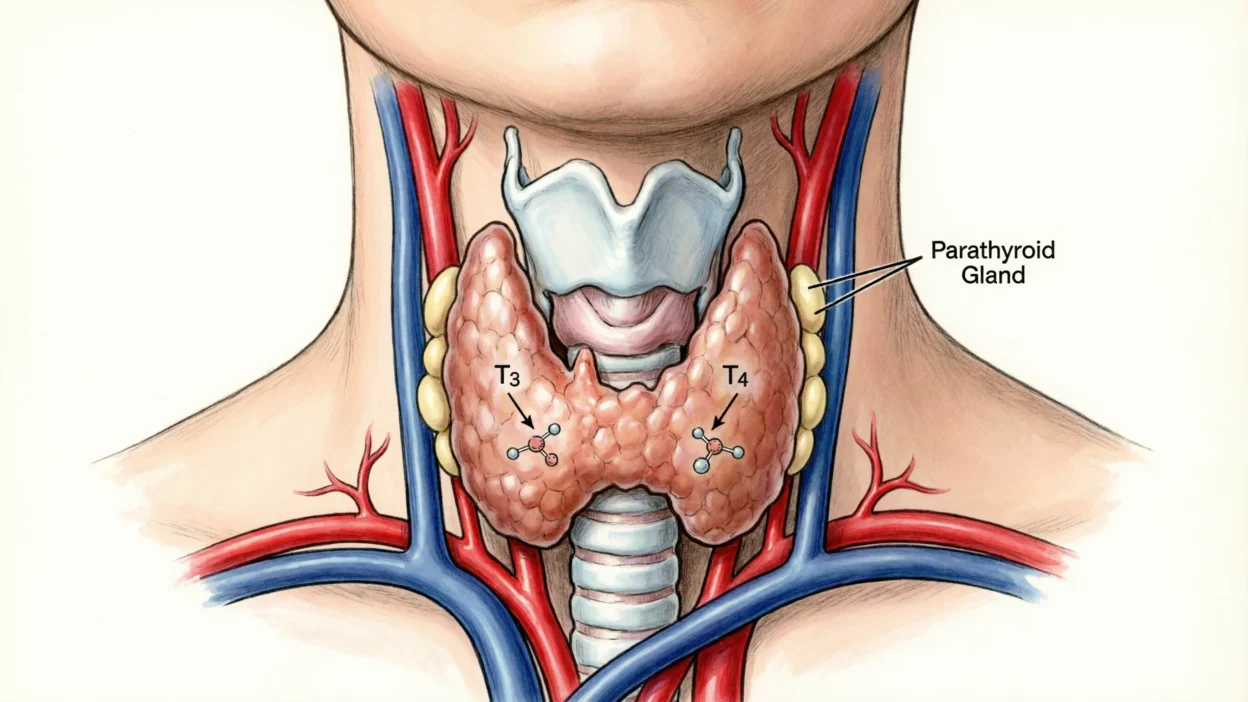
Definition: The thyroid gland is a small, butterfly-shaped organ in the neck that produces hormones regulating metabolism, energy, and overall body function. Proper thyroid gland function is essential for growth, heart rate, and temperature control. Swelling or enlargement can indicate thyroid problems.
The thyroid gland, though small, plays a vital role in overall health. Located in the neck, this butterfly-shaped endocrine organ produces hormones—primarily T3 (triiodothyronine) and T4 (thyroxine) that regulate metabolism, energy, heart rate, and body temperature.
The thyroid gland function extends to supporting mental clarity, digestion, and growth in both children and adults.
When the thyroid gland is swollen or enlarged, it can cause discomfort, visible changes in the neck, and affect hormone balance.
Understanding where the thyroid gland is located, its anatomy, and its hormones is key to identifying thyroid gland symptoms early.
Conditions like enlarged thyroid gland, swollen thyroid gland, or other thyroid gland disorders can affect individuals differently, impacting metabolism, energy levels, and reproductive health.
In this article, we explore what the thyroid gland does, its hormones, common signs of dysfunction, and strategies to maintain thyroid gland health naturally.
What Is the Thyroid Gland?
The thyroid gland is a small, butterfly-shaped organ located at the front of the neck, just below the Adam’s apple. It is part of the endocrine system and plays a key role in regulating metabolism, energy, and hormone balance.
The thyroid gland function includes producing hormones that affect nearly every cell in the body. These hormones, mainly T3 and T4, control how the body converts food into energy, regulates body temperature, supports growth, and maintains mental clarity.
When the thyroid gland is swollen or enlarged, it can cause a visible lump in the neck, known as a goiter. Pictures of swollen thyroid gland in neck can help people recognize early signs of thyroid issues. Understanding the thyroid gland anatomy and its histology helps explain why hormone imbalances can lead to thyroid gland symptoms, fatigue, and weight changes.
Where Is the Thyroid Gland Located?
The thyroid gland location is in the front of the neck, wrapped around the trachea (windpipe), just below the Adam’s apple. Its two lobes are connected by a narrow bridge called the isthmus, forming a butterfly shape.
Knowing where your thyroid gland is helps in detecting signs like swelling or lumps. Enlarged thyroid gland or swollen thyroid gland may indicate thyroid disorders such as hyperthyroidism, hypothyroidism, or thyroid nodules.
The proximity of the thyroid to the larynx (voice box) explains why thyroid gland swelling can sometimes affect speech or swallowing. Understanding thyroid gland anatomy helps people identify early thyroid gland symptoms and consult healthcare professionals for timely evaluation.
What Does the Thyroid Gland Do in the Body?
The function of the thyroid gland is to regulate metabolism, energy, heart rate, body temperature, and growth through hormone production.
Key roles include:
- Metabolism Control: Influences how fast the body burns calories.
- Energy Levels: Keeps you alert and active.
- Heart Function: Regulates heartbeat and circulation.
- Body Temperature: Maintains stable internal temperature.
- Growth & Development: Supports bone growth and brain development.
- Digestive Function: Affects the speed of digestion and nutrient absorption.
What does the thyroid gland do to a woman? Thyroid dysfunction in women can affect menstrual cycles, fertility, pregnancy, and overall energy. Thyroid gland hormones T3 and T4 are essential for reproductive health and metabolism.
Thyroid Gland Hormones Explained (T3, T4, TSH)
The thyroid gland hormones are primarily T3 (triiodothyronine), T4 (thyroxine), and TSH (thyroid-stimulating hormone).
- T3: Active hormone regulating metabolism, energy, and heart function.
- T4: Main hormone produced by the thyroid; converted into T3 for activity.
- TSH: Secreted by the pituitary gland to signal the thyroid to produce T3 and T4.
Imbalances in these hormones can cause thyroid gland problems such as fatigue, weight changes, or mood disturbances. Blood tests measure thyroid stimulating hormone to detect disorders early.
How the Thyroid Gland Controls Metabolism
The thyroid gland acts as a metabolic thermostat:
- Controls calorie burning and energy use.
- Regulates fat and carbohydrate processing.
- Influences body temperature.
- Supports protein synthesis for muscle repair.
When the thyroid gland function is disrupted, metabolism slows (hypothyroidism) or speeds up (overactive thyroid), resulting in common thyroid gland symptoms like weight fluctuations, fatigue, or palpitations.
Hyperthyroidism vs Hypothyroidism
- Hyperthyroidism (Overactive Thyroid): Excess hormones speed metabolism. Symptoms: weight loss, rapid heartbeat, anxiety, insomnia.
- Hypothyroidism (Underactive Thyroid): Low hormone levels slow metabolism. Symptoms: weight gain, fatigue, constipation, depression.
Both conditions are serious and may require thyroid medication or monitoring for thyroid nodules, enlarged thyroid gland, or thyroid gland swelling.
Signs and Symptoms of Thyroid Problems
What are the 20 signs of thyroid problems?
- Fatigue
- Weight gain or loss
- Cold or heat intolerance
- Swollen thyroid gland
- Hair thinning
- Dry skin
- Brittle nails
- Constipation or diarrhea
- Mood swings
- Brain fog
- Swelling in neck
- Rapid or irregular heartbeat
- Depression or anxiety
- Sleep disturbances
- Muscle weakness
- Joint pain
- Goiter
- Difficulty swallowing
- Voice changes
- Menstrual irregularities
These thyroid gland symptoms can indicate thyroid disease or dysfunction.
Factors That Affect Thyroid Gland Function
- Nutrition: Iodine, selenium, zinc, iron.
- Lifestyle: Stress, sleep, exercise.
- Genetics: Autoimmune conditions like Hashimoto’s or Graves’.
- Environmental: Chemicals, radiation, medications.
How to Support Healthy Thyroid Gland Naturally
- Eat iodine-rich foods: Seaweed, eggs, fish.
- Selenium and zinc sources: Brazil nuts, mushrooms, lean meats.
- Exercise: Cardio and strength training.
- Manage stress: Yoga, meditation, deep breathing.
- Sleep: 7–9 hours nightly.
- Avoid toxins: Heavy metals, chemicals, radiation.
- Routine check-ups: Blood tests for TSH, T3, T4.
When to See a Doctor
Consult a doctor for:
- Persistent fatigue
- Unexplained weight changes
- Swelling or enlarged thyroid gland
- Rapid heartbeat
- Mood changes
- Hair or skin changes
Tests may include: thyroid stimulating hormone, T3, T4, and imaging for thyroid nodules or thyroid gland swelling.
FAQs About Thyroid Gland
Q1: What is the main function of the thyroid gland?
Regulates metabolism, energy, heart rate, body temperature, and growth.
Q2: What are the symptoms of a thyroid gland problem?
Fatigue, weight changes, neck swelling, mood swings, hair thinning, or irregular heartbeat.
Q3: What does thyroid do to a woman?
Affects menstrual cycles, fertility, pregnancy, energy, and metabolism.
Q4: Where is the thyroid gland located?
In the front of the neck, below the Adam’s apple, wrapping around the trachea.
Q5: What hormones does the thyroid gland produce?
T3, T4, and signals from TSH regulate metabolism, energy, and growth.
Conclusion
The thyroid gland, though small, is essential for metabolism, energy, growth, and hormonal balance.
Recognizing thyroid gland symptoms like fatigue, weight changes, or swelling helps prevent serious complications.
Maintaining thyroid health with proper diet, stress management, exercise, sleep, and routine testing can prevent thyroid disease or thyroid gland swelling.
Understanding what the thyroid gland does to a person ensures overall wellness and vitality.