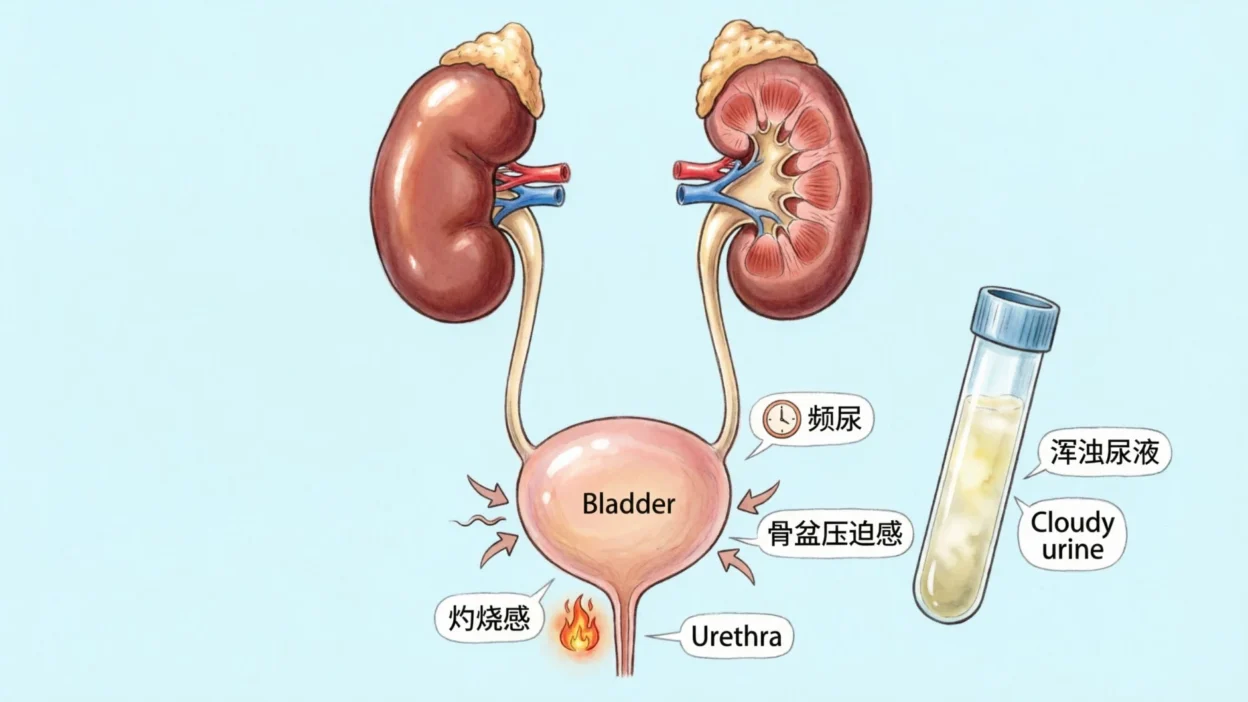
Definition: A urinary tract infection (UTI) is a bacterial infection affecting the bladder, urethra, or kidneys. It often causes burning while urinating, frequent urges to pee, lower abdominal discomfort, and cloudy or foul-smelling urine.
Urinary tract infections (UTIs) are one of the most common bacterial infections affecting millions of people every year. Many people wonder, “How do you know if you have a UTI?” Recognizing uti symptoms early is essential for timely treatment and avoiding complications.
Typical symptoms include burning during urination, frequent urges to urinate, pelvic or lower abdominal pressure, cloudy or foul-smelling urine, and fatigue. In women, UTIs are more common due to anatomical factors, while men, children, and older adults may experience atypical symptoms.
Understanding what causes a UTI in a woman or a man, the 5 stages of UTI, and early warning signs helps guide proper uti treatment, whether with antibiotics for UTI or supportive care.
This guide also covers uti prevention, common misdiagnoses, and pregnancy-specific UTIs, helping readers make informed health decisions and manage urinary health effectively.
What Is a UTI? (Simple Medical Overview)
A UTI is an infection in the urinary system, including the bladder, urethra, or kidneys. Most UTIs are caused by bacteria, especially E. coli, entering the urinary tract. Infection leads to irritation, inflammation, and common uti symptoms.
Types of UTIs:
- Bladder Infection (Cystitis): Causes lower abdominal pressure, frequent urination, and burning sensations.
- Urethra Infection (Urethritis): Pain during urination.
- Kidney Infection (Pyelonephritis): Can cause back pain, fever, nausea, and fatigue.
Who Gets UTIs?
- Women are more prone to UTIs.
- Men may experience more serious infections.
- Children and older adults may have subtle or atypical symptoms.
Understanding what a UTI is helps you recognize symptoms early and differentiate between mild and severe infections.
What Does a UTI Feel Like? (Core Symptoms Section)
UTI symptoms can range from mild irritation to severe discomfort. Recognizing these feelings early allows prompt treatment.
Common Physical Sensations:
- Burning or stinging during urination
- Frequent urges to urinate
- Lower abdominal or pelvic pressure
- Incomplete emptying feeling
- Cloudy or strong-smelling urine
Emotional & Physical Discomfort:
- Irritability and restlessness
- Soreness and tenderness
- Fatigue from disrupted sleep
💡 Tip: Early recognition prevents progression to severe infections like kidney infections.
Early Signs of a UTI
Mild UTIs often start subtly.
Common Early Symptoms:
- Mild burning during urination
- Increased frequency, often in small amounts
- Slight bladder pressure
- Cloudy or darker urine
- Stronger or unusual odor
Other Subtle Signs:
- Urgency with little urine output
- Mild fatigue
- Irritability
Recognizing early signs ensures timely uti treatment and prevents progression.
Mild vs Moderate vs Severe UTI Symptoms
Mild Symptoms:
- Slight burning
- Mild urgency
- Light pelvic pressure
- No fever
Moderate Symptoms:
- Increased burning
- Noticeable bladder discomfort
- Frequent nighttime urination
- Cloudy or foul-smelling urine
- Fatigue
Severe Symptoms:
- High fever and chills
- Back or flank pain
- Blood in urine
- Intense urinary discomfort
💡 Tip: Understanding the 5 stages of UTI helps determine severity and need for medical care.
What Does a UTI Feel Like for Women?
Women are more prone to UTIs due to a shorter urethra.
Symptoms in Women:
- Burning or stinging during urination
- Frequent urges to pee
- Lower abdominal or pelvic pressure
- Cloudy, dark, or foul-smelling urine
- Fatigue
Situational Symptoms:
- Post-intercourse discomfort
- Hormonal influences
- Recurrent UTIs
💡 Tip: Persistent UTI symptoms in women may require best antibiotic for UTI in females.
What Does a UTI Feel Like for Men?
UTIs in men are less common but can be serious.
Symptoms in Men:
- Burning during urination
- Frequent urge to urinate
- Lower abdominal or pelvic discomfort
- Cloudy or foul-smelling urine
- Testicular or perineal discomfort
Serious Symptoms:
- Fever and chills
- Back or flank pain
- Blood in urine
💡 Tip: Early treatment with uti antibiotics prevents complications.
UTI Symptoms That Are Often Missed
Subtle Symptoms:
- Mild pelvic pressure
- Urgency with little output
- Nighttime urination
- Slight changes in urine color or odor
- Fatigue
💡 Tip: Even mild symptoms should be checked to prevent kidney infections.
How Fast Do UTI Symptoms Start?
Timeline:
- Early (hours to 1–2 days): Mild burning, urgency
- Progression (2–4 days): Increased discomfort, cloudy/foul urine
- Advanced (4+ days): Fever, back pain, blood in urine
Factors affecting onset: bacterial type, immune response, gender, and anatomy.
Where Does UTI Pain Occur?
Common Locations:
- Lower abdomen / pelvic area
- Urethra (burning sensation)
- Lower back / flank (kidney involvement)
- General pelvic discomfort
💡 Tip: Pain location helps identify infection severity.
What Does UTI Pain Feel Like Compared to Other Conditions?
UTI vs Yeast Infection: Burning + urgency vs itching + discharge
UTI vs Kidney Infection: Lower bladder discomfort vs systemic fever + flank pain
UTI vs STI: Urinary symptoms vs discharge/sores
UTI vs Bladder Irritation: Sudden infection vs chronic irritation
💡 Tip: Medical evaluation confirms cause.
Can You Have a UTI Without Burning?
Yes, atypical or silent UTIs can occur.
Populations: Older adults, men, children, women with recurrent UTIs
Other Signs: Urgency, pelvic pressure, cloudy urine, fatigue
💡 Tip: Early evaluation prevents complications.
What Does a Kidney Infection Feel Like?
Symptoms:
- Severe back or flank pain
- High fever and chills
- Nausea and vomiting
- Blood in urine
- Fatigue
💡 Tip: Seek immediate medical care.
When Should You See a Doctor?
Red Flags:
- High fever, chills, nausea
- Severe back pain
- Blood in urine
- Persistent or worsening burning
- Recurrent UTIs
Special Situations: Pregnancy, diabetes, older adults
How UTIs Are Diagnosed
Methods:
- Urinalysis
- Urine culture
- Physical examination
- Imaging for recurrent infections
How UTIs Are Treated
Medical Treatment:
- Antibiotics for UTI (best antibiotic depends on bacteria and patient)
- Pain relief (phenazopyridine)
- Hospitalization if severe
Home & Supportive Care:
- Hydration
- Urinate frequently
- Avoid irritants
- Cranberry / D-mannose
💡 Tip: Early treatment improves recovery.
Can a UTI Go Away on Its Own?
Some mild UTIs improve temporarily, but untreated infections can worsen or spread.
Risks: Kidney infection, blood in urine, recurrent infections
💡 Tip: Medical evaluation is always recommended.
How to Prevent UTIs
- Stay hydrated
- Urinate regularly
- Practice hygiene (front-to-back)
- Urinate after sex
- Wear breathable clothing
- Avoid irritants
- Cranberry or D-mannose
FAQs
Q1: How do you get a UTI? Bacteria entering urinary tract.
Q2: What can be mistaken for UTI? Yeast infection, STI, bladder irritation.
Q3: Can UTI cause shoulder pain? Rare, but kidney infections can radiate discomfort.
Q4: How to treat UTI in pregnancy? Prompt medical evaluation, safe antibiotics.
Q5: How to get rid of a UTI in 24 hours? Early antibiotics are essential; hydration and urination support recovery.
Conclusion
Recognizing what a UTI feels like—from burning, urgency, pelvic pressure, cloudy urine, to fatigue—is crucial.
Understanding uti causes in females and males, the 5 stages of UTI, treatment with antibiotics for UTI, and prevention strategies ensures timely care and reduces complications.
Seek medical attention if symptoms worsen, recur, or include fever, blood in urine, or flank pain.
Proper awareness, early diagnosis, and treatment protect urinary health effectively.