Definition: A vaginal tear is a cut or laceration in the vaginal tissue that can happen during childbirth, sexual activity, or trauma. Tears vary in severity from mild surface injuries to deep lacerations involving muscles or the vaginal wall. Proper identification, treatment, and care are key to healing and preventing complications.
Vaginal tears are a common injury affecting women during childbirth, sexual activity, or accidents. They range from first degree vaginal tears that affect only the skin to fourth-degree vaginal tears that extend through the vaginal wall and rectal lining.
Understanding what a vaginal tear looks like, how it feels, and the symptoms to watch for can help women respond quickly, manage pain, and prevent infections.
Medical professionals classify vaginal tears by severity to guide treatment, from home care with topical ointments and sitz baths to surgical repair for severe tears.
This guide explains vaginal tear symptoms, healing timelines, and treatment options, including vaginal tear treatment for internal vaginal tears, labial tears, and vaginal wall tears.
It also covers preventive measures, like perineal massage and proper lubrication, and answers common questions such as “how do you tell if you have a tear down there?” and “how to prevent vaginal tearing?”.
Backed by OB/GYN advice and trusted sources, this article ensures accurate, safe, and empathetic guidance.
Types of Vaginal Tears
Vaginal tears are classified by severity, which influences how they are treated and how long they take to heal.
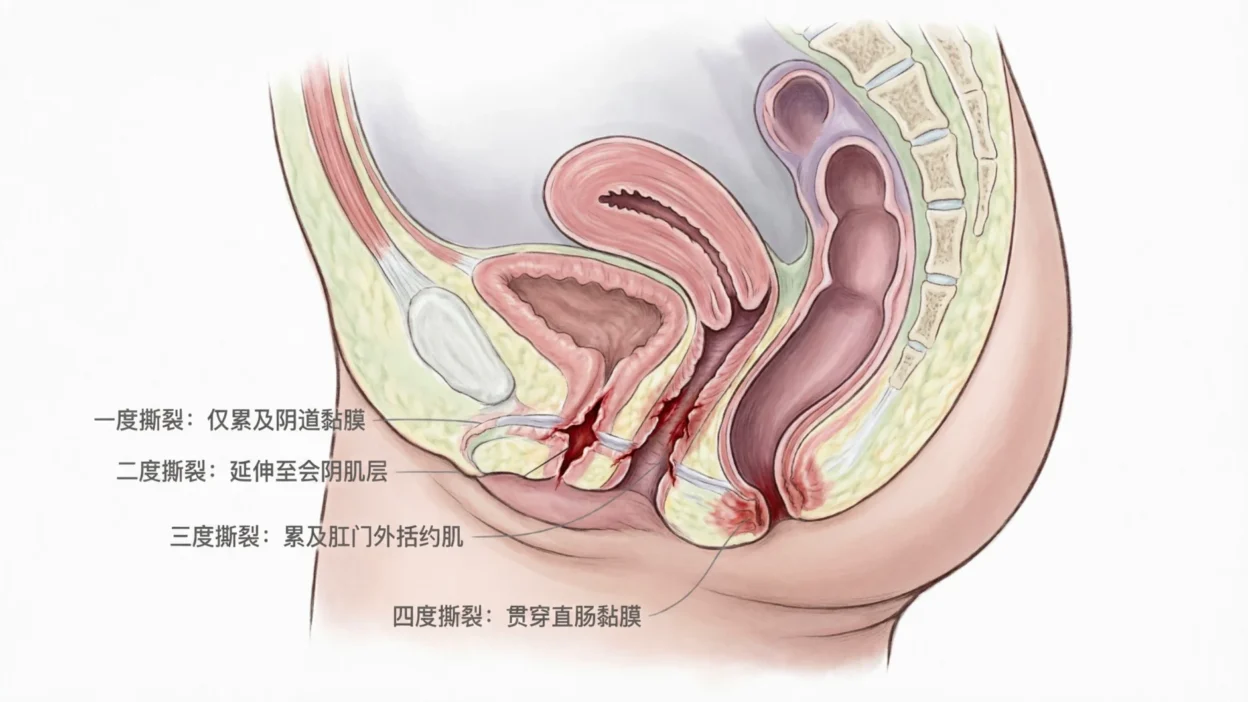
First Degree Vaginal Tear
- Involves only the skin of the vaginal opening or perineum.
- Mild bleeding and discomfort; may heal naturally in 1–2 weeks.
- Commonly managed with gentle cleaning and labial tears healing ointment.
- Often no stitches are required.
Second-Degree Vaginal Tear
- Extends into vaginal muscles.
- Usually requires stitches to repair the tissue.
- Healing takes about 3–4 weeks.
- Symptoms include pain, swelling, and discomfort during urination.
Third-Degree Vaginal Tear
- Involves the anal sphincter.
- Requires surgical repair and close follow-up.
- Recovery can take 6–12 weeks.
- May cause difficulty controlling bowel movements initially.
Fourth Degree Vaginal Tear
- Extends through the vaginal wall into the rectal lining.
- Requires surgery and intensive care to prevent complications.
- Healing may take several months.
- Careful monitoring for infection is essential.
Note: Vaginal tear degrees are common in childbirth, and proper care ensures most women recover fully.
Causes of Vaginal Tears
Vaginal tears can occur due to childbirth, sexual activity, trauma, or medical procedures.
- Childbirth: Rapid labor, a large baby, or use of forceps can increase the risk. Vaginal tear birth is common in first-time mothers.
- Sexual activity: Vaginal tear from sex can occur with rough intercourse or insufficient lubrication. Internal vaginal tears or labial tears may result.
- Trauma: Accidents or falls can cause sudden tearing.
- Medical procedures: Surgeries or episiotomies may result in tears that need monitoring.
Symptoms of Vaginal Tears
Common Vaginal Tear Symptoms
- Pain or discomfort around the vaginal opening.
- Visible laceration or bleeding, sometimes light or moderate.
- Swelling or bruising near the perineum.
- Discharge or odor may indicate infection.
- Feeling of a tear down there — sudden tearing or stretching sensation.
Other indicators: Vaginal wall tear, internal vaginal tear, or labial tears can vary in pain and bleeding intensity.
Query Integration: “How do you tell if you have a tear down there?” — Look for pain, bleeding, swelling, and unusual discharge. “What does a tear down there feel like?” — Most tears cause soreness, stretching, or burning sensations.
Vaginal Tear After Childbirth: What to Expect
- Immediate assessment: Healthcare provider evaluates the tear and determines the degree.
- Stitching: First-degree may heal naturally; second- to fourth-degree usually require stitches.
- Pain management: Ice packs, sitz baths, and prescribed pain relievers.
- Recovery timeline:
- First-degree: 1–2 weeks
- Second-degree: 3–4 weeks
- Third-/Fourth-degree: 6–12 weeks or longer
- First-degree: 1–2 weeks
Tip: Gentle care and monitoring help prevent infection and promote healing.
Difference Between Vaginal Tear and Episiotomy
- Vaginal tears are accidental, occurring naturally during childbirth.
- Episiotomy is a planned surgical cut to aid delivery.
- Both may require stitches, but episiotomy usually heals faster than severe tears.
Healing and Recovery Timeline for Vaginal Tears
- First-degree tear: 1–2 weeks; minor discomfort; may use labial tears healing ointment.
- Second-degree tear: 3–4 weeks; requires stitches; monitor for infection.
- Third-/Fourth-degree tear: 6–12 weeks; surgical repair; pelvic floor therapy may help.
Query Integration: “How long does a vaginal tear take to heal?” — Healing depends on severity and care. “How to heal a vaginal tear?” — Follow medical instructions, hygiene, sitz baths, pain management, and topical creams like estradiol vaginal cream if advised.
Treatment Options for Vaginal Tears
Medical Treatment
- Stitches for second- to fourth-degree tears.
- Surgery for severe anal sphincter or rectal involvement.
- Pain medication and antibiotics to prevent infection.
Home Care
- Sitz baths, cold compresses, and gentle cleaning.
- Avoid heavy lifting and strenuous activity.
- Use vaginal probiotics or uro vaginal probiotic to maintain vaginal health.
Query Integration: “Vaginal tear treatment” — Includes stitches, topical ointments, home care, and monitoring.
Signs of Infection and When to See a Doctor
- Increasing pain, redness, swelling, or discharge
- Foul odor or fever
- Opening of stitches or delayed healing
Seek prompt medical care if these occur to prevent complications.
Related Queries: Vaginal yeast infection, vaginal discharge, vaginal itching, or unusual labial tears may overlap with infection signs.
Preventing Vaginal Tears
- Childbirth: Perineal massage, warm compresses, controlled pushing, and proper positioning.
- Sexual activity: Use lubrication, gentle techniques, and stop if pain occurs.
- General vaginal health: Maintain hygiene, treat infections, consider vaginal probiotics, boric acid vaginal suppositories, or vaginal yeast infection treatments if recommended.
Query Integration: “How to prevent vaginal tearing?” — These measures reduce risk during childbirth and sexual activity.
FAQs About Vaginal Tears
- Can vaginal tears heal naturally without stitches? — Minor first-degree tears may heal naturally.
- Are vaginal tears common during childbirth? — Yes, especially for first-time mothers.
- How long does a vaginal tear take to heal? — 1–2 weeks for first-degree; up to 12 weeks for severe tears.
- When can I resume sexual activity? — Usually 4–6 weeks after healing, depending on severity.
- How do I know if my vaginal tear is infected? — Look for pain, redness, swelling, discharge, or fever.
- Can vaginal tears affect future childbirth? — Most women recover fully, though severe tears may require monitoring.
Conclusion
Vaginal tears are common, treatable, and manageable, especially with proper care. From minor first-degree tears to fourth-degree tears involving the anal sphincter, most women recover fully when they follow medical guidance.
Knowing what a vaginal tear looks like, how it feels, and the symptoms to watch for helps women respond quickly, prevent infections, and ensure smooth recovery.
Preventive measures during childbirth and sexual activity, along with proper postpartum care, can reduce risks. Always consult a healthcare provider for severe tears, signs of infection, or persistent discomfort to ensure safe healing.