Quick Reply:
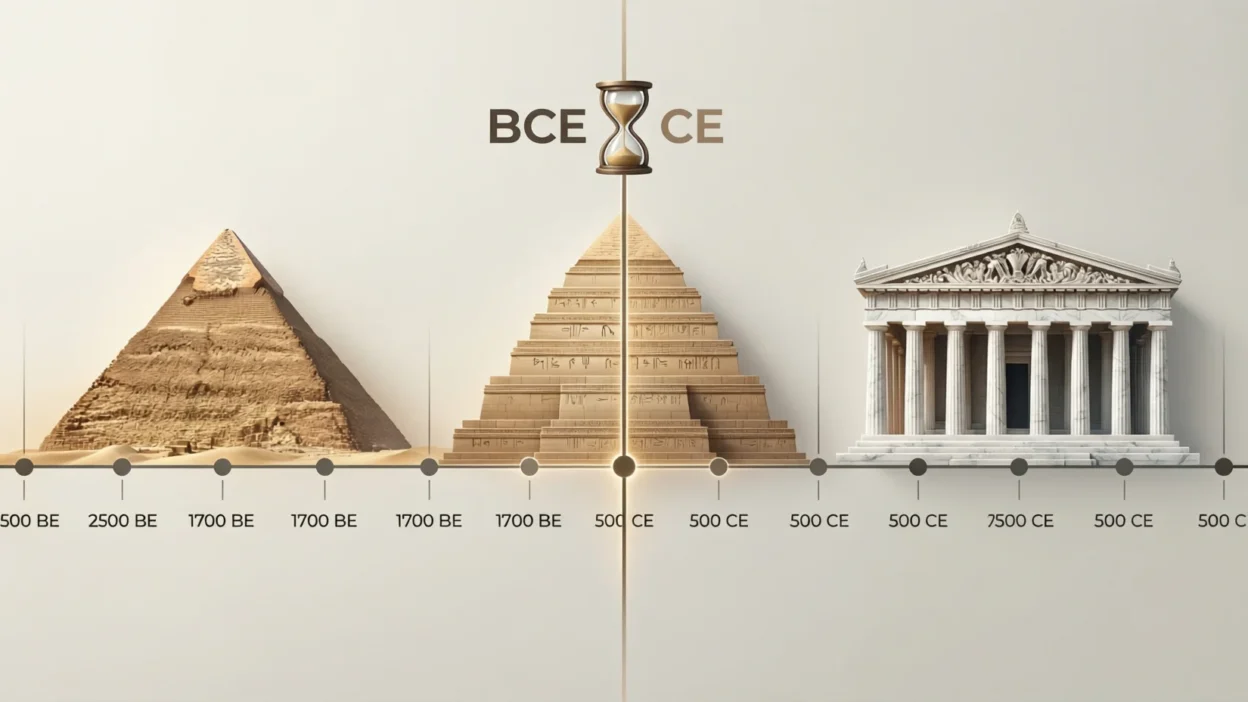
- BCE meaning: Before Common Era
- BCE vs BC: Same years, BCE is secular
- BCE vs CE: BCE = before year 1, CE = after year 1
When exploring history, archaeology, or even reading school textbooks, you may often come across the term BCE. But what does BCE actually mean?
BCE stands for “Before Common Era” and is used to label years before the traditional starting point of the Gregorian calendar. It is essentially a secular alternative to BC, or “Before Christ”, providing a neutral and inclusive way to reference historical dates.
Using BCE allows historians, educators, and writers to discuss timelines without religious implications, making it a preferred choice in academic and international contexts.
From ancient civilizations like the Egyptians and Mesopotamians to notable historical events, BCE helps us place occurrences in chronological order accurately.
In this guide, we’ll explore the origin of BCE, how it differs from BC and CE, practical examples, and tips on using it correctly in both academic and casual writing.
Definition of BCE
BCE stands for “Before Common Era”, and it is a term used to indicate years that occurred before the starting point of the Common Era, which is traditionally considered the year 1 CE. Essentially, BCE serves the same function as BC (Before Christ), but it is secular and culturally neutral, making it more inclusive for global use.
For example, the construction of the Great Pyramid of Giza is often dated to around 2560 BCE, which means it happened approximately 2,560 years before the Common Era began. Similarly, the invention of the wheel is believed to have occurred around 3500 BCE. Using BCE instead of BC allows historians and educators to discuss these events without implying religious context, which is especially important in academic and international settings.
BCE is commonly paired with CE (Common Era) to create a complete chronological system for historical timelines. Events that occur after year 1 are labeled with CE, while events before year 1 use BCE. This system makes it easy to compare dates across different cultures and civilizations without confusion. Understanding BCE is essential for reading history textbooks, academic papers, and archaeological studies accurately.
History and Origin of BCE
The term BCE (Before Common Era) was introduced to provide a secular and culturally neutral alternative to BC (Before Christ). While BC has been used for centuries in Western countries to label years before the start of the Gregorian calendar, it is explicitly tied to Christianity. As education and scholarship became more global, historians and academics sought a term that could be used inclusively across cultures and religions.
The use of BCE began to gain traction in the 19th and 20th centuries, particularly in academic writing and textbooks. Scholars recognized the importance of a dating system that would allow non-Christian readers to understand historical timelines without implying religious significance. BCE is paired with CE (Common Era), which replaces AD (Anno Domini), creating a fully neutral chronological framework.
For example, instead of saying “500 BC”, one would write “500 BCE”, referring to the same year but without religious connotations. Over time, BCE/CE has become widely adopted in historical research, archaeology, and international education, especially in countries with diverse cultural and religious populations. Today, many academic journals, history books, and educational resources use BCE and CE as the standard convention for historical dating.
This system ensures that historical events are understood in context, allowing readers from all backgrounds to study timelines accurately and respectfully.
BCE vs BC: Key Differences
Many people wonder whether BCE and BC are different. The truth is, both represent the same time period—years before the start of the Common Era—but they differ in terminology and context.
BC stands for “Before Christ” and has been traditionally used in Western countries to indicate years before year 1 AD (Anno Domini). While widely recognized, BC is religiously oriented, as it directly references Christianity. For example, the founding of Rome in 753 BC uses this system, explicitly linking the timeline to Christian tradition.
BCE, on the other hand, stands for “Before Common Era”. It was introduced to provide a secular, inclusive alternative to BC, suitable for use in academic, educational, and international contexts. Using BCE allows historians and educators to avoid religious references while still accurately representing historical dates. For instance, instead of writing 753 BC, one would write 753 BCE, which communicates the same date without implying Christian context.
The key difference, therefore, is cultural neutrality. BCE is preferred in modern scholarship, global textbooks, and academic writing, whereas BC is still common in traditional or religious contexts. Despite this distinction, it’s important to remember that 1 BCE = 1 BC, 2 BCE = 2 BC, and so on—so the numerical value of years remains identical.
BCE vs CE
To understand historical timelines fully, it’s important to know how BCE (Before Common Era) and CE (Common Era) work together. While BCE refers to years before year 1 of the Common Era, CE denotes years after the start of the Common Era. Essentially, BCE and CE together form a neutral, chronological system that replaces the older BC/AD system.
CE stands for “Common Era” and is equivalent to AD (Anno Domini), meaning “in the year of our Lord.” The primary difference is that CE is secular and inclusive, like BCE, making it suitable for global academic use. For example, the construction of the Parthenon is dated around 447–432 BCE, while the fall of the Western Roman Empire occurred in 476 CE. This pairing clearly distinguishes events that happened before and after the Common Era, without implying any religious preference.
Using BCE and CE together is especially useful in international education, historical research, and archaeology, as it allows scholars from different cultural and religious backgrounds to discuss dates clearly. The system is straightforward: years count backwards in BCE (e.g., 500 BCE, 400 BCE) and forwards in CE (e.g., 100 CE, 202 CE).
In short, BCE and CE provide a consistent and neutral timeline, making it easier to compare events across different civilizations and eras.
How to Use BCE Correctly
Using BCE (Before Common Era) correctly is essential for clarity, especially in academic writing, history papers, and educational materials. While it functions similarly to BC, there are a few rules and tips to keep in mind to ensure proper usage.
- Placement of BCE: The abbreviation always follows the year. For example, we write 3000 BCE, not BCE 3000. This format keeps historical timelines consistent and readable.
- Numerical order: When using BCE in timelines, remember that years count backward. For instance, 500 BCE occurred before 400 BCE. This is the opposite of CE, where years count forward.
- Consistency: Always pair BCE with CE when creating timelines. Avoid mixing BC/AD with BCE/CE in the same text to prevent confusion. For example, use 500 BCE and 200 CE, not 500 BC and 200 CE.
- Context: BCE is most appropriate in academic and secular contexts, including history books, research papers, and educational articles. While it can appear in casual writing, BC is still commonly used in informal settings.
- Examples:
- The Great Pyramid of Giza: 2560 BCE
- The Code of Hammurabi: 1754 BCE
- The founding of Babylon: 1894 BCE
- The Great Pyramid of Giza: 2560 BCE
By following these guidelines, you can ensure your historical writing is accurate, inclusive, and easy to understand, making BCE a valuable tool for conveying dates clearly.
Common Misconceptions About BCE
Although BCE (Before Common Era) is widely used in modern academic writing, several misconceptions about it still exist. Understanding these myths can help readers and writers use the term accurately.
1. BCE is a religious term:
Some people assume BCE is linked to religion, similar to BC (Before Christ). This is incorrect. BCE was specifically created to provide a secular alternative to BC, making it neutral and inclusive for readers of all cultural and religious backgrounds.
2. BCE changes historical dates:
Another common misconception is that using BCE alters historical calculations. In reality, BCE is identical to BC numerically. For example, 500 BCE and 500 BC refer to the exact same year. The difference is purely in terminology.
3. BCE can be used interchangeably with CE:
Some people mistakenly believe BCE and CE can replace each other freely. This is wrong, as BCE refers to years before the Common Era, while CE refers to years within the Common Era. For example, 200 BCE occurred long before 200 CE.
4. BCE is only for academic texts:
While BCE is prevalent in scholarly writing, it can also be used in general contexts like history blogs, timelines, or educational articles. It is simply a matter of style and audience.
By clearing up these misconceptions, readers can use BCE confidently and accurately, ensuring clarity in historical writing and discussions.
Examples of BCE in History
Understanding BCE becomes much easier when we look at historical events and civilizations that use this dating system. BCE helps place events in a chronological, secular, and culturally neutral framework.
1. Ancient Egypt: The construction of the Great Pyramid of Giza is dated around 2560 BCE, showcasing the impressive engineering skills of the Egyptians thousands of years ago.
2. Mesopotamia: The Code of Hammurabi, one of the earliest written legal codes, was established around 1754 BCE. This demonstrates the rise of organized societies and governance in human history.
3. Indus Valley Civilization: The flourishing of cities like Harappa and Mohenjo-Daro is believed to have occurred between 3300–1300 BCE, marking some of the earliest urban settlements in the world.
4. Ancient Greece: The early development of Greek city-states and culture began around 800 BCE, laying the foundation for philosophy, politics, and the arts that influenced Western civilization.
5. Babylon: The founding of Babylon, a major Mesopotamian city, is dated to around 1894 BCE, highlighting the importance of urban centers in early human history.
Using BCE to label these events allows historians and students to compare timelines across different civilizations without any religious bias. From pyramids to codes, BCE provides a clear and universal way to understand when events occurred in the past.
Why Some People Prefer BCE Over BC
While BC (Before Christ) has been used for centuries, many scholars, educators, and writers now prefer BCE (Before Common Era) for several important reasons. The shift is primarily motivated by the desire for neutrality, inclusivity, and global understanding.
1. Cultural and Religious Neutrality:
BC directly references Christianity, which may not be relevant or meaningful in a multicultural and multi-religious context. BCE, on the other hand, is secular, allowing historians, educators, and students from diverse backgrounds to discuss historical timelines without religious implications.
2. Academic Standardization:
Many modern history textbooks, research papers, and academic journals now use BCE/CE instead of BC/AD. This creates a consistent and professional standard for historical writing, especially in international or interfaith educational settings.
3. Inclusivity in Education:
Using BCE ensures that non-Christian students can engage with historical content without feeling excluded. It emphasizes learning and accuracy over religious tradition, making history more accessible to everyone.
4. Global Relevance:
In today’s interconnected world, history is studied globally. BCE provides a universal system for chronological events that is understandable regardless of cultural or religious background.
Overall, BCE is preferred because it allows for clarity, inclusivity, and neutrality, while still representing the exact same years as BC. It reflects the growing emphasis on making historical studies accessible to all.
FAQs About BCE
1. What does BCE mean in textbooks?
BCE stands for “Before Common Era” and is used in history textbooks to indicate years before the start of the Common Era. It replaces BC (Before Christ) to provide a secular and inclusive dating system.
2. Is BCE the same as BC?
Yes, BCE and BC represent the same years. For example, 500 BCE is the same as 500 BC. The only difference is terminology: BCE is neutral, while BC references Christianity.
3. Why do historians use BCE instead of BC?
Historians use BCE to maintain cultural neutrality and inclusivity, especially in academic and international contexts. It avoids religious references while keeping historical dates accurate.
4. Can BCE be used in casual writing?
Absolutely! BCE can be used in blogs, articles, and general discussions about history. However, BC is still more common in informal or religious contexts.
5. How do BCE and CE relate to AD and BC?
BCE corresponds to BC, and CE (Common Era) corresponds to AD (Anno Domini). For instance, 200 BCE is the same as 200 BC, and 150 CE is the same as AD 150. Together, BCE and CE provide a fully neutral chronological system.
6. How do you convert BC/AD to BCE/CE?
Simply replace BC with BCE and AD with CE. The numerical year remains unchanged, so 44 BC becomes 44 BCE, and AD 33 becomes 33 CE.
These FAQs help clarify the meaning, usage, and importance of BCE, ensuring readers understand historical timelines accurately and confidently.
What Does BCE Mean in the Bible
In biblical studies, BCE (Before Common Era) is often used as a neutral alternative to BC (Before Christ). While BC explicitly refers to the birth of Jesus Christ, BCE allows scholars to discuss historical events in the Bible without assuming religious context. For instance, events like the construction of Solomon’s Temple or the reign of King David can be described using BCE dates, such as 970 BCE, providing a timeline without directly tying it to Christian terminology. Many modern biblical scholars, especially in interfaith or academic settings, prefer BCE because it is inclusive and secular. Using BCE in biblical discussions ensures clarity when comparing timelines with other ancient civilizations like Egypt or Mesopotamia, which existed in the same periods. Overall, BCE helps readers study biblical events chronologically while maintaining academic neutrality.
What Does BCE Mean in History
In historical studies, BCE stands for Before Common Era, indicating years prior to year 1 CE. It is widely used in history textbooks, research papers, and archaeological reports. BCE allows historians to describe events from ancient civilizations like the Egyptians, Babylonians, Greeks, and Romans without referencing a particular religion. For example, the Code of Hammurabi is dated around 1754 BCE, and the Great Pyramid of Giza around 2560 BCE. Using BCE instead of BC provides a secular and inclusive approach, making it easier for people of all cultures and religions to understand timelines. Paired with CE, BCE creates a consistent chronological system, allowing historians to accurately position events before and after the Common Era. This system is especially helpful for comparing developments across multiple civilizations and understanding world history in a neutral context.
What Does BCE Mean in Time
When referring to time, BCE indicates years before the start of the Common Era. Unlike CE, which moves forward from year 1, BCE counts backward. For instance, 500 BCE occurred 500 years before 1 CE. This system allows historians, educators, and researchers to measure historical time accurately. It is particularly useful when creating chronological timelines of civilizations or major events. By using BCE, we can place events like the rise of the Indus Valley Civilization (~3300 BCE) or the establishment of Babylon (~1894 BCE) in the correct historical order. BCE ensures that time is represented consistently and helps prevent confusion when comparing events from different regions or cultures. Essentially, BCE provides a neutral and standardized way to understand and communicate the passage of historical time.
What Does BCE Mean in Dates
In dates, BCE is used after the numerical year to indicate that the event happened before the Common Era. For example, historians write the founding of Rome as 753 BCE. This placement after the year is a standard formatting rule to avoid confusion. BCE works alongside CE to create clear, chronological timelines. When writing dates, it is important to remain consistent, avoiding mixing BC with BCE or AD with CE in the same text. Using BCE ensures clarity and is widely accepted in academic and international contexts. Whether listing events on a timeline or discussing ancient history in writing, BCE provides a secular and standardized method of referencing years, allowing readers worldwide to understand the timing of historical events accurately.
What Does BCE Mean?
BCE stands for Before Common Era and is a term used to describe years prior to year 1 CE. It is essentially the secular counterpart to BC (Before Christ). BCE is used to label historical dates in a way that is culturally neutral and suitable for international or academic use. Paired with CE (Common Era), it provides a complete chronological system, allowing clear representation of both ancient and modern events. For example, the Great Pyramid of Giza was constructed around 2560 BCE, while the fall of the Western Roman Empire occurred in 476 CE. BCE is widely used in history, archaeology, biblical studies, and education to maintain neutrality and consistency in dating. It helps readers place events in chronological order without implying any religious perspective.
What Does BCE Mean in Years
When referring to years, BCE indicates a time before the Common Era, moving backward from 1 CE. For example, 1000 BCE means the event happened 1,000 years before the start of the Common Era. The counting of years in BCE is descending, unlike CE, where the count ascends. BCE is widely used in academic writing, history textbooks, and archaeological reports because it provides a secular and standardized way of marking years. Using BCE helps compare chronological timelines across civilizations, such as the Indus Valley (~3300–1300 BCE), Ancient Egypt (~3100–30 BCE), and Mesopotamia (~3500 BCE onwards). Understanding BCE in terms of years is essential for students and researchers to accurately place historical events relative to each other, ensuring timelines are consistent and understandable globally.
What Does BCE Mean in a Date
When BCE appears in a date, it shows that the year is before the Common Era, and it is always written after the number. For example, the Code of Hammurabi is dated 1754 BCE, meaning it occurred 1,754 years before the start of CE. This placement after the year is standard in academic and historical writing. BCE dates are often used in timelines, textbooks, and archaeological records to provide chronological context. Pairing BCE with CE allows readers to understand historical sequences clearly, such as comparing events from Ancient Egypt, Mesopotamia, and Greece. Proper use of BCE in a date ensures that historical events are represented accurately and without religious bias, making it ideal for global academic and educational purposes.
In the Bible, What Does BCE Mean
In the context of the Bible, BCE is used as a neutral alternative to BC. While BC refers to “Before Christ,” BCE removes the explicit Christian reference, allowing biblical events to be discussed in a secular, inclusive manner. For instance, the reign of King David or the construction of Solomon’s Temple might be dated around 1000 BCE. Scholars prefer BCE in interfaith or academic studies because it clarifies timelines without imposing religious terminology. This helps when comparing biblical events with other historical civilizations such as Mesopotamia or Egypt. Using BCE in biblical discussions ensures that the chronology of events is clear, while also maintaining cultural and religious neutrality, making historical studies accessible to everyone.
In History, What Does BCE Mean
In history, BCE refers to years before the Common Era and is the preferred term for secular historical writing. While BC (Before Christ) is still commonly recognized, BCE is more inclusive and widely used in international academic contexts. For example, historians may date the building of the Parthenon at 447–432 BCE. BCE allows scholars to create chronological timelines of events from multiple civilizations without referencing religion. When paired with CE (Common Era), BCE provides a complete and neutral chronological system, ensuring historical events from Ancient Egypt, Mesopotamia, Greece, or Babylon can be compared accurately. Its use is essential in research, textbooks, and educational content for maintaining clarity and neutrality in historical studies.
What Does BCE Mean in Text
In text, BCE is often used to indicate historical dates without implying religious context. Writers use BCE to maintain neutrality in academic papers, blogs, and history articles. For example, you might write, “The Great Pyramid of Giza was completed around 2560 BCE.” Using BCE in text makes it clear that the date occurred before the start of the Common Era, while avoiding the religious implication of BC. This is especially helpful when writing for international audiences, secular education, or research purposes. Proper formatting in text includes placing BCE after the year and being consistent throughout the content. This ensures clarity, accuracy, and neutrality, allowing readers to easily understand historical events and timelines.
In Time, What Does BCE Mean
In terms of time, BCE refers to years before the Common Era, moving backward from year 1 CE. It provides a way to organize historical events chronologically, making timelines easy to understand. For example, 500 BCE occurred 500 years before the start of CE, while 300 BCE happened 200 years later. This backward counting is essential for historians and students to accurately place events relative to one another. Using BCE in timekeeping ensures that ancient civilizations and historical milestones are correctly sequenced. When paired with CE for post-year 1 events, BCE provides a complete and neutral chronological framework. This system allows global readers to understand history without religious bias, making timelines consistent and universally accessible.
What Does BCE Mean After a Date
When BCE appears after a date, it shows that the event happened before the Common Era. For instance, “The Code of Hammurabi was created in 1754 BCE” clearly indicates the event occurred 1,754 years before CE 1. The placement after the year is standard in writing historical timelines. Using BCE after dates is common in academic papers, history books, and timelines, providing clarity for readers. It allows events from multiple civilizations to be compared chronologically. Pairing BCE with CE ensures a consistent system for dating both ancient and more recent events. Writing BCE after a date keeps historical records accurate, inclusive, and easy to understand, especially for students, researchers, and international readers.
What Does BCE Mean in Terms of Years
BCE in terms of years indicates a period before the Common Era. Years count backward, so 500 BCE happened before 400 BCE. This system helps historians and educators position events accurately on a timeline. For example, the rise of the Indus Valley Civilization occurred around 3300–1300 BCE, while the founding of Babylon was around 1894 BCE. BCE ensures that historical timelines are sequential and neutral, avoiding religious references that come with BC. Understanding BCE in terms of years allows researchers to compare events across civilizations, like Egypt, Mesopotamia, and Greece. This method provides a standardized way of tracking time before the Common Era, ensuring clarity for global audiences.
What Does BCE Mean in Biblical Terms
In biblical terms, BCE is a neutral alternative to BC, used to date events in the Old and New Testament. While BC references “Before Christ,” BCE avoids religious terminology, allowing scholars to discuss biblical events academically. For example, the reign of King Solomon may be dated around 970–931 BCE, providing a clear, secular timeline. BCE is especially useful when comparing biblical events with other civilizations like Egypt (~2560 BCE) or Babylon (~1894 BCE). This ensures that historical context is accurate and inclusive, helping students, researchers, and readers understand chronological relationships without religious bias.
What Does BCE Mean in Social Studies
In social studies, BCE is used to teach students about historical events and timelines in a neutral and chronological way. Educators use BCE alongside CE to describe events from ancient civilizations, such as 2560 BCE for the Great Pyramid of Giza or 3500 BCE for Mesopotamia. This helps students place events in context without tying them to religious references. BCE is widely preferred in modern curricula because it promotes inclusivity while teaching historical literacy. Using BCE in social studies ensures that timelines are accurate, consistent, and understandable for learners of all backgrounds, helping them grasp the flow of human history effectively.
What Does BCE Mean in Timeline
BCE is essential in constructing timelines, as it represents years before the Common Era. On a timeline, years in BCE count backward, while CE counts forward. For instance, a timeline might show the founding of Babylon (~1894 BCE), the construction of the pyramids (~2560 BCE), and then the rise of Greek city-states (~800 BCE). Using BCE ensures that events are accurately positioned relative to each other. Timelines using BCE and CE are widely used in schools, textbooks, and research papers, making historical sequences clear and neutral. BCE provides a consistent framework for understanding the progression of civilizations over time.
What Does BCE Mean in Terms of Time
BCE in terms of time refers to years before the start of the Common Era. It allows historians and students to organize events chronologically, showing what happened in the distant past. Years in BCE move backward toward 1 CE, creating a timeline of ancient history. For example, 500 BCE occurred 200 years after 700 BCE. Using BCE in terms of time is critical for comparing events across civilizations like Egypt, Mesopotamia, and Greece. BCE provides a neutral, standardized way to discuss historical intervals, ensuring that dates are accurate and culturally inclusive. It is especially helpful in education, research, and archaeology for representing ancient periods clearly.
What Does BCE Mean in Dating
In dating historical events, BCE is used to mark years before the Common Era. For instance, archaeologists might date the building of Stonehenge to 3100 BCE. Using BCE in dating allows historians to sequence events accurately across multiple civilizations. BCE ensures that ancient timelines are secular and neutral, avoiding religious terminology from BC. It is widely used in academic, educational, and research contexts, providing clarity in chronological analysis. By using BCE in dating, events from different regions can be compared easily, creating a comprehensive and unbiased timeline of human history.
What Does BCE Mean in Archaeology
In archaeology, BCE is commonly used to date artifacts, ruins, and ancient structures. For example, the excavation of the Great Pyramid of Giza is often dated around 2560 BCE, while early Mesopotamian settlements are dated to 3500 BCE. Archaeologists use BCE because it provides a neutral and globally recognized dating system, avoiding religious references inherent in BC. Using BCE allows for accurate chronological analysis, comparing cultures, civilizations, and events across time. This standardized system helps researchers document findings consistently, making BCE an essential tool in archaeological studies and publications.
Conclusion
BCE, or Before Common Era, is a modern, secular, and inclusive way to describe years before the start of the Common Era. While it corresponds directly to BC (Before Christ), BCE removes religious references, making it ideal for academic, international, and educational contexts.
From ancient civilizations like Egypt, Mesopotamia, and Greece to biblical events and archaeological discoveries, BCE provides a clear and consistent chronological system.
When paired with CE (Common Era), it allows readers to easily understand timelines, organize historical events, and compare different cultures across time.
Using BCE correctly—always after the year, consistently throughout text, and alongside CE—ensures clarity, neutrality, and accuracy in writing.
If you are a student, researcher, historian, or casual reader, understanding BCE helps make sense of history, timelines, and dates without any ambiguity.