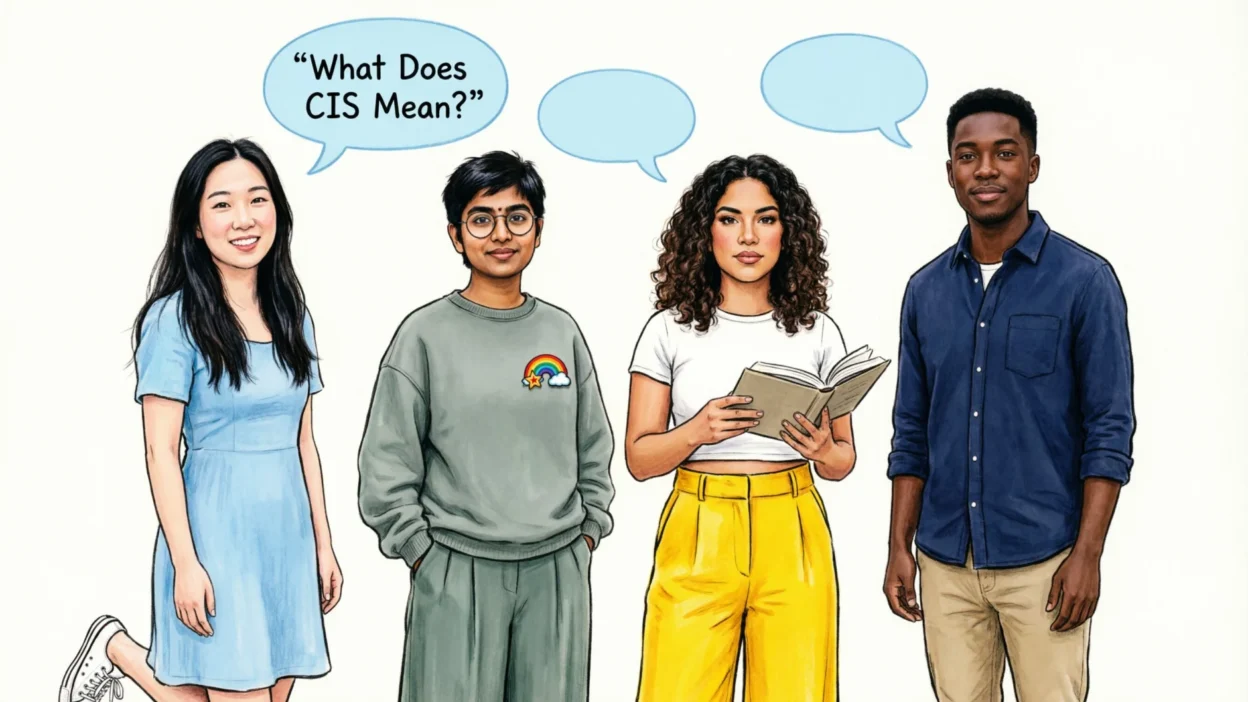
Definition : CIS stands for cisgender, referring to individuals whose gender identity matches the sex they were assigned at birth.
In today’s society, understanding gender terminology is essential for respectful and informed communication. One term that frequently appears in social media, classrooms, workplaces, and even online forums is CIS, short for cisgender. A cis person is someone whose gender identity aligns with the sex they were assigned at birth.
For example, a cis woman is someone assigned female at birth who identifies as a woman, while a cis man is someone assigned male at birth who identifies as a man.
Knowing what cis means helps avoid assumptions and promotes inclusive language, which is especially important in discussions about LGBTQ+ issues.
This article will explain the meaning of cis, explore cisgender meaning, compare cis vs trans, provide practical examples, and answer questions like “Is cis the same as straight?” or “When did cisgender become a word?”.
Definition of CIS
CIS is short for cisgender, describing people whose gender identity matches their birth-assigned sex. The prefix “cis-” comes from Latin, meaning “on this side of,” contrasting with trans-, meaning “across” or “on the other side.”
- Cis woman: Assigned female at birth and identifies as a woman.
- Cis man: Assigned male at birth and identifies as a man.
Cisgender is about gender identity, not sexual orientation. A cis person can be straight, gay, bisexual, or pansexual. Understanding the cis gender meaning is crucial in distinguishing cis vs trans and promoting respectful conversations in social, educational, and professional contexts.
What Does Cis Mean in Text & Online
In texting, online forums, or social media, cis is shorthand for cisgender. People use it to clarify their identity or perspective in discussions about gender.
Examples:
- “I’m cis, so I might not fully understand trans experiences.”
- “She’s cis and uses she/her pronouns.”
Whether discussing cis controls, cis benchmarks, or even referring to U of U CIS (University of Utah Center for Integrated Sciences), knowing what cis means in text or professional contexts ensures clarity and avoids confusion.
Cis vs Transgender: Key Differences
Understanding the distinction between cis and trans is essential.
- Cisgender (Cis): Gender identity matches birth-assigned sex.
- Transgender (Trans): Gender identity does not match birth-assigned sex.
Cisgender individuals often experience societal advantages known as cis privilege, while transgender people may face unique challenges. Recognizing this distinction helps in discussions of cis gender meaning and promotes inclusive language.
Cisgender vs Sexual Orientation
Being cisgender is about gender identity, not sexual orientation. A cis man or cis woman can be straight, gay, bisexual, or pansexual.
Many people confuse cis with being straight, but that’s incorrect. A cis person’s gender alignment with their assigned sex doesn’t determine who they are attracted to. Understanding this difference answers questions like “Does cis mean straight?” or “Does cisgender mean normal?”.
How Cis is Used in Everyday Life
Cis appears in:
- Social conversations: “I’m cis, so I want to understand trans experiences better.”
- Educational contexts: Explaining cisgender meaning in lessons on gender identity.
- Workplace discussions: Diversity and inclusion programs may reference cis and trans identities.
- Online platforms: Social media and forums frequently use cis for shorthand.
Even in business contexts, knowing “what does cis mean in business” can refer to corporate systems like CIS login or CIS controls, though these are separate from gender identity.
Pronouns and Gender Identity
Cisgender people typically use pronouns matching their birth-assigned sex:
- Cis woman: she/her
- Cis man: he/him
Respecting pronouns is essential for both cis and trans individuals. This awareness clarifies “what does cis in cisgender mean” and promotes respectful, inclusive communication.
Can Cis People Be Allies?
Cis individuals can be active allies by:
- Educating themselves about gender identity.
- Listening to transgender and non-binary experiences.
- Using inclusive language.
- Challenging discrimination in social or professional spaces.
- Supporting policies for gender inclusivity.
Being aware of cis privilege allows cis people to advocate effectively for gender-diverse communities.
Benefits and Challenges of Being Cis
Benefits:
- Social acceptance and recognition.
- Reduced risk of discrimination based on gender identity.
- Representation in media, policies, and cultural norms.
Challenges:
- Limited awareness of trans or non-binary struggles.
- Responsibility to leverage cis privilege positively.
Understanding these benefits and challenges promotes empathy and inclusive behavior.
Common Misconceptions About Cis
- Cis means straight: False, gender identity ≠ sexual orientation.
- Cis people don’t face challenges: They do, but not related to gender identity.
- Cis is an insult: It’s neutral and descriptive.
- Cis people don’t need to learn about gender diversity: Incorrect; awareness is key.
Examples of Using Cis in Sentences
- “I’m cis, so I want to learn more about trans experiences.”
- “She’s a cis woman using she/her pronouns.”
- “Cis men may have societal advantages in certain contexts.”
- “Even as a cis person, I advocate for LGBTQ+ rights.”
- “Cis students may not face the same challenges in school as trans students.”
Related Terms and Concepts
- Transgender (Trans)
- Non-binary
- Gender identity
- Pronouns
- Cis privilege
- Gender spectrum
- Inclusive language
These terms complement understanding of cis, cis male, cis female, and broader gender identity discussions.
Frequently Asked Questions (FAQ)
- What does cis mean? Short for cisgender, aligning gender with birth-assigned sex.
- What does cis mean in text? Shorthand for cisgender in conversations.
- Is cis the same as straight? No, gender identity is separate from sexual orientation.
- Is a cis woman a female? Yes, she identifies with her birth-assigned sex.
- When did cisgender become a word? Late 20th century in academic and LGBTQ+ contexts.
- What does cis male mean? A male whose gender identity matches his birth-assigned sex.
- What does cis mean in chemistry? Refers to molecules where similar groups are on the same side (cis vs trans isomers).
- What does cis mean in business? May refer to corporate systems like CIS login or CIS controls.
Importance of Inclusive Language
Using correct terms like cis, cisgender, cis woman, or cis man fosters inclusivity, respect, and awareness. Inclusive language reduces assumptions, promotes equality, and encourages allyship in schools, workplaces, online platforms, and society.
Conclusion
CIS, or cisgender, refers to individuals whose gender identity matches their birth-assigned sex.
Understanding this term, its distinctions from trans, and related concepts like cis privilege is essential for respectful communication and inclusivity.
Cis people can be allies, using awareness of social advantages to advocate for equality.
Using inclusive language, correct pronouns, and accurate terminology creates safer spaces and fosters understanding across gender identities.
Knowing what cis means, in text, in society, or even in professional or scientific contexts, empowers individuals to engage thoughtfully, challenge misconceptions, and contribute to a more aware, equitable world.