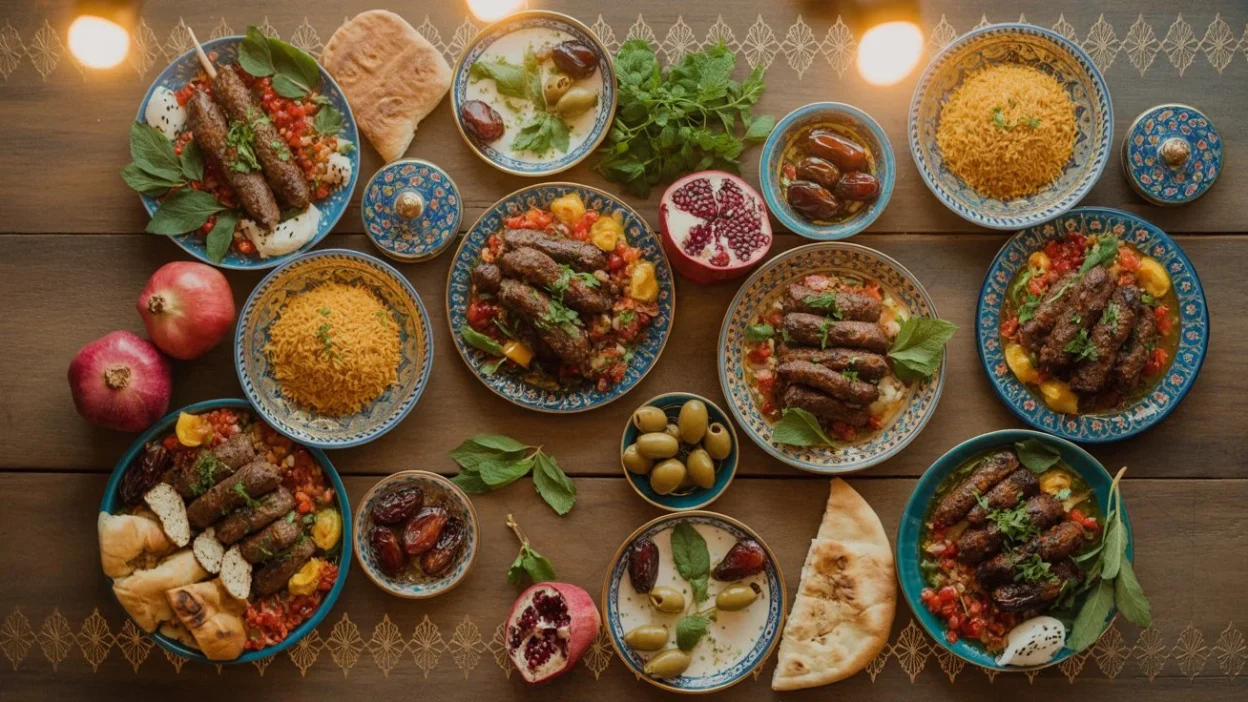
If you’ve ever shopped for groceries, dined out, or explored Islamic culture, you may have seen the term “halal”. But what does halal really mean? 🤔
At its core, halal is an Arabic word meaning “permissible” or “allowed” according to Islamic law. While often linked to food 🍗, halal extends to lifestyle choices, finance, personal care, and ethical behavior.
Understanding halal is important not only for Muslims but also for anyone wanting to respect cultural and religious practices. In this guide, we’ll cover:
- ✅ What halal means
- ✅ Halal vs haram
- ✅ Halal food and lifestyle
- ✅ Halal certification and global practices
By the end, you’ll understand halal as a holistic framework for ethical and mindful living.
Definition of Halal 📝
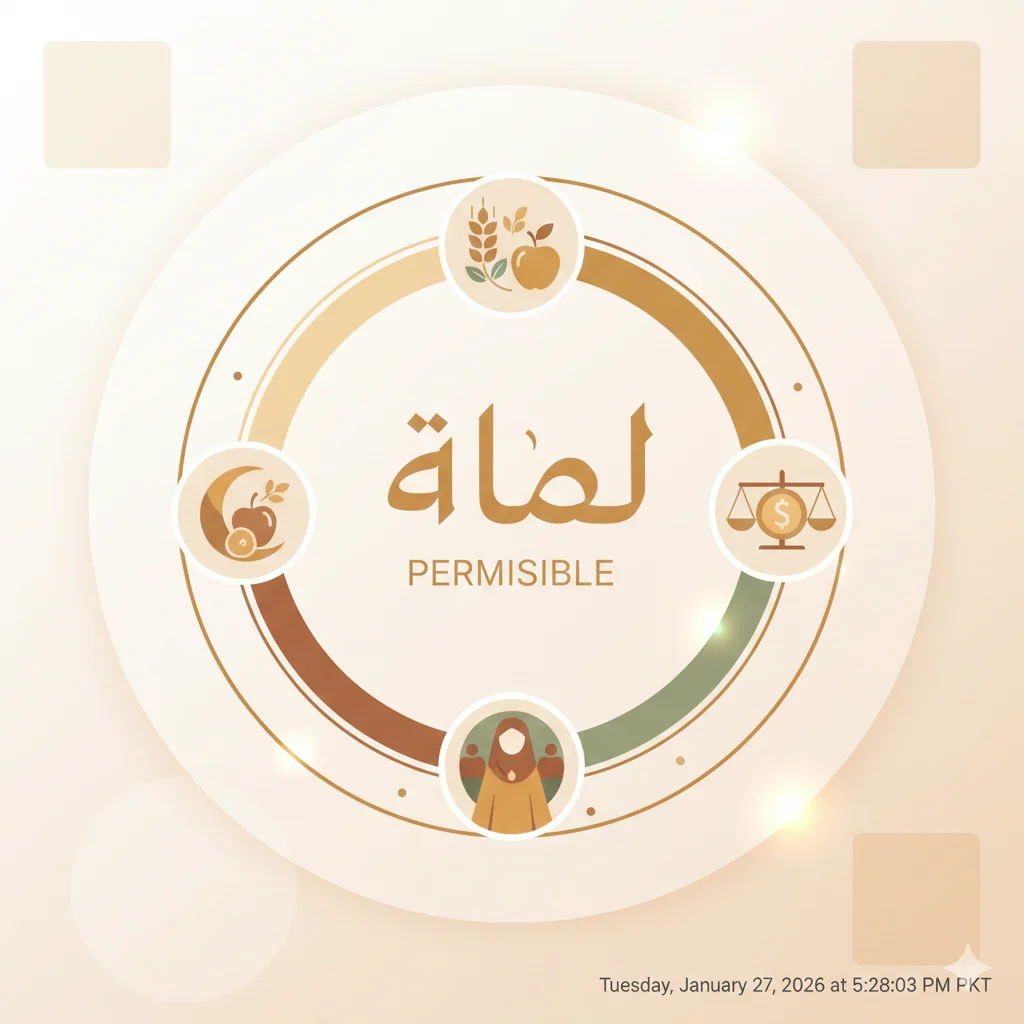
The word halal literally means “permissible”. In Islam, it refers to anything that is allowed according to Islamic law, while its opposite, haram, refers to what is forbidden.
Key points:
- ✅ Halal applies beyond food, including finance, personal care, clothing, and entertainment.
- 🍖 Halal food must meet specific criteria: meat comes from healthy animals, properly slaughtered with a prayer, and processed without forbidden ingredients.
- ❌ Haram foods include pork, alcohol, and certain additives.
What Does Halal Mean in Arabic 🔤
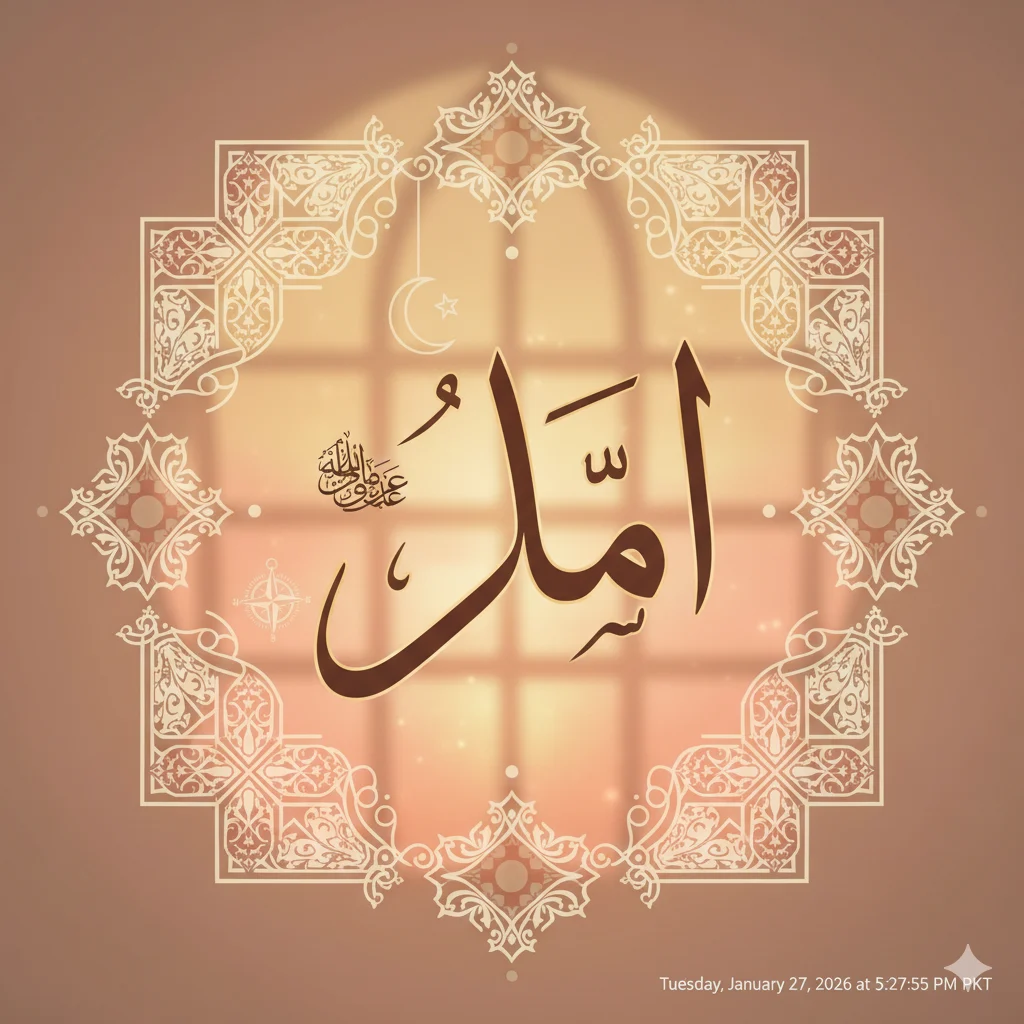
The term halal originates from Arabic and literally means “lawful” or “permissible.” It reflects a cultural and religious context that emphasizes ethical behavior, spiritual mindfulness, and conscious choices in daily life.
What Does Halal Mean in Islam 🕌

In Islam, halal is not just a dietary rule—it is a principle guiding ethical and spiritual living. The rules are derived from the Quran and Hadith, defining what is lawful (halal) and unlawful (haram).
- Encourages ethical consumption and responsible living
- Promotes spiritual discipline and obedience
- Provides a framework for everyday ethical decisions
Halal in Food: What You Can and Cannot Eat 🍴
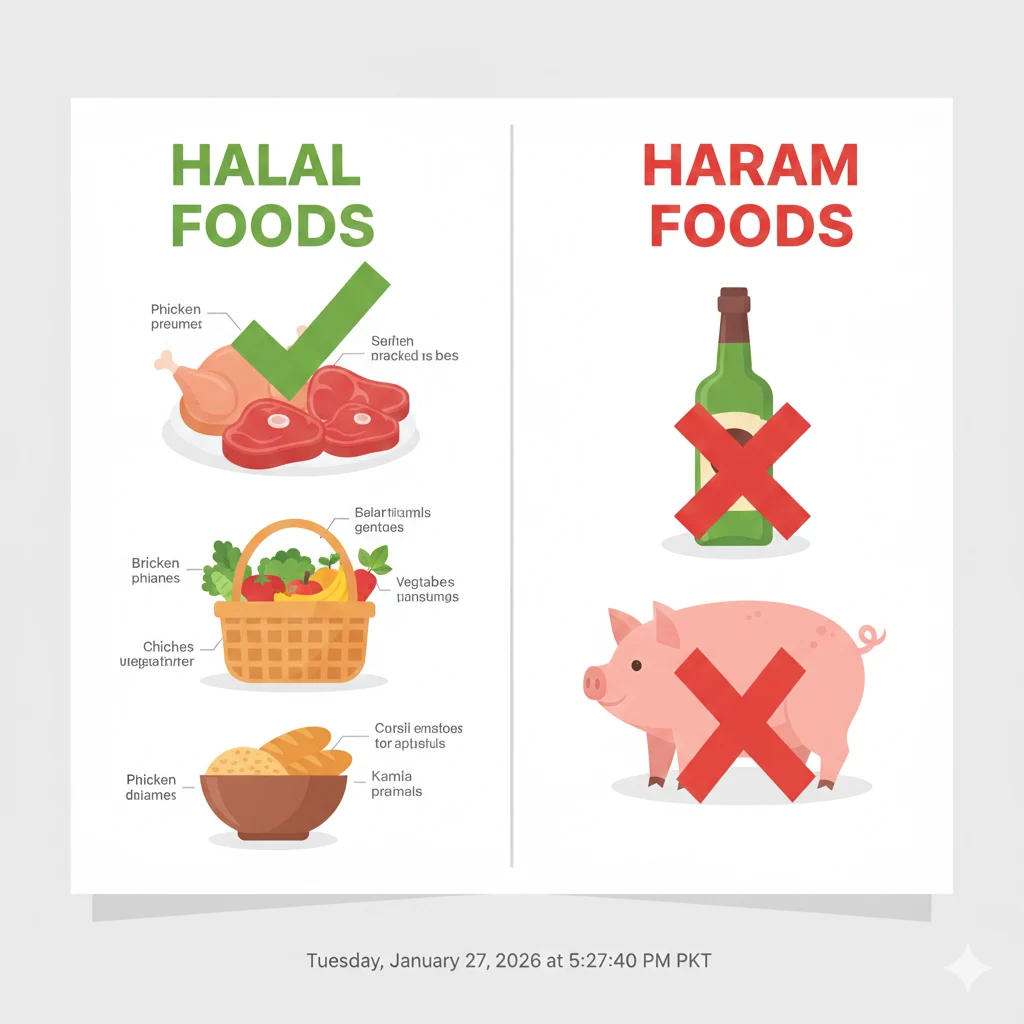
Halal food must meet Islamic dietary laws.
Halal foods include:
- Properly slaughtered meat 🍗
- Fruits, vegetables, grains 🍎🥦
- Halal-certified processed foods ✅
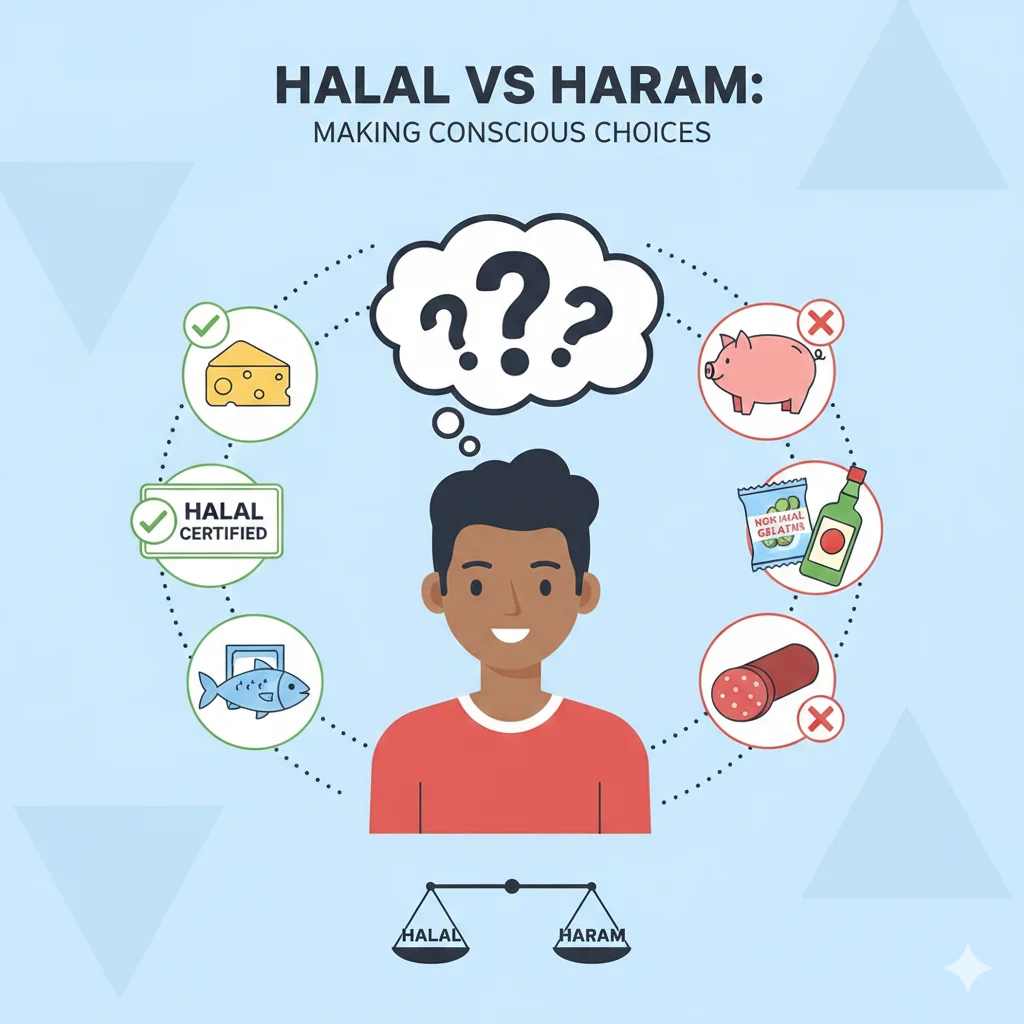
Haram foods include:
- Pork ❌
- Alcohol 🍷
- Non-halal gelatin or additives ❌
What Does Zabiha Halal Mean ⚖️

Zabiha refers to the Islamic method of slaughtering animals for halal consumption:
- Animal must be healthy and slaughtered humanely
- Blood fully drained
- Prayer recited during slaughter (Bismillah)
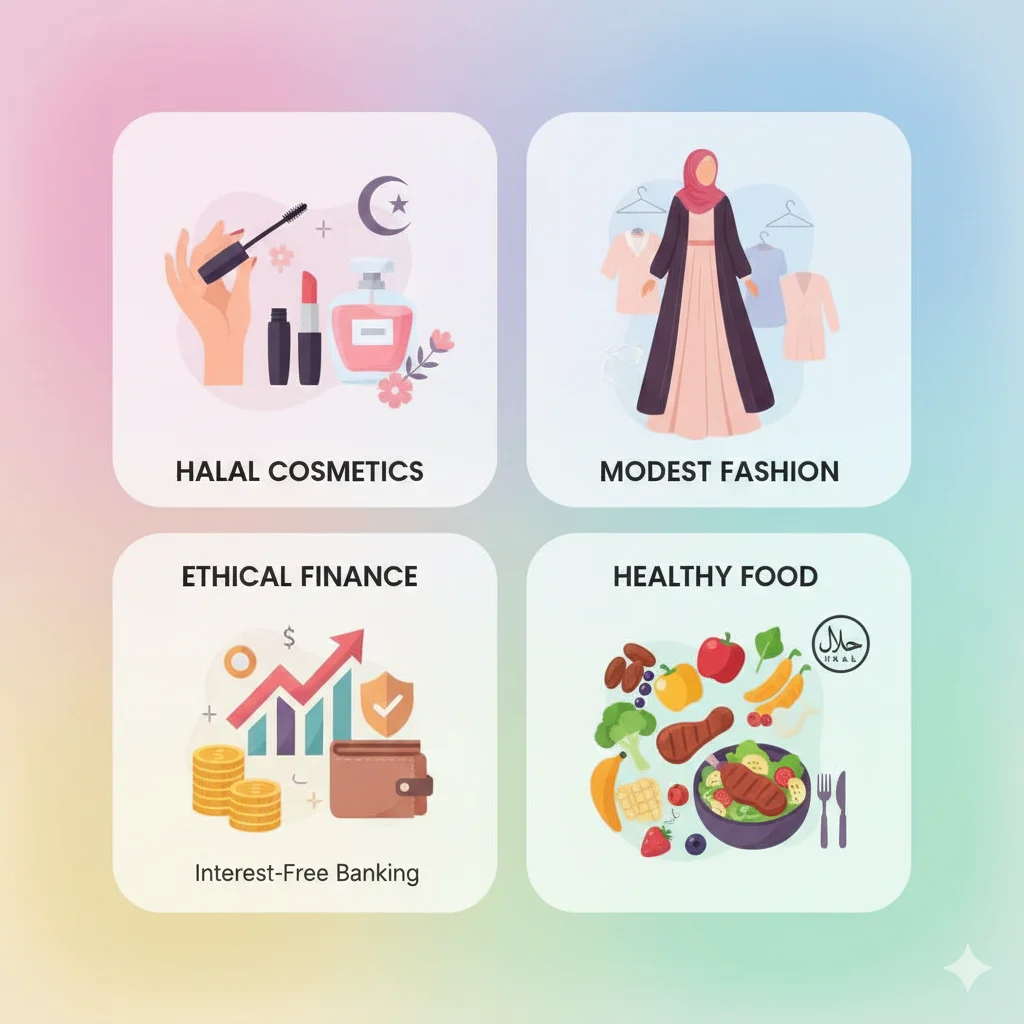
Halal Beyond Food: Lifestyle and Products 💄💰👚

Halal is more than diet; it shapes daily lifestyle choices:
- Finance: Interest-free banking and ethical investments 💵
- Cosmetics: Alcohol-free, cruelty-free products 💄
- Clothing & entertainment: Modest and ethically aligned 👗🎬
This ensures ethical and mindful living beyond dietary rules.
Understanding Halal Certification ✅
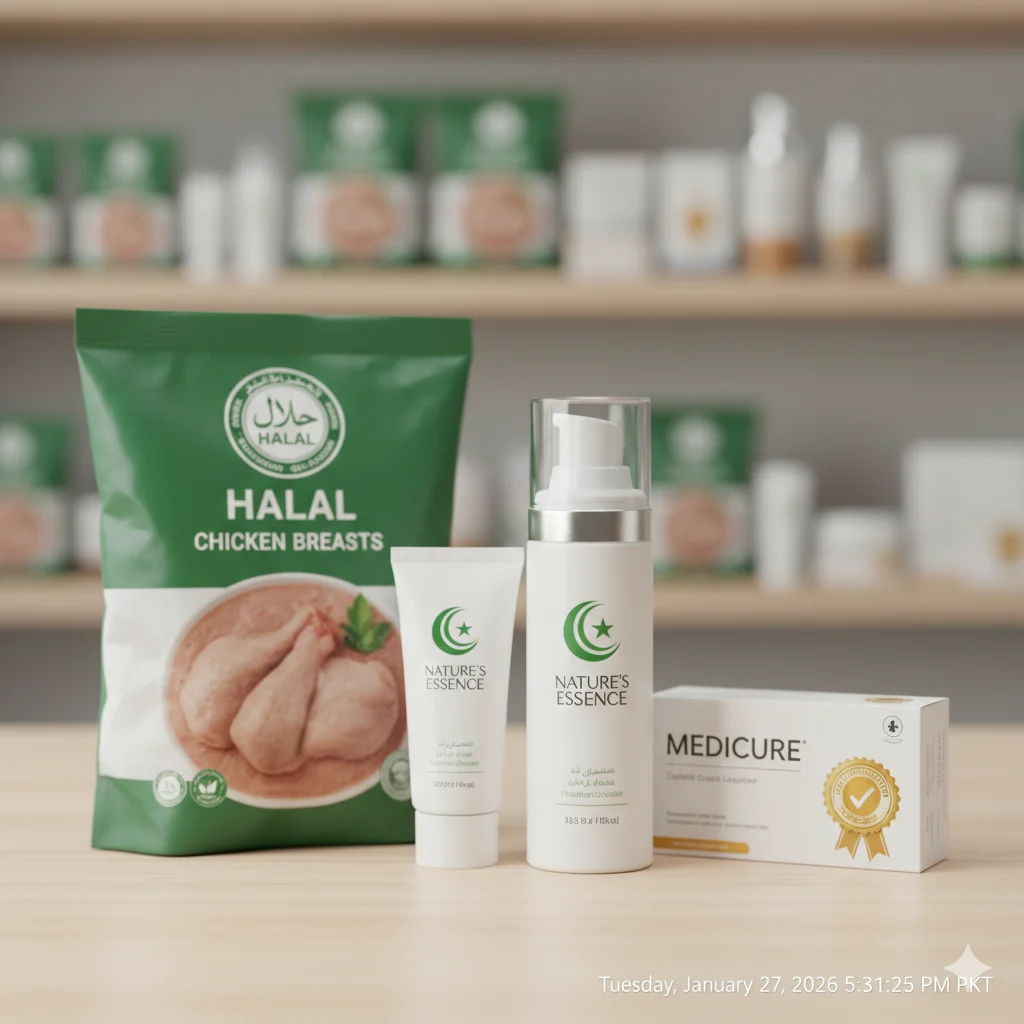
Halal certification ensures products meet Islamic law standards.
- Halal logos on food, cosmetics, and pharmaceuticals 🏷️
- Verifies proper ingredients and preparation
- Builds trust and transparency for consumers
Halal vs Haram: Key Differences ⚖️
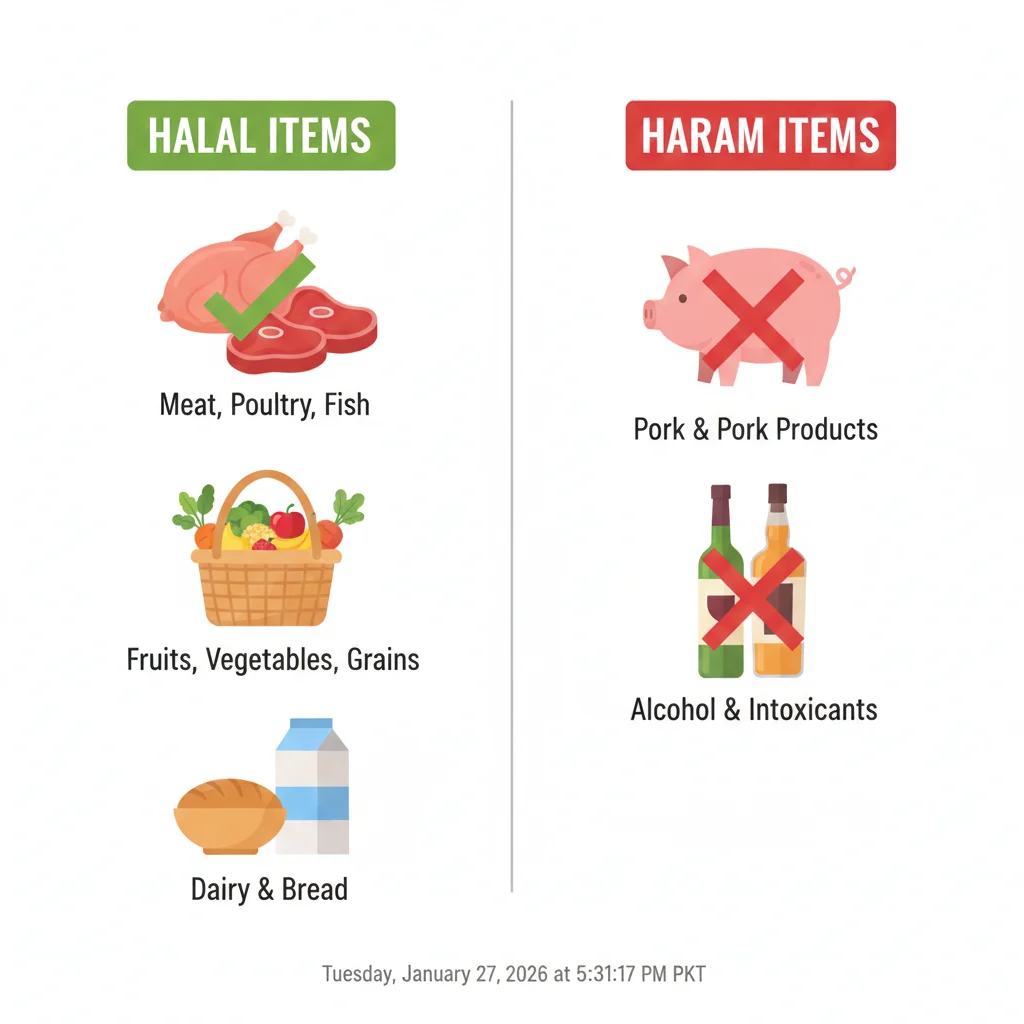
Understanding what is halal vs haram is key:
- ✅ Halal: permissible foods and actions
- ❌ Haram: forbidden items like pork, alcohol, unethical practices
Common Misconceptions About Halal ❌✅
- Halal is only about food ❌ → also includes lifestyle, finance, and personal care ✅
- Halal meat is automatically healthier ❌ → nutrition depends on quality and handling ✅
- Halal is only for Muslims ❌ → anyone can consume halal products ✅
- Halal is restrictive ❌ → it’s a flexible ethical framework ✅
Why Halal Matters to Muslims 🌙
Halal strengthens faith, ethics, and community bonds:
- Encourages spiritual obedience 🙏
- Builds community connection 🤝
- Guides daily ethical and mindful choices 🌿
Halal Practices Around the World 🌎
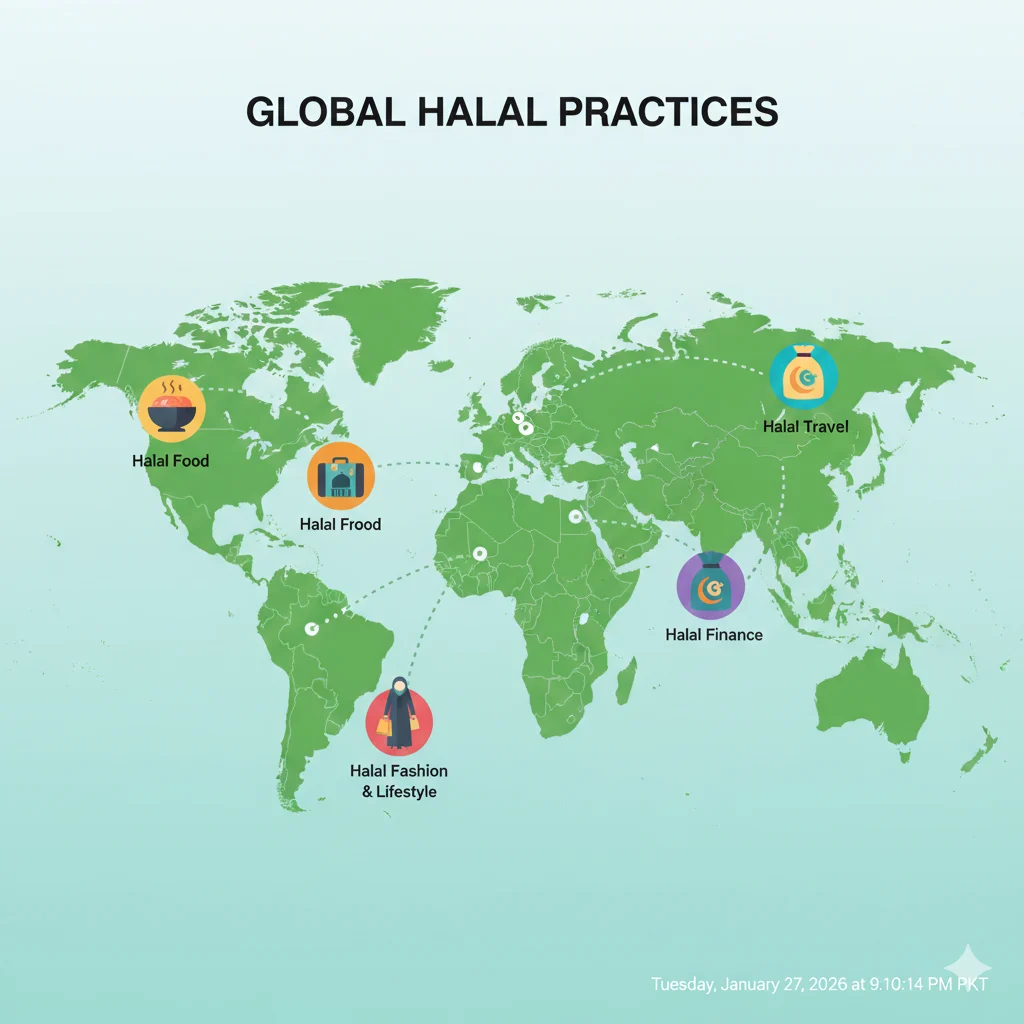
- Muslim-majority countries: regulated halal markets and restaurants 🕌
- Western countries: halal products and certification labels 🏪
- Halal tourism: accommodations and dining options ✈️
- Core principles remain: ethical sourcing, proper preparation, compliance with Islamic law ✅
Halal Food Examples: Popular Dishes Around the World 🍲
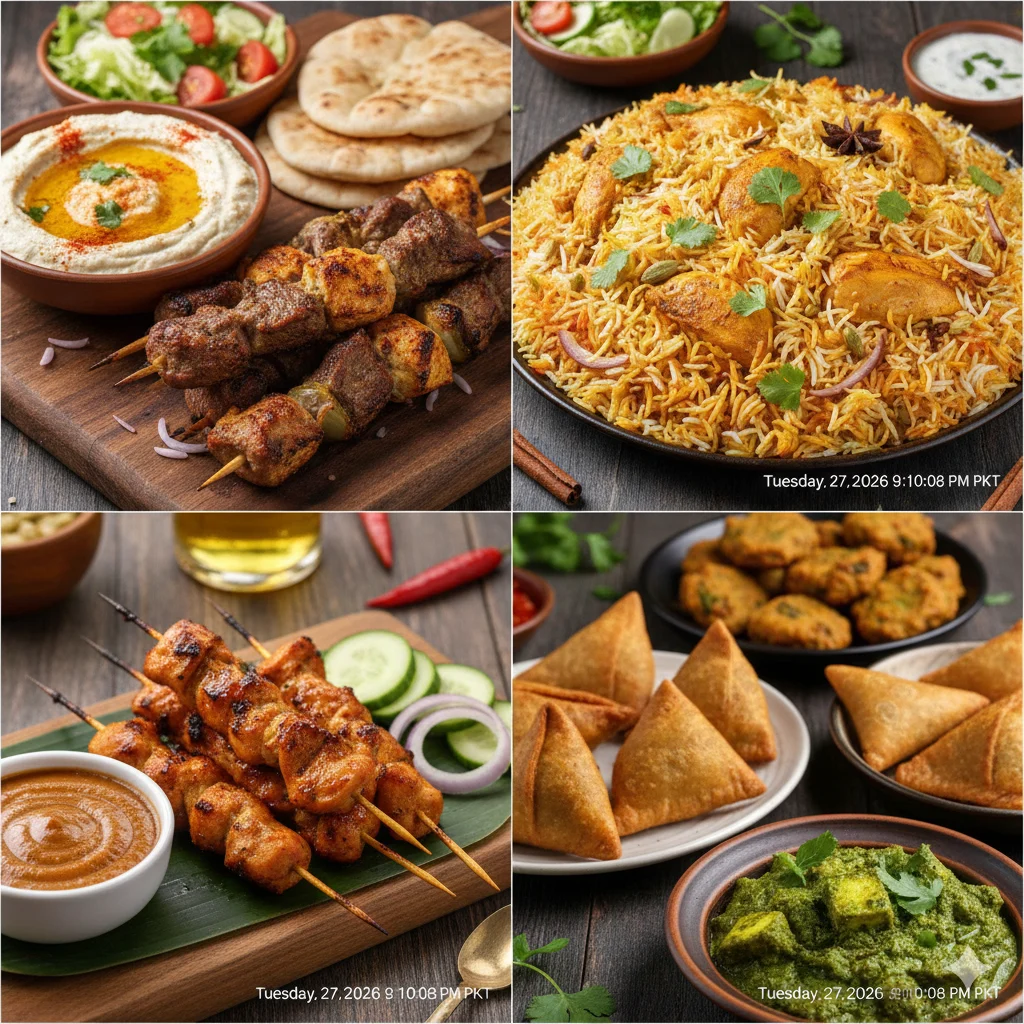
- Middle Eastern: kebabs, hummus, falafel
- Southeast Asian: satay, rendang
- South Asian: biryani, haleem
- Demonstrates how halal rules are applied globally
Halal Certification Authorities and Standards 📜
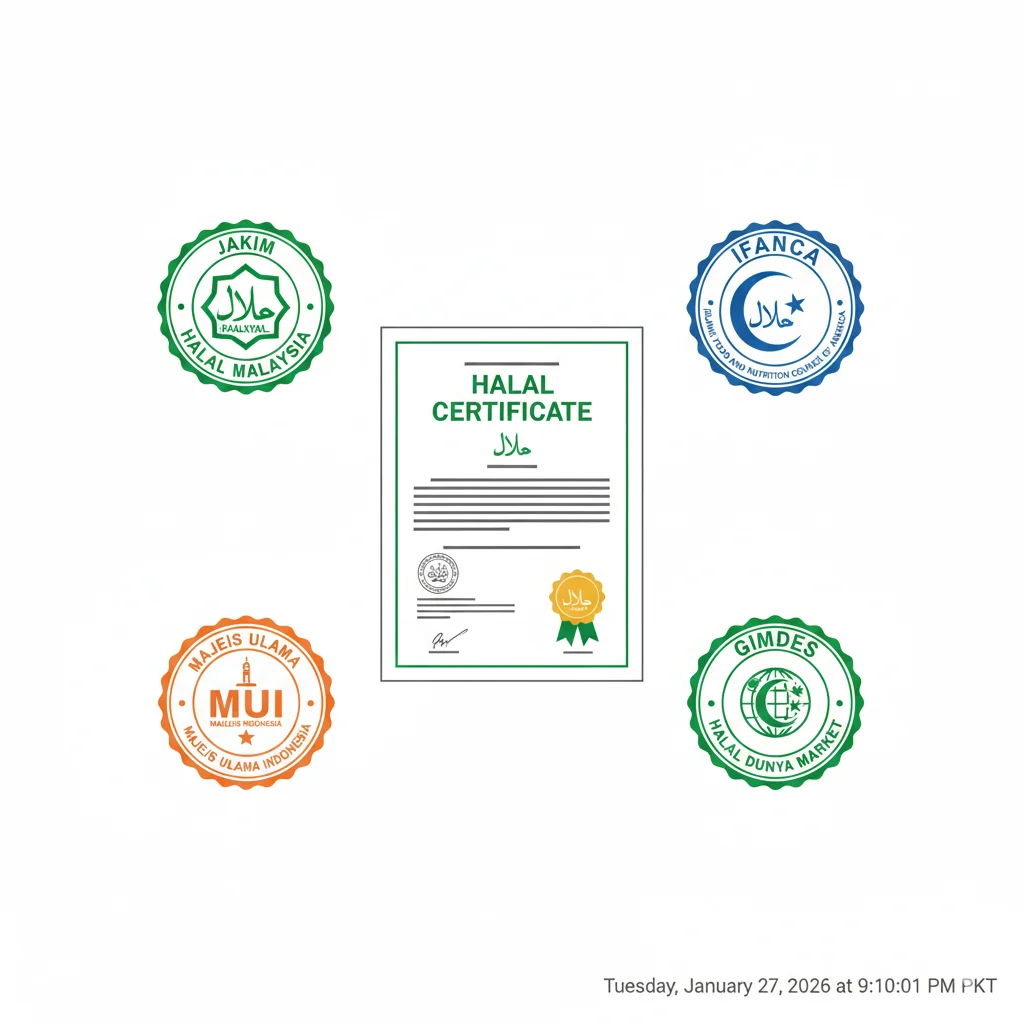
- Explains how halal certification is regulated globally.
- Highlights major organizations and their standards, like JAKIM, IFANCA, and MUI.
- Shows how certification ensures trust, consistency, and compliance for consumers.
The Global Halal Market and Industry 🌍
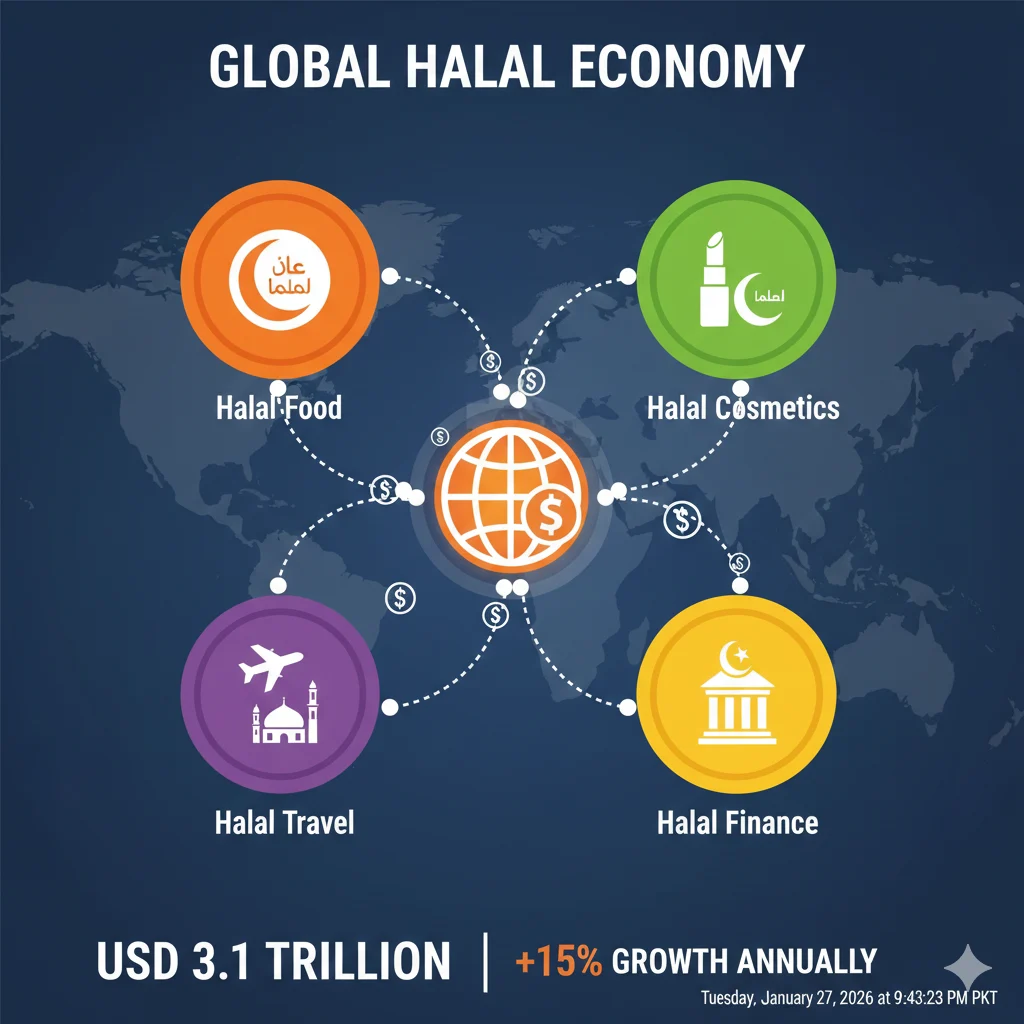
- Covers the economic impact of halal products worldwide.
- Includes food, cosmetics, travel, and finance markets.
- Shows why halal is a fast-growing and profitable global industry.
FAQs About Halal ❓
- What does halal mean in Hebrew? 🔤
Halal retains its meaning of lawful or permissible. - Does halal mean kosher? ❓
Halal and kosher share some similarities but follow different religious laws. - Does halal mean no pork? ❌
Yes, pork is strictly haram. - Can non-Muslims eat halal food? ✅
Yes! Halal food is safe and permissible for anyone, not just Muslims. - Is halal meat healthier than regular meat? ❌
Not necessarily. Halal focuses on ethical slaughter and religious compliance, but nutritional value depends on the type and quality of meat. - Does halal food contain alcohol? ❌
No. Alcohol is strictly haram, so halal food and drinks must be free from alcohol or intoxicants. - What does halal mean for personal care products? 💄
Halal personal care products avoid alcohol, pork-derived ingredients, and other haram substances. - How can I identify halal-certified products? ✅
Look for official halal certification logos from trusted organizations on packaging, labels, or restaurant menus. - Is halal only related to food? ❌
No, halal applies to lifestyle, business, travel, personal care, and financial practices. - Why is halal important in daily life? 🌿
Halal guides ethical, spiritual, and mindful decisions in all aspects of life, not just diet.
Halal in Finance and Business 💵
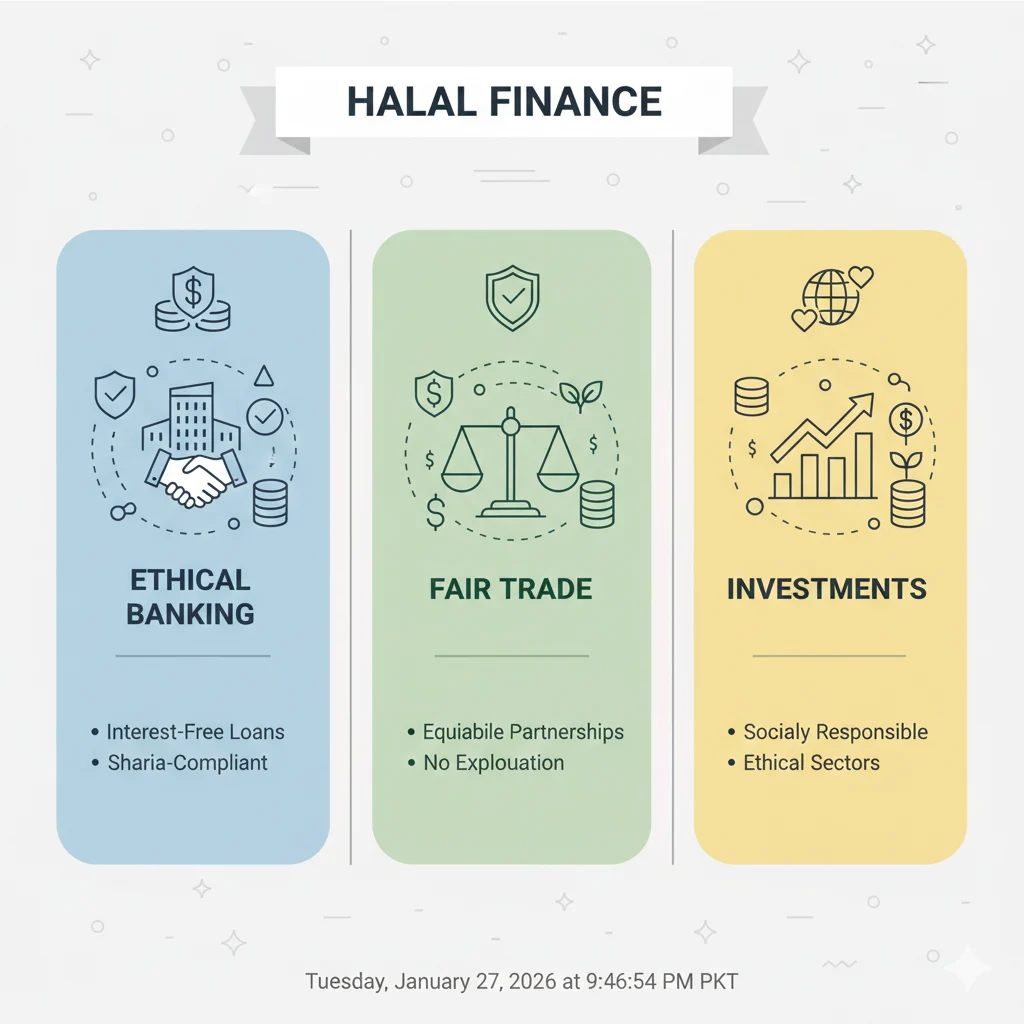
- Explains Islamic finance principles: interest-free banking, ethical investing, and halal business practices.
- Highlights how halal extends beyond food into money and commerce, ensuring ethical and fair practices globally.
Halal Tourism and Travel ✈️

- Covers travel experiences that follow halal principles, like halal-friendly hotels, restaurants, and destinations.
- Shows the growing global halal tourism industry and how it supports Muslim travelers’ lifestyle needs.
Conclusion 🕌
Halal is more than a dietary rule—it’s a holistic guide to ethical and spiritual living. From food to lifestyle, finance, and personal care, halal guides Muslims to make faith-aligned, ethical choices.
It fosters community, cultural identity, and mindfulness, while non-Muslims can also appreciate halal for its ethical standards and quality.
By understanding halal, its origins, and practices, readers can see it as a symbol of faith, ethical living, and cultural respect, influencing millions worldwide 🌏.