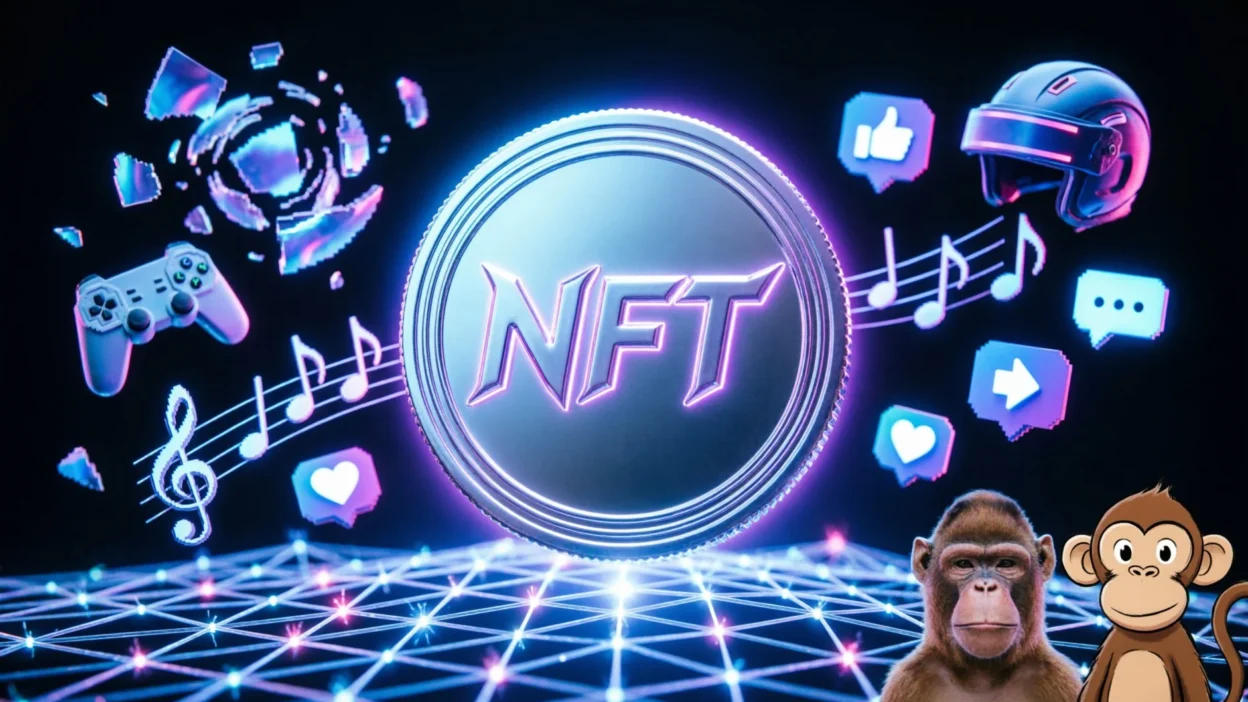
Definition: NFT stands for Non-Fungible Token. It is a unique digital asset stored on a blockchain, representing ownership of items such as digital art, music, collectibles, or virtual assets. Unlike cryptocurrencies, NFTs are not interchangeable, making each one distinct and verifiable.
In recent years, the term NFT has become a staple in conversations about cryptocurrency, digital art, and social media.
But what does NFT actually stand for, and why is it so significant? An NFT—or Non-Fungible Token—is a digital certificate of ownership for a unique item recorded on a blockchain.
Unlike cryptocurrency, which is fungible and interchangeable, NFTs are one-of-a-kind assets. They can represent digital art, gaming items, music, or even moments in sports, including WWE highlights.
Understanding NFTs requires balancing technical knowledge with practical insights, including how NFTs work, how they make money, and how much they cost.
This guide will explain NFTs in simple, beginner-friendly terms, provide real-world NFT examples like Monkey NFTs and Bored Ape NFTs, explore NFT marketplaces, and answer questions about legality, Islamic compliance, and investment potential, empowering readers to navigate the digital asset world confidently.
What Does NFT Stand For?
NFT stands for Non-Fungible Token, a term often confusing to beginners. Breaking it down:
- Non Indicates that the asset is not interchangeable with anything else. Each NFT is unique.
- Fungible Refers to items that are interchangeable, like money or cryptocurrencies.
- Token Represents a digital certificate of ownership on the blockchain.
In simple terms, an NFT is a unique digital asset verified on the blockchain. NFTs appear in social media, trading cards, WWE moments, art collections, and even hydroponics tokenization projects.
What Does “Non-Fungible” Mean?
What Is a Fungible Asset?
Fungible assets, like Bitcoin or dollars, can be exchanged one-to-one.
What Makes Something Non-Fungible?
Non-fungible items are unique and irreplaceable, such as signed digital art, rare trading cards, or exclusive NFT moments.
Why Non-Fungibility Matters in NFTs
Even if a digital file is copied, the NFT proves ownership, which gives the asset its value.
What Is an NFT in Simple Words?
An NFT is a digital certificate of ownership for online content, whether art, music, gaming items, or collectibles. Even if someone copies the file, the NFT shows who owns the original.
Analogies:
- Concert tickets: only one VIP ticket is non-fungible.
- Digital art: owning a Monkey NFT or Bored Ape NFT is like owning the original painting versus a print.
NFTs are widely discussed on social media and urban slang, with users asking questions like “what does NFT stand for in text or in slang?”
How Do NFTs Work?
Role of Blockchain
NFTs are stored on blockchains like Ethereum or Polygon, making ownership verifiable and immutable.
Smart Contracts Explained Simply
NFTs use smart contracts to automate ownership transfer and royalties.
Minting an NFT
Minting turns digital files into NFTs with unique token IDs, ready for marketplaces.
Buying & Selling NFTs
NFTs can be bought on an NFT marketplace like OpenSea or Rarible using crypto wallets.
NFT Wallets (Basic Overview)
Digital wallets store your NFTs, including Monkey NFTs, Bored Ape NFTs, and NFT trading cards.
NFT vs Cryptocurrency (What’s the Difference?)
| Feature | NFT | Cryptocurrency |
| Interchangeable? | No | Yes |
| Unique? | Yes | No |
| Purpose | Ownership of digital assets | Medium of exchange or investment |
| Examples | Digital art, Monkey NFT, Bored Ape NFT | Bitcoin, Ethereum |
| Stored On | Blockchain | Blockchain |
NFTs are unique collectibles, while cryptocurrencies are fungible and tradable.
Examples of NFTs
Digital Art
Beeple’s Everydays, Monkey NFTs, and Tory Lanez NFTs showcase the art potential.
Music & Albums
Musicians use NFTs to sell exclusive tracks, albums, and royalties.
Gaming Items
Axie Infinity, The Sandbox, and Decentraland items are NFTs you can trade or monetize.
Virtual Real Estate
NFTs represent ownership of land in metaverse platforms.
Collectibles & Profile Pictures
Bored Ape NFTs and Pudgy Penguins are prime examples of PFP NFTs.
How Do People Make Money from NFTs?
- Selling digital art and music
- Flipping NFTs for profit
- Earning royalties via smart contracts
- Monetizing NFT gaming items
- Brand engagement and limited editions
Readers often ask: “How does NFT make money?” The key is ownership, uniqueness, and marketplace activity.
Are NFTs Still Valuable in 2026?
NFTs are evolving from hype to utility-based assets. Value depends on:
- Rarity and uniqueness
- Community engagement
- Functional utility in gaming, social media, and membership perks
Speculative NFTs may lose value, but those with real-world utility or collectible importance remain relevant.
Risks of NFTs
- Price volatility
- Scams and fake projects
- Rug pulls
- Copyright issues
- Environmental concerns
- Regulatory uncertainty
Always research projects and marketplaces, like eCryptoBit.com NFT listings, before investing.
Why Did NFTs Become So Popular?
- 2021 boom and media coverage
- Celebrity endorsements
- Social media amplification
- Crypto bull market synergy
- Pandemic-driven digital shift
NFTs became mainstream due to technology, community, and hype.
The Future of NFTs
- NFTs in gaming: unique items and skins
- Ticketing & memberships
- Virtual real estate and metaverse applications
- Identity and credentials
- Brand and enterprise adoption
The future emphasizes utility, verified ownership, and interoperability.
Frequently Asked Questions (FAQ)
Q1: What does NFT stand for in crypto?
A: Non-Fungible Token, a unique digital asset.
Q2: What does NFT stand for in social media?
A: Same as crypto; used to indicate ownership of digital content online.
Q3: What does NFT stand for in text or slang?
A: Often used informally for Non-Fungible Token or jokingly in urban contexts.
Q4: Is NFT halal in Islam?
A: Opinions vary; NFTs can be halal if no gambling, interest, or unethical practices are involved.
Q5: How much does 1 NFT cost?
A: Prices vary widely, from a few dollars to millions, depending on rarity and demand.
Q6: How does NFT make money?
A: Through selling, flipping, royalties, or monetizing utility and collectibles.
Q7: What are NFT examples?
A: Monkey NFTs, Bored Ape NFTs, digital art, trading cards, and music NFTs.
Q8: How to make an NFT?
A: Create digital content, mint it on a blockchain, and list it on an NFT marketplace.
Q9: What is NFT in art?
A: Digital art with verifiable ownership recorded on the blockchain.
Q10: What is NFT full form?
A: Non-Fungible Token.
Final Thoughts
NFTs have transformed digital ownership, from art and gaming to social media and virtual real estate.
They offer exciting opportunities but carry risks like market volatility, scams, and legal uncertainties. In 2026, NFTs with real utility, community value, or collectible significance remain relevant.
Understanding their meaning, how they work, and potential returns empowers readers to engage with NFTs confidently and explore digital assets responsibly.