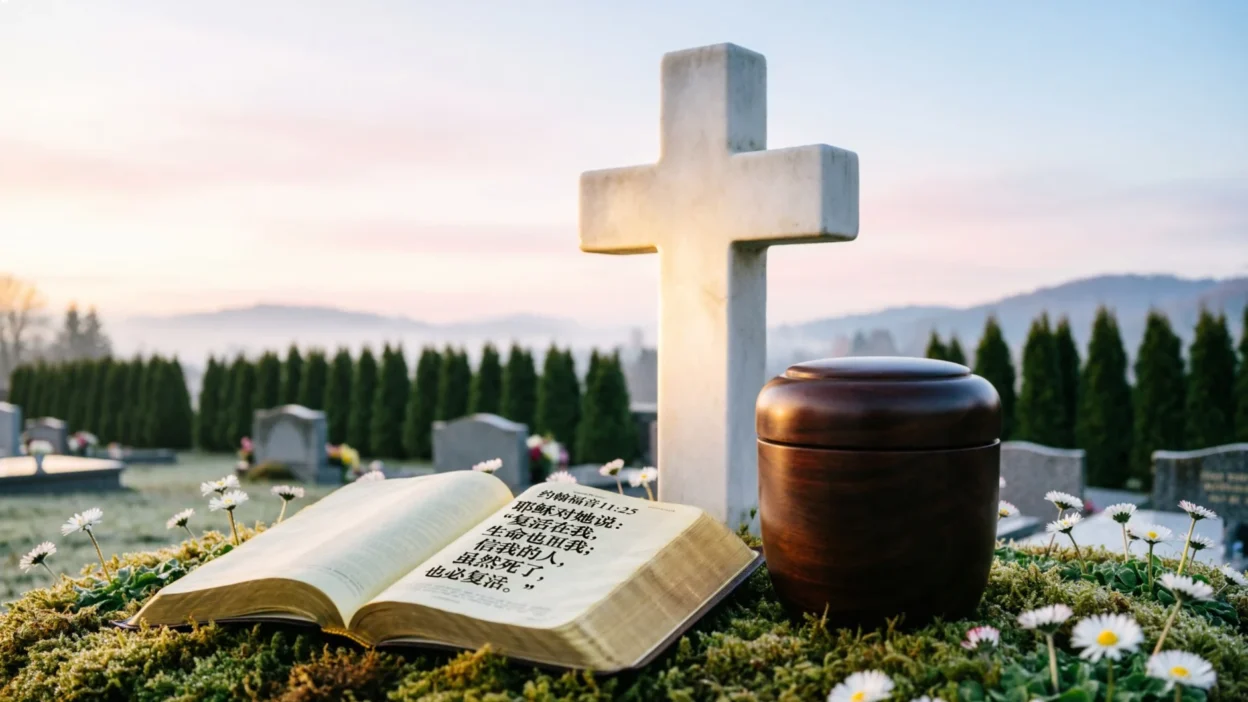
Definition: The Bible does not directly forbid cremation, nor does it teach that a cremated body cannot rise again. Instead, scripture emphasizes honoring the body, faith in resurrection, and trusting God beyond the physical state of human remains.
Christians today interpret cremation through biblical principles, historical context, and denominational teachings.
Many believers ask important spiritual questions when facing end-of-life decisions: Can Christians be cremated and go to heaven? Does the Bible say a cremated body cannot rise? Is it better to cremate or bury?
These concerns are deeply personal and deserve careful biblical understanding. The holy bible, including translations such as the king james bible, niv bible, and esv bible, provides guidance through principles rather than strict commands about cremation.
Christian teaching focuses on honoring God, respecting the body, and trusting in the promise of resurrection. Scholars, pastors, and resources like the bible project, devotional studies, and biblical theology help clarify how cremation fits within Christian faith.
This comprehensive guide explores scriptures, historical context, denominational views, and modern perspectives. Ifr researching cremation services, asking theological questions, or seeking spiritual peace, this article aims to provide balanced, compassionate, and biblically grounded answers for Christians exploring cremation and burial decisions.
Biblical References Related to Burial and Death
The Bible contains many references to burial, showing respect and care for the deceased. However, these passages describe cultural practice rather than strict commands.
Key Biblical Examples
- Genesis 23:19 — Abraham buried Sarah, demonstrating honor and family tradition.
- Genesis 50:13 — Jacob’s burial reflects respect for the body.
- John 19:38–42 — Jesus’ burial shows reverence and dignity.
- Ecclesiastes 12:7 — The body returns to dust while the spirit returns to God.
These scriptures highlight that burial was common, but they do not explicitly forbid cremation.
Many readers searching what does the king james version of the bible say about cremation will find that even within the king james bible, cremation is not directly prohibited.
Old Testament Views on Cremation
The Old Testament primarily presents burial as the norm, yet cremation is occasionally mentioned.
Has anyone in the Bible ever been cremated?
Yes — in 1 Samuel 31:12, Saul and his sons were burned after death. This event was unusual and linked to wartime circumstances rather than a general command.
Symbolic Uses of Fire
- Fire sometimes represented judgment or purification.
- Cremation was uncommon among Israelites and more associated with surrounding cultures.
These references do not mean cremation was sinful — they simply reflect historical context.
New Testament Perspective on Cremation
The New Testament shifts focus toward resurrection and spiritual transformation.
Does the Bible say a cremated body cannot rise?
No. In fact:
- 1 Corinthians 15:35–44 teaches that God transforms the body into a spiritual form.
- Resurrection depends on God’s power, not the condition of human remains.
This answers questions like:
- Does the Bible say a cremated body can’t rise?
- Can Christians be cremated and go to heaven?
The biblical message is clear: God’s ability to resurrect is unlimited.
Cultural and Historical Context of Cremation in Bible Times
Understanding ancient practices helps avoid misinterpretation.
Israelite Tradition
- Burial symbolized honor and continuity.
- Cremation was rare but not universally condemned.
Surrounding Cultures
- Greeks and Romans practiced cremation frequently.
- Early Christians preferred burial partly to distinguish themselves culturally.
Context explains why burial appears more often in scripture without creating a theological prohibition against cremation.
Common Denominational Stances on Cremation
Christian views differ but share core principles.
Catholic Church
- Cremation allowed since 1963.
- Ashes should be kept respectfully.
Protestant Churches
- Generally accept cremation.
- Emphasize faith over method.
Orthodox Christianity
- Strong preference for burial.
- Cremation discouraged but varies by region.
Many readers searching what does the bible say about cremation billy graham will find that evangelist Billy Graham taught cremation does not prevent resurrection or salvation.
Cremation vs Burial: Theological Considerations
What does the Bible say about cremation vs burial?
Burial symbolizes rest and hope, while cremation can still reflect respect and faith.
Is it better to cremate or bury?
Scripture does not declare one universally superior. Christians may consider:
- Personal beliefs
- Family tradition
- Church guidance
- Practical factors
Both options can honor God when approached with reverence.
Modern Christian Perspectives on Cremation
Today, cremation is increasingly common.
Practical reasons include:
- Cost considerations (many search how much does cremation cost or cost of cremation).
- Environmental concerns such as water cremation.
- Changing cultural practices.
Pastors emphasize that salvation depends on faith — not burial method.
Practical Guidance for Christian Families Considering Cremation
When planning:
- Discuss wishes openly with family.
- Seek pastoral guidance.
- Include scripture readings such as bible verses about love, encouraging bible verses, or bible verses about strength during memorial services.
Common related searches include:
- cremation services
- cremation near me
- cremation services near me
- direct cremation
- cremation urns
- cremation jewelry
These practical aspects can coexist with spiritual priorities.
Some also explore:
- pet cremation
- dog cremation near me
- animal cremation near me
While pet cremation is separate from human theology, Christians often apply principles of stewardship and compassion.
Frequently Asked Questions About Cremation in Christianity
What does the Bible say about cremation — is it a sin?
No. The Bible does not state cremation is sinful.
Does the Bible say a cremated body cannot rise?
No. Resurrection is based on God’s power, not physical condition.
What does the Bible say about cremation and scattering of ashes?
Scripture gives no direct command; churches encourage respectful handling.
What does the Bible say about cremation for Christians?
Christians are free to choose cremation or burial while honoring God and maintaining faith in resurrection.
Who wrote the Bible and how does interpretation matter?
Understanding context from scholars studying books of the bible, translation differences, and theology helps avoid misunderstandings.
What about online debates like “what does the bible say about cremation reddit”?
Online discussions vary widely; always compare claims with scripture and trusted theological sources.
Conclusion
The Bible provides principles rather than strict rules regarding cremation. While burial was historically common, scripture never declares that cremation prevents resurrection or salvation.
Questions like Can Christians be cremated and go to heaven? or Does the Bible say a cremated body cannot rise? are answered through core Christian doctrine: God’s power is greater than any physical process.
Modern Christians can choose burial or cremation based on faith, tradition, and practical needs.
If consulting church leaders, using a bible app, studying resources like the bible project, or reading the holy bible in translations such as NIV, ESV, or KJV, believers are encouraged to focus on honoring God, respecting the body, and trusting in eternal hope.
Ultimately, the heart of Christian teaching is not the method of body disposition — but faith, resurrection, love, and the promise of life beyond death.