The estar present tense is a cornerstone of Spanish grammar, essential for anyone learning the language.
If you’re a student, language enthusiast, or writer, mastering estar in the present tense opens the door to expressing temporary states, locations, and conditions with ease.
Unlike its counterpart ser, which describes permanent characteristics, estar focuses on how things are in the moment.
This beginner-friendly guide, we’ll break down the estar present tense, its conjugation, sentence structures, and practical examples.
You’ll also find tips to avoid common mistakes, engaging exercises, and a FAQ section to clarify doubts.
By the end, you’ll feel confident using estar in everyday conversations. Let’s dive into this exciting journey of learning verb conjugation and discover how to use estar present tense correctly!
What Is the Estar Present Tense?
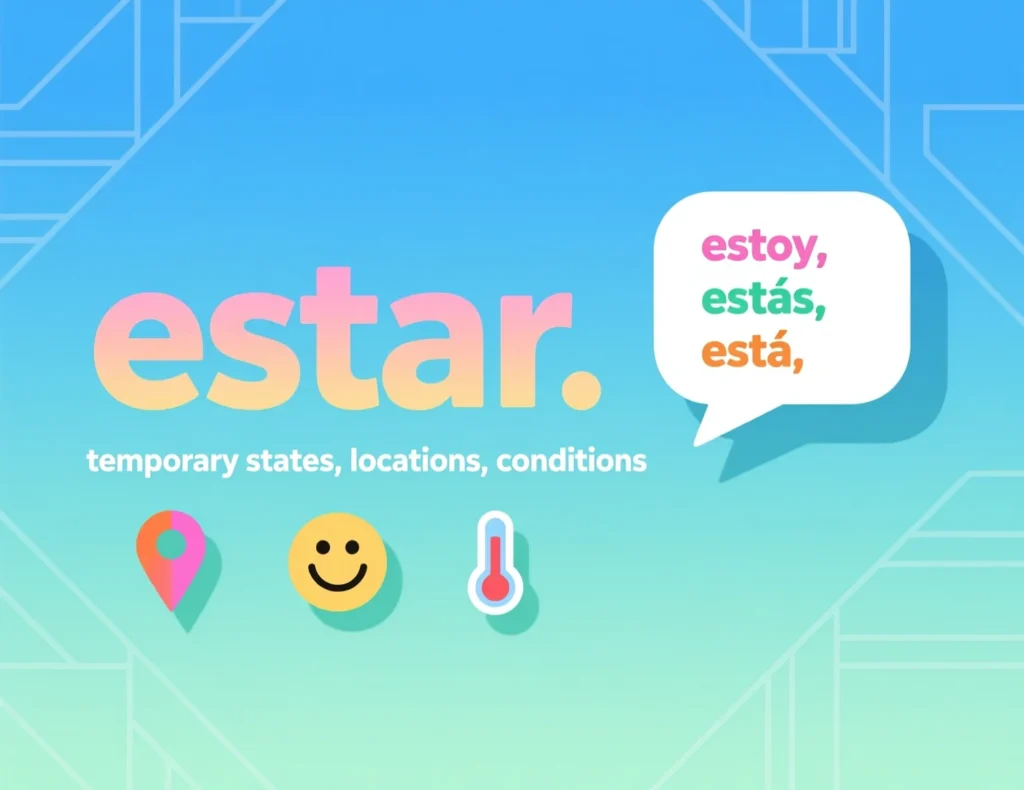
The estar present tense is a form of the Spanish verb estar (to be) used to describe temporary states, locations, or conditions in the present moment. It’s one of two Spanish verbs meaning “to be,” with estar focusing on transient or changeable situations, such as feelings, locations, or physical states. For example, “Estoy cansado” means “I am tired” (a temporary feeling), while “Estoy en la playa” means “I am at the beach” (a specific location). Understanding when to use estar versus ser is key to mastering Spanish verb tense examples.
How to Recognize the Estar Present Tense?
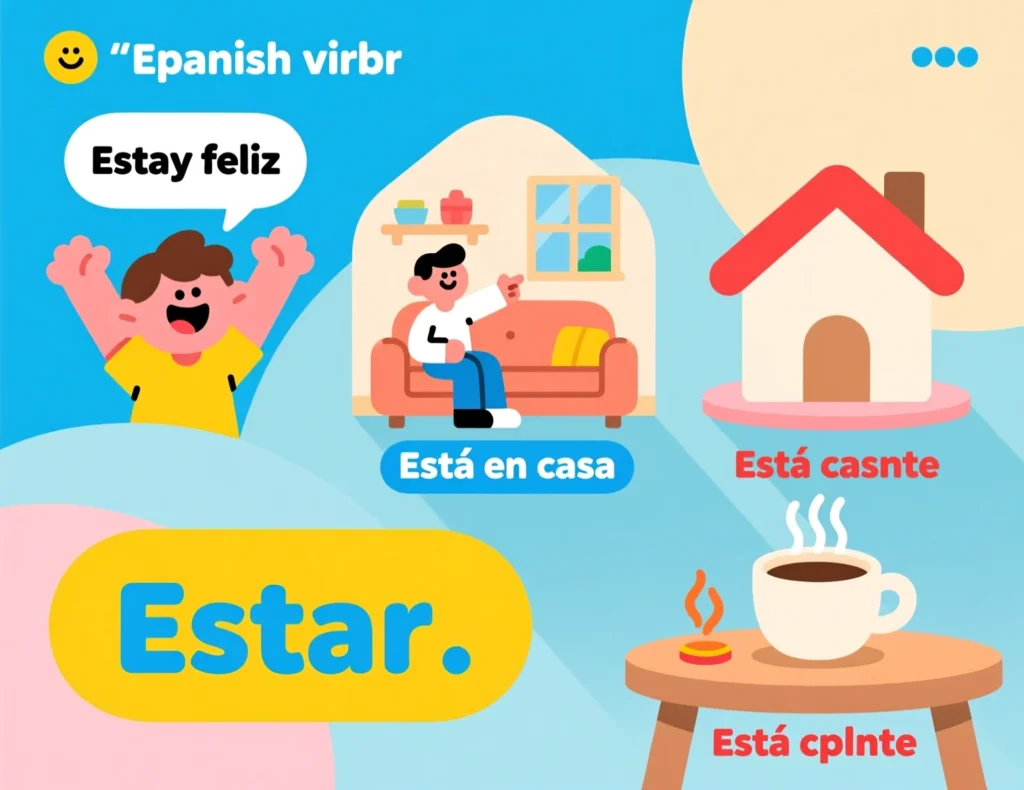
To identify the estar present tense, look for the verb estar conjugated to match the subject and describe a current, temporary situation. It often appears in sentences about:
- Location: “Ella está en la cocina” (She is in the kitchen).
- Temporary states: “Estamos contentos” (We are happy).
- Conditions: “El café está caliente” (The coffee is hot).
Unlike ser, which is used for permanent traits or identity, estar signals something that can change.
Structure of a Sentence in Estar Present Tense
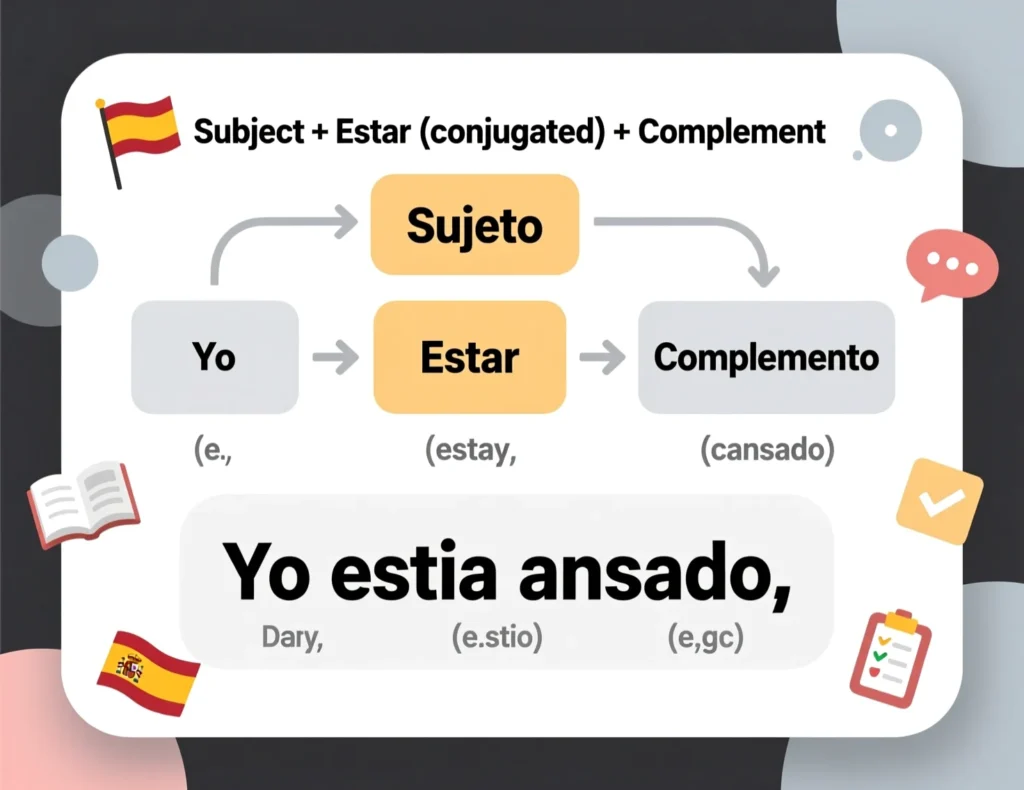
A basic sentence using estar present tense follows this structure:
Subject + estar (conjugated) + complement
- Subject: The person or thing (e.g., I, you, she).
- Estar (conjugated): The form of estar matching the subject (e.g., estoy, estás).
- Complement: Describes the state, location, or condition (e.g., tired, at home).
Example: “Yo estoy cansado” (I am tired).
Formation of Estar Present Tense
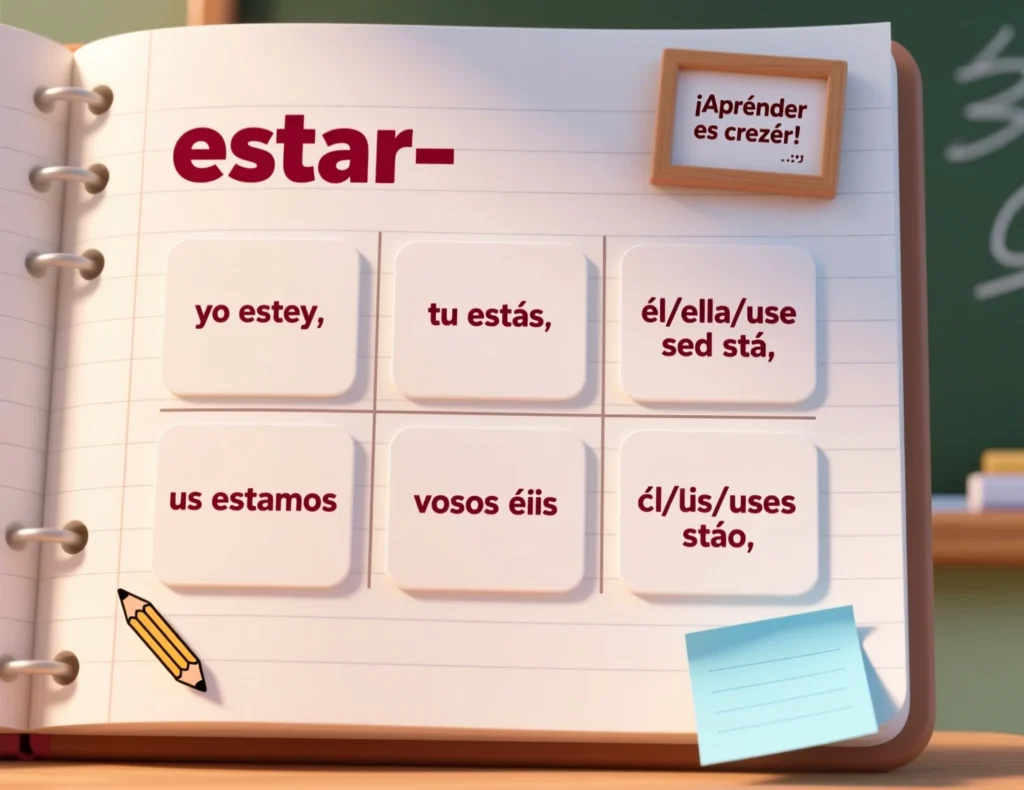
To form the estar present tense, conjugate estar based on the subject pronoun. The verb estar is irregular, so it doesn’t follow the standard patterns of regular verbs like -ar, -er, or -ir verbs.
Verbs
The verb estar is a standalone verb but often pairs with adjectives, prepositional phrases, or gerunds to describe states or actions. It’s not typically used with other verbs in the same way auxiliary verbs are.
Helping Verbs
Estar itself can act as an auxiliary verb in Spanish, especially in the present progressive tense (e.g., “Estoy comiendo” – I am eating). In the present tense, however, estar is primarily used to describe states or locations and doesn’t require additional helping verbs.
Explanation of Some Verbs with Reference to Estar Present Tense
While estar is the focus, it’s often confused with ser. Here’s how estar differs:
- Estar: Used for temporary states, locations, or conditions (e.g., “Estoy enfermo” – I am sick).
- Ser: Used for permanent characteristics, identity, or time (e.g., “Soy estudiante” – I am a student).
Estar also pairs with gerunds for the present progressive (e.g., “Estás corriendo” – You are running).
Table of Regular or Irregular Verbs in Estar Present Tense
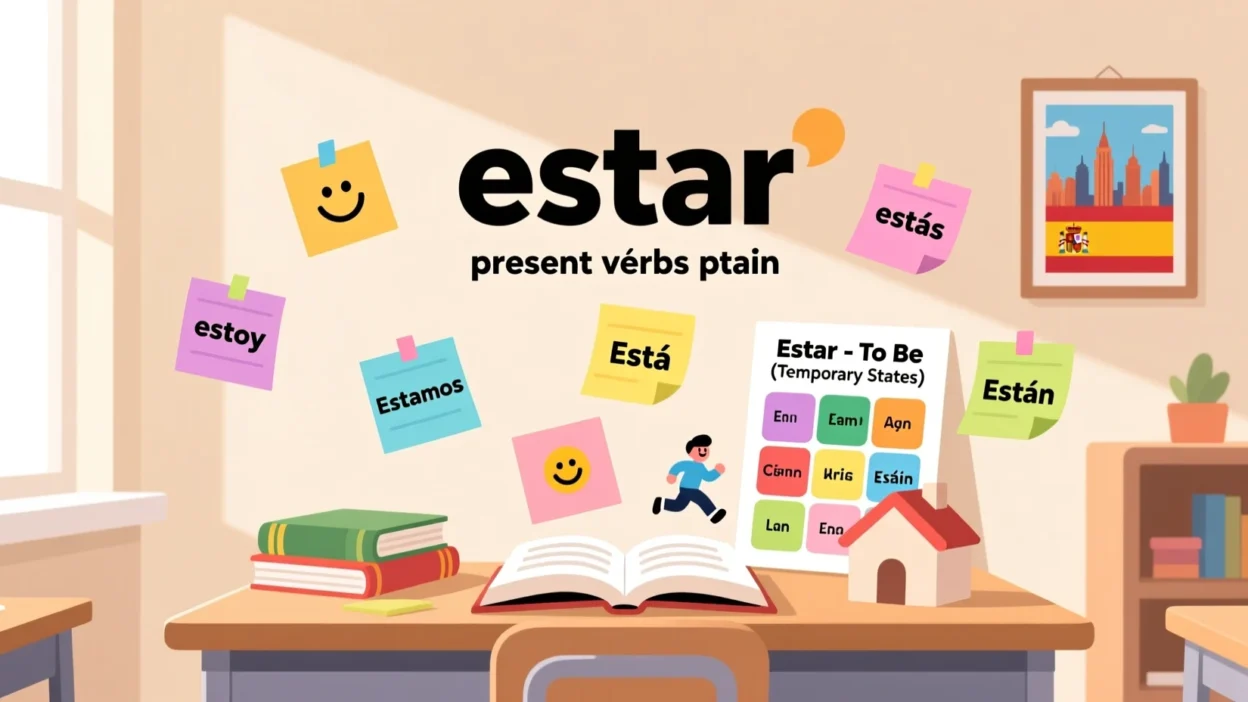
Since estar is irregular, here’s its conjugation in the present tense:
| Subject Pronoun | Conjugation |
| Yo | estoy |
| Tú | estás |
| Él/Ella/Usted | está |
| Nosotros | estamos |
| Vosotros | estáis |
| Ellos/Ellas/Ustedes | están |
Simple Sentence Examples
- Yo estoy cansado después del trabajo. (I am tired after work.)
- Tú estás en la escuela ahora. (You are at school now.)
- Ella está feliz hoy. (She is happy today.)
- Nosotros estamos en el parque. (We are at the park.)
- Vosotros estáis ocupados con la tarea. (You all are busy with homework.)
- Ellos están en la playa. (They are at the beach.)
- Él está enfermo esta semana. (He is sick this week.)
- Usted está en la oficina. (You are in the office.)
- Las flores están bonitas. (The flowers are pretty.)
- Mi perro está durmiendo. (My dog is sleeping.)
Negative Sentence Examples
- Yo no estoy cansado hoy. (I am not tired today.)
- Tú no estás en casa ahora. (You are not at home now.)
- Ella no está triste. (She is not sad.)
- Nosotros no estamos en el cine. (We are not at the cinema.)
- Vosotros no estáis ocupados ahora. (You all are not busy now.)
- Ellos no están en el restaurante. (They are not at the restaurant.)
- Él no está enfermo hoy. (He is not sick today.)
- Usted no está en la tienda. (You are not in the store.)
- Las luces no están encendidas. (The lights are not on.)
- Mi gato no está jugando. (My cat is not playing.)
Interrogative Sentence Examples
- ¿Estás tú en la escuela? (Are you at school?)
- ¿Está ella contenta hoy? (Is she happy today?)
- ¿Estamos nosotros en el lugar correcto? (Are we in the right place?)
- ¿Estáis vosotros en el partido? (Are you all at the game?)
- ¿Están ellos en la playa? (Are they at the beach?)
- ¿Estás cansado después del viaje? (Are you tired after the trip?)
- ¿Está él enfermo? (Is he sick?)
- ¿Está usted en la oficina? (Are you in the office?)
- ¿Están las flores marchitas? (Are the flowers wilted?)
- ¿Está el perro durmiendo? (Is the dog sleeping?)
Negative and Interrogative Sentence Examples
- ¿No estás tú en casa? (Aren’t you at home?)
- ¿No está ella cansada? (Isn’t she tired?)
- ¿No estamos nosotros en el parque? (Aren’t we at the park?)
- ¿No estáis vosotros ocupados? (Aren’t you all busy?)
- ¿No están ellos en la escuela? (Aren’t they at school?)
- ¿No estás tú enfermo? (Aren’t you sick?)
- ¿No está él en la tienda? (Isn’t he in the store?)
- ¿No está usted en el cine? (Aren’t you at the cinema?)
- ¿No están las luces apagadas? (Aren’t the lights off?)
- ¿No está el gato jugando? (Isn’t the cat playing?)
How to Conjugate Estar Present Tense
To conjugate estar in the present tense, follow these steps:
- Start with the verb estar.
- Identify the subject (yo, tú, él, etc.).
- Use the correct conjugation: estoy, estás, está, estamos, estáis, están.
- Add a complement (e.g., an adjective or location).
- Ensure the verb agrees with the subject in number and person.
- Use estar for temporary states, not permanent traits.
- Pair with gerunds for ongoing actions (e.g., estoy corriendo).
- Check for context (location, condition, or feeling).
- Practice with different subjects to master forms.
- Review irregularities, as estar doesn’t follow regular patterns.
Conjugation Table for All Subjects
| Subject Pronoun | Conjugation |
| Yo | estoy |
| Tú | estás |
| Él/Ella/Usted | está |
| Nosotros | estamos |
| Vosotros | estáis |
| Ellos/Ellas/Ustedes | están |
Spelling Changes or Irregularities
Estar is an irregular verb, so it doesn’t follow the standard conjugation patterns of -ar verbs. The stem changes significantly (e.g., est- instead of estar-), and the endings are unique. There are no additional spelling changes beyond its irregular nature.
Sentence Examples with Different Subjects
- Yo estoy muy cansado después de correr. (I am very tired after running.)
- Tú estás en el supermercado ahora. (You are at the supermarket now.)
- Él está estudiando para el examen. (He is studying for the exam.)
- Ella está contenta con su regalo. (She is happy with her gift.)
- Nosotros estamos en la biblioteca. (We are in the library.)
- Vosotros estáis jugando al fútbol. (You all are playing soccer.)
- Ellos están cansados después del viaje. (They are tired after the trip.)
- Las niñas están bailando en la fiesta. (The girls are dancing at the party.)
- Usted está en el aeropuerto. (You are at the airport.)
- Mi hermano está enfermo hoy. (My brother is sick today.)
- Los perros están corriendo en el parque. (The dogs are running in the park.)
- La comida está deliciosa. (The food is delicious.)
- Nosotros estamos contentos con los resultados. (We are happy with the results.)
- Tú estás escribiendo una carta. (You are writing a letter.)
- Ellas están en la playa ahora. (They are at the beach now.)
Common Mistakes with Estar Present Tense
- Using ser instead of estar: Saying “Soy cansado” instead of “Estoy cansado” (I am tired).
- Ignoring temporary states: Using estar for permanent traits (e.g., “Estoy médico” instead of “Soy médico”).
- Incorrect conjugation: Using está for “yo” instead of estoy.
- Forgetting agreement: Saying “Ellos está” instead of “Ellos están”.
- Misusing with gerunds: Saying “Estoy corro” instead of “Estoy corriendo”.
- Overusing estar: Using estar for time expressions (e.g., “Está las dos” instead of “Son las dos”).
- Confusing adjectives: Using adjectives that work with ser (e.g., “Estoy simpático” instead of “Soy simpático”).
- Incorrect negatives: Saying “No estoy no cansado” instead of “No estoy cansado”.
- Wrong subject-verb agreement: Using estás for “ellos” instead of están.
- Misplacing complements: Saying “Estoy en cansado” instead of “Estoy cansado”.
How to Avoid Common Mistakes
- Memorize estar for temporary states and ser for permanent traits.
- Practice conjugations with all subject pronouns.
- Use flashcards to reinforce estar forms.
- Double-check gerund usage for progressive tenses.
- Read examples to understand context (location vs. identity).
- Practice with native speakers to catch errors.
- Use grammar checkers to spot mistakes.
- Write sentences and review them.
- Learn common adjective pairings with estar.
- Take quizzes to test your understanding.
Related Verbs and Synonyms for Estar Present Tense
- Ser: Used for permanent characteristics or identity (e.g., “Soy alto” – I am tall).
- Permanecer: A synonym meaning “to remain” or “to stay” (e.g., “Permanzco en casa” – I stay at home).
- Quedar: Used for location or remaining (e.g., “Queda en la mesa” – It remains on the table).
Sentence Comparisons
- Estar: “Estoy enfermo” (I am sick – temporary).
- Ser: “Soy médico” (I am a doctor – permanent).
- Permanecer: “Permanzco tranquilo” (I remain calm).
- Quedar: “Quedo en el hotel” (I stay at the hotel).
Tips to Practice Using Estar Present Tense
- Write 10 sentences daily using estar.
- Describe your current location or mood.
- Practice with a language partner.
- Use apps like Duolingo for verb conjugation.
- Create flashcards for estar conjugations.
- Watch Spanish shows and note estar usage.
- Join online forums for Spanish learners.
- Practice negative and interrogative sentences.
- Read Spanish texts and highlight estar.
- Take online quizzes for reinforcement.
Frequently Asked Questions
- What’s the difference between estar and ser?
Estar is for temporary states; ser is for permanent traits. - When do I use estar present tense?
Use it for locations, temporary conditions, or progressive actions. - Is estar irregular?
Yes, it has unique conjugations like estoy, estás, etc. - Can estar be used with gerunds?
Yes, for present progressive (e.g., Estoy corriendo). - How do I avoid confusing ser and estar?
Memorize their contexts and practice with examples. - What are common adjectives with estar?
Cansado, feliz, enfermo, caliente, etc. - Can estar be used for time?
No, use ser for time (e.g., “Son las tres”). - How do I form negative estar sentences?
Add “no” before the verb (e.g., “No estoy cansado”). - Are there synonyms for estar?
Yes, like permanecer or quedar in specific contexts. - How can I practice estar effectively?
Write sentences, take quizzes, and speak with natives.
Exercises
- Conjugate estar for “yo” in a sentence about your mood.
- Write a negative sentence using estás.
- Create an interrogative sentence with están.
- Describe your current location using estoy.
- Use estar with a gerund (e.g., estoy corriendo).
- Write a sentence with estáis and an adjective.
- Form a negative interrogative sentence with está.
- Use estar to describe a temporary condition.
- Write a sentence with estamos about a group.
- Combine estar with a prepositional phrase (e.g., en la playa).
Quizzes
- What is the conjugation of estar for “tú”?
a) Estoy b) Estás c) Está
Answer: b) Estás - Which sentence uses estar correctly?
a) Estoy médico b) Estoy cansado c) Soy enfermo
Answer: b) Estoy cansado - What does “Estamos en la playa” mean?
a) We are doctors b) We are at the beach c) We are happy
Answer: b) We are at the beach - How do you say “Are they tired?”
a) ¿Están cansados? b) ¿Son cansados? c) ¿Están médicos?
Answer: a) ¿Están cansados? - What’s wrong with “Estoy simpático”?
a) Wrong verb b) Wrong adjective c) Correct
Answer: b) Wrong adjective - Conjugate estar for “ellos”.
Answer: Están - Which is negative?
a) Estoy feliz b) No estoy feliz c) ¿Estoy feliz?
Answer: b) No estoy feliz - What’s the gerund form in “Estoy corriendo”?
a) Corriendo b) Correr c) Corro
Answer: a) Corriendo - Which verb is for permanent traits?
a) Estar b) Ser c) Permanecer
Answer: b) Ser - How do you say “I am not at home”?
a) No estoy en casa b) No soy en casa c) Estoy no en casa
Answer: a) No estoy en casa
True or False
- Estar is used for permanent characteristics. False
- Estoy is the conjugation for “yo.” True
- Estar can be used with gerunds. True
- No estoy cansado is a negative sentence. True
- Estar is a regular verb. False
- Estás is used for “ellos.” False
- Estar is used for time expressions. False
- Estamos en la escuela means “We are at school.” True
- Ser and estar are interchangeable. False
- Estar is used for temporary states. True
Conclusion
Mastering the estar present tense is a game-changer for Spanish learners.
By understanding its use for temporary states, locations, and progressive actions, you can express yourself more naturally in conversations.
This guide has covered verb conjugation, sentence structures, common mistakes, and practical tips to help you use estar confidently.
If you’re describing your mood, location, or an ongoing action, estar is your go-to verb for the present moment.
Keep practicing with the exercises and quizzes provided, and try forming your own sentences in real-life scenarios.
For extra help, consider using a grammar checker or joining a language learning community.
Start using the estar present tense today, and watch your Spanish fluency soar!